
Erythema Toxicum Neonatorum (ETN): A Common Newborn Rash
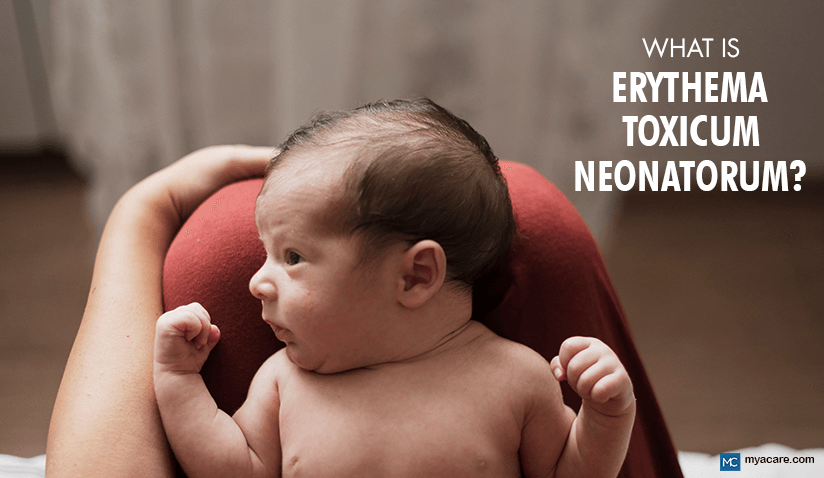
Erythema toxicum neonatorum (ETN), also known as neonatal erythema toxicum, is a skin condition that develops in many full-term newborn infants during the neonatal period. The reported prevalence of ETN varies widely across studies depending on the population and the methodology used. Its clinical presentation may resemble other pustular skin eruptions of the neonatal period, making accurate identification important.
This article reviews the clinical features, possible causes, and risk factors associated with ETN. It also highlights the importance of accurate diagnosis, outlines common differential diagnoses, and offers guidance on management, skin care, and when to seek medical advice.
What Is Erythema Toxicum Neonatorum?
Erythema toxicum neonatorum, otherwise known as toxic erythema, is a benign condition in which a skin rash develops on the newborn and is seen soon after birth. Although sometimes confused with baby acne, ETN is a distinct condition and not a form of acne. Some key features and signs can indicate whether a rash is ETN.
Signs and Symptoms
-
Appearance
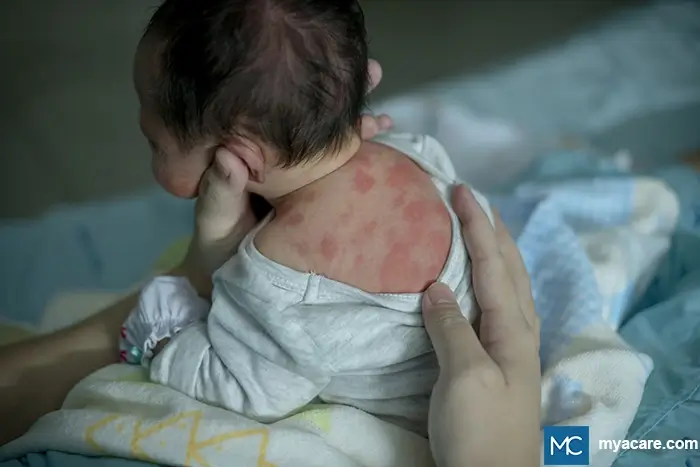
The rash of ETN consists of white or yellow bumps with a base of red.
-
Location
The first spots of the rash on the newborn’s skin start on the face and then spread to the chest, trunk, and arms and legs. It is uncommon for the rash to appear on the palms or the soles of the feet. The rash can change position, with it appearing on the face one day, then disappearing and reappearing elsewhere. The rash can also disappear completely and then return at a later date. Although recurrences are uncommon (occurring in about 11% of newborns), they usually happen six weeks after birth and are mild.
-
Onset and progression/duration
Erythema toxicum neonatorum (ETN) usually appears within the first week of life, most commonly between days 3 and 4. However, it can be present at birth or appear as late as day 10. The condition typically resolves on its own within 7 to 14 days. The infant appears healthy overall and does not exhibit any discomfort related to the rash. ETN is generally considered a benign and self-limiting condition in newborns, typically requiring no specific treatment.
Causes and Risk Factors
There is no definitive evidence for why your baby may develop ETN. However, some possible causes in newborn babies are underdeveloped hair follicles and skin pores. Bacteria on the skin associated with the hair follicles may also cause inflammation, triggering the condition. The immune system responds to microbes in the hair follicles with inflammation. This inflammatory response may be important in the development and adaptation of the newborn’s skin.
ETN commonly affects full-term newborns; it is uncommon in premature babies. Newborn erythema is also more common in boys than girls, as indicated by several studies, and occurs sometime during the first six weeks of the baby’s birth. There are some factors that increase the risk of a baby having ETN.
Risk Factors
Higher birth weight and a greater gestational age are risk factors for the development of ETN. These can apply to both vaginal and cesarean deliveries. However, vaginally delivered full-term newborns may show a slightly higher incidence.
The condition is not contagious and does not appear to be associated with allergies or infection.
Diagnosis
The diagnosis of toxic erythema is primarily based on the newborn’s clinical presentation and overall health status. It is a benign condition, and the baby will not have any signs of illness, just the rash on the skin.
An ETN rash typically does not entail evaluation tests or a biopsy, unless other skin conditions, such as herpes simplex or varicella-zoster, are suspected.
Erythema Toxicum Neonatorum Differential Diagnosis
There are other conditions that resemble the rash of ETN:
-
Acne neonatorum vs Erythema toxicum neonatorum
Acne neonatorum is baby acne in which blackheads and whiteheads form on the face of the infant. When distinguishing erythema toxicum neonatorum from neonatal acne, the doctors examine the characteristics of the rash. The rash of neonatal acne consists of little red bumps, while ETN appears as red patches with pale white bumps. -
Erythema toxicum neonatorum vs Neonatal cephalic pustulosis
Neonatal cephalic pustulosis is a rash on the face or head of a baby that looks like acne, but there are no blackheads or whiteheads, just pustules. It is considered a form of acne. This condition does not show the red patches seen in ETN. -
Erythema toxicum neonatorum vs Milia
Babies with milia have little white bumps on the cheeks and nose, and no reddish blotches on the newborn’s face, which is typical of ETN. Infants can be born with milia or develop it days after birth. -
Erythema toxicum neonatorum vs Transient neonatal pustular melanosis
The rash of transient neonatal pustular melanosis consists of pus-filled bumps that can blister and break open. These pustules have no reddish coloring at the base, unlike those of ETN. An ETN rash has distinct erythema around the pustules. -
Erythema toxicum neonatorum vs Heat rash
A heat rash happens when a baby gets too hot. This also appears as redness in newborn skin. A heat rash appears on the skin as little red blisters or bumps. This is unlike erythema toxicum newborn rash, which looks different in that it has white, raised areas surrounded by erythema. The development of an ETN rash is also not linked to temperature. -
Erythema toxicum neonatorum vs Newborn allergy rash
Exposure to certain substances can trigger allergies in newborns. Infants can develop a cow’s milk allergy if the mother who is breastfeeding drinks cow’s milk, although this has a lower occurrence rate of 0.5% compared with infant allergies to formula. The rash associated with an allergic response to cow’s milk appears as hives, raised bumps on the skin, rather than red blotches with white or yellow raised areas, as seen with ETN. Itching and other symptoms of gastrointestinal distress, wheezing, and coughing are possible in an allergic response to cow’s milk, while a baby will not have discomfort from ETN.
Erythema Toxicum Neonatorum Treatment
ETN is commonly seen in pediatric dermatology. Contrary to what some people believe, there is no evidence that breast milk helps resolve this condition. However, treatment is usually not needed since it typically resolves within 14 days. It is important to care for your baby’s skin even if they do not have ETN.
General Skin Care Tips for Babies
- Shield your baby’s skin from direct sunlight and dress them in loose, breathable clothing during hot weather.
- Bathe your baby regularly, in lukewarm water for about 5 to 10 minutes. Use soap designed for use on infants and pat the baby dry after bathing, but only use water to wash your child’s face.
- Do not touch or squeeze the bumps, because this could cause an infection.
Prognosis and When to Seek Medical Attention
The rash is self-limiting and usually disappears in about 14 days. You should see a pediatrician if you have any concerns about your baby or if your baby with ETN spikes a fever, becomes lethargic, or the rash starts to bleed.
To search for the best Dermatology Healthcare Providers in Croatia, Germany, Greece, India, Malaysia, Singapore, Slovakia, Spain, Thailand, Turkey, Ukraine, the UAE, UK, the USA, please use the Mya Care search engine.

Dr. Rae Osborn has a Ph.D. in Biology from the University of Texas at Arlington. She was a tenured Associate Professor of Biology at Northwestern State University, where she taught many courses to Pre-nursing and Pre-medical students. She has written extensively on medical conditions and healthy lifestyle topics, including nutrition. She is from South Africa but lived and taught in the United States for 18 years.
References:
Featured Blogs

Medically Induced Coma: What It Is, How It Works & Recovery