
Serious Games: Latest Gamification Developments in Healthcare
Key Takeaways
- Designed for purposes beyond entertainment, serious games are being explored to support rehabilitation, mental health, patient education, and medication adherence.
- Emerging technologies such as AI, virtual reality (VR), augmented reality (AR), and biofeedback are making serious games more personalized and interactive.
- Current evidence suggests serious games are most effective when used alongside healthcare professionals rather than as stand-alone therapies.
- While serious games can improve motivation and engagement, further research is needed to confirm their long-term effectiveness, accessibility, and benefits across diverse populations.
Introduction
Serious games are digital applications that are designed for a specific purpose. Such games are not for entertainment but are used for other purposes, such as healthcare. In healthcare, serious games are useful in rehabilitation, education, and behavioral modification.
What Are the Recent Healthcare Applications of Gamification?
There are many gamification applications in healthcare. A few of them are listed below:
-
Neurological Rehabilitation
Serious games can be used for stroke recovery. For instance, games have been developed that track finger dexterity and help with coordination in stroke patients. Such games can also help Parkinson’s patients with motor training and neuroplasticity.
-
Cognitive Deficit
Serious games can be helpful for elderly people with some cognitive decline. This is because these games can help activate the brain and may help delay the onset of conditions like dementia.
-
Mental Health
Games can be developed and used to treat mental disorders.
CBT-based games combine gaming with cognitive behavioral therapy (CBT). Cognitive behavioral therapy games can be used for people with anxiety, PTSD, and depression. There is some evidence that CBT games help reduce symptoms as an adjunct therapy in patients with severe depression.
More research needs to be done to prove that serious games help patients who are depressed. Distinct from CBT games, gamified physical activity can also help reduce depression by stimulating patients to exercise.
Serious games in healthcare that are of short duration are most effective in reducing anxiety. Some researchers have found results to be inconclusive and suggest more research is needed on the effectiveness of serious games in treating anxiety. Additionally, serious games may be helpful for teens and children with PTSD.
-
Potentially Help With Autism
A study showed improvements in eye gaze and social skills among subjects playing these games, but the sample size was too small to provide conclusive evidence of their effectiveness.
Emerging research suggests that serious games that use the metaverse and other immersive technologies may aid individuals with emotional regulation, self-confidence, attention, and cognition. Further studies are needed on serious game interventions for individuals with autism.
-
Physical Therapy (PT) and Movement Retraining
Biofeedback computer game-based training can help patients requiring physical activity. For instance, patients with heart disease undergoing rehab. Serious games can be developed to help motivate children needing rehabilitation of motor control. It is important that physiotherapists are involved when serious games are used in PT. These therapists help calibrate the devices and provide support. Console-based games can also be helpful in PT.
-
Medication Reminders
Apps can help patients who forget to take their medication by including reminders and scheduling.
-
Patient Education
Games can be designed and used for patient education.
Technology and UX Innovations
Biofeedback Integration
Biofeedback integration with gameplay allows the game to adjust to match the player. These types of games can measure physiological features such as heart rate or emotion, and then adjust accordingly.
AI and Serious Games
AI can be used for adaptive difficulty and for personalizing serious games to suit the patient’s needs. AI algorithms can combine physiological, performance, and mood data to assess patient state and refine how the game responds over time. Algorithms can measure player activity and behavior during the game. A patient’s specific physiological responses and performance metrics can also be measured using AI algorithms in a game. This is useful since patients will have unique characteristics and responses to games, and the data gathered by the game can help the therapist assess patient progress.
VR/AR Environments Simulating Real-World Tasks
Combining virtual reality with CBT is effective in helping patients who have depression and anxiety. More studies need to be done with diverse populations to ascertain how effective this method really is on a larger scale. Self-guided VR therapy can be used for patients with anxiety.
VR can be used for treating burn patients and distract them during their recovery. Virtual reality immersion therapy (VRIT) helps with physical and psychological discomfort during recovery from burns. Interactive game consoles (IGC) can also aid rehabilitation of burn patients.
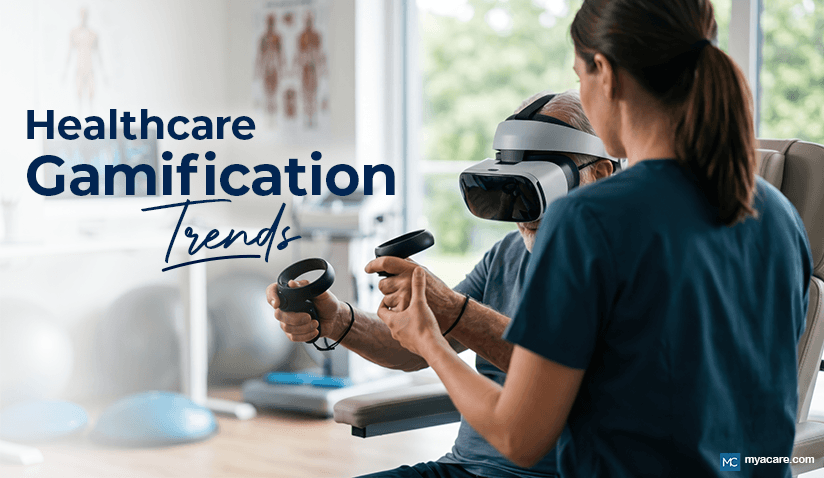
VR could also help patients recovering from stroke who have visuospatial neglect (VSN). This is when patients, due to a stroke, are unaware of objects or stimuli on one side of the body (the neglected side). In a survey, therapists believed that VR and augmented (AR) reality games could help stroke patients with VSN. More research is needed to determine how effective AR and VR games are for stroke rehabilitation. VR games could be beneficial for physical therapy for stroke patients and others needing rehab.
Evidence of Clinical Effectiveness
Accurately measuring the impact of serious games requires randomized trials that show improved adherence, learning, and health outcomes. The games also need to be tested on a diverse population to truly assess their applicability and overall effectiveness.
There are better outcomes when serious games are combined with in-person therapy or professionals who guide the use of the games.
The Patients’ Perspectives
Some of the positive effects of serious games in healthcare are motivation and engagement. This does not only apply to patients since it also improves motivation for medical students and increases engagement with game-based rehab.
Gamified tracking, especially in home settings, can be helpful in motivating patients. Providing gamified elements like badges or leaderboards can increase motivation and engagement. Such gamification incentives can help encourage patients to adhere to programs, e.g., exercise programs.
Gamification strategies such as competition and achievement can help improve engagement and even enjoyment of the games for the patient.
Challenges and Limitations
Patients can become addicted to games, which can lead to neglecting other parts of their lives. It is important that screen time is limited to prevent cognitive overload in some cases. Cognitive load is important to measure with serious games as it can help improve game design. Serious games have not been adopted across all demographics, which means some people miss out. This also makes it hard to properly assess the effectiveness of games when used to help in treating medical or mental problems. Serious games are often not multiplatform and may be limited and not accessible to people with disabilities. More research is needed on gamification and serious games for personalized health.
Conclusion
Serious games are scalable and can be adapted and personalized based on biofeedback. VR, AR, and AI can be integrated with serious games to potentially help patients with mental or physical conditions. More research on the effectiveness of serious games and integration with other technology is needed. Such studies need to include other ages and psychiatric and medical conditions.
FAQ
Are serious games a replacement for therapy or medication?
No, even FDA-approved therapeutic games are officially labeled as "not intended to be used as a stand-alone therapeutic". They're meant to be used alongside medication, therapy, or educational support, not instead of them.
Is there scientific proof that gamification improves health outcomes?
Some clinical trials of serious games designed for specific health conditions found statistically significant improvements in symptoms, but the overall evidence remains low quality and isn't yet conclusive. So proof depends on the specific game and how rigorously it's been tested, not on gamification as a whole.
Can serious games be used to detect or screen for depression?
Researchers have built early prototype games that use gameplay data and machine learning to flag possible signs of depression. This approach shows potential, but is based on very small samples and needs much larger studies before it could be used in real clinical settings.
To search for the best doctors and healthcare providers worldwide, please use the Mya Care search engine.

Dr. Rae Osborn has a Ph.D. in Biology from the University of Texas at Arlington. She was a tenured Associate Professor of Biology at Northwestern State University, where she taught many courses to Pre-nursing and Pre-medical students. She has written extensively on medical conditions and healthy lifestyle topics, including nutrition. She is from South Africa but lived and taught in the United States for 18 years.
References:
Featured Blogs
Medically Induced Coma: What It Is, How It Works & Recovery