
Colorectal Cancer Risk and Diet: The Impact of Food Choices
Medically Reviewed and Edited by Abinaya Muralidharan, M. Pharm - August 28, 2026
Key Takeaways
- Diet may influence the development and progression of colorectal cancer (CRC).
- Increased intake of whole grains and fiber, along with fruits and vegetables, may support colon health.
- Studies suggest links between processed meat, sugar, and elevated CRC risk.
- Routine screening, including colonoscopy and stool tests, helps with early detection.
- Genetics, chronic inflammation, type 2 diabetes, and certain lifestyle factors may predispose individuals to CRC.
Introduction
There were more than 1.9 million new colorectal cancer cases and approximately 900,000 deaths from colorectal cancer worldwide in 2022. A key reason why knowing how to prevent colorectal cancer is so important. Certain foods may trigger colon cancer. Studies have shown that the worst foods for colon health include red meat, ultra-processed foods, sugar, and fatty and fried foods. Diet affects the microbiome in the gut, and depending on what you eat, it can increase inflammation and even trigger carcinogenesis. This article examines factors that can increase your risk of colon cancer and the role of prevention through dietary changes.
The Impact of Diet on Colorectal Cancer (CRC)
Dietary choices are important in colon cancer prevention. Some types of food may either promote or reduce your CRC risk by impacting the gut microbiome and subsequently inflammation and oxidative stress.
Foods That Increase Risk
Knowing what to eat to prevent colon cancer is essential since a person’s diet can be a risk factor for colon cancer. Some foods and drinks that can cause colon cancer include:
-
Red and processed meats (especially cured/smoked meats)
Consuming high amounts of red meat (e.g., beef, lamb, and pork) and processed meats (e.g., hot dogs) may increase your risk of colon cancer, while white meats like poultry don’t appear to raise your risk. Heme iron, N-nitroso compounds, and heterocyclic amines formed during meat processing or high-temperature cooking may contribute to cancer risk. Higher intake of processed meat has been linked with increased risk of CRC, which rises as intake increases.
-
Low-fiber diets
Lower fiber intake has been associated with increased colorectal cancer incidence. Dietary fiber may help reduce exposure of the colon to potential carcinogens in many ways. It helps the stool to bulk up and increases how quickly waste leaves the body. It also helps gut bacteria, which ferment fiber to form short-chain fatty acids (SCFAs). The SCFAs may have anti-carcinogenic properties.
-
Alcohol
Alcohol consumption is associated with colon cancer risk, especially among people who drink heavily. Alcohol can cause cancer because of the metabolites that are formed when it breaks down.
-
High saturated fat intake
Saturated fat and arachidonic acid – a breakdown product of Omega-6 fatty acids – are linked to a higher chance of developing colon cancer. However, omega-3 fatty acids, which are found in oily fish, may help inhibit cancer.
Diets rich in ultra-processed foods, which contain high levels of omega-6 fatty acids, can increase the overall risk of CRC.
Protective Dietary Factors
Some foods and beverages that may prevent colon cancer:
-
High-fiber plant-based foods
Foods high in fiber decrease CRC risk. Such foods include legumes, whole grains, and vegetables. Rice bran, for example, decreases pro-cancer compounds and helps the microbiome, while navy beans decrease inflammation and increase gut bacteria diversity. High-fiber plant-based diets could help to reduce the occurrence of colon polyps, which can develop into colon tumors.
-
Omega-3-rich foods
These are colon-healthy foods due to their possible anti-inflammatory effects. Some studies have not indicated a significant association between omega-3s and lowered colon cancer risk but have shown a link between fish-derived docosahexaenoic acid (a type of omega-3) and decreased CRC risk. Recent evidence suggests that omega-3 fatty acids have no protective effect against CRC, but that this may vary based on other factors such as genetics. More research is needed on the effects of omega-3 and CRC risk.
-
Dairy and calcium
Increased intake of dairy and calcium-rich foods seems to be linked to a lower risk of CRC. Although how this works is not known for certain, it is thought that the binding of calcium to secondary bile acids and fatty acids in the colon may reduce cancer risk. Calcium is effective in a dose-response way, with higher amounts decreasing CRC risk.
-
Vitamin D and magnesium
Evidence from observational studies suggests that people with higher dietary vitamin D intake have a modestly lower risk of developing certain colon polyps, called conventional adenomas, particularly in the distal colon. However, the effect of vitamin D alone or in combination with calcium on reducing the risk of conventional adenomas or serrated polyps is uncertain, as evidenced by the results of larger randomized trials. Moderate dietary magnesium intake has been reported to lower CRC risk, but more research is needed to quantify the effects by intake level. Vitamin D3 and magnesium together may be associated with lower mortality rates in patients who already have CRC.
-
Coffee
Studies suggest that decaffeinated coffee is associated with a lower risk of CRC, suggesting that non-caffeine compounds in coffee may have a protective effect, though the findings are not fully consistent. Coffee contains polyphenols, including chlorogenic acids. Research suggests that drinking coffee may lower the risk of colorectal cancer, although it is unclear whether this effect is specifically due to polyphenols in the coffee. Also, it is worth noting that among people already diagnosed with colorectal cancer, higher coffee and tea intake has been linked to better outcomes – including lower rates of recurrence and progression.
-
Herbal tea
Limited evidence suggests that herbal tea consumption could help reduce the incidence of distal colon cancer.
-
Eating frequency
Evidence on eating frequency and CRC risk is inconsistent – some studies linked eating more often to lower CRC risk, and others to higher risk, but this may be influenced by the actual foods eaten. Diet quality needs to be considered alongside eating frequency.
Gut Microbiome and Fermentation
A healthy gut microbiome helps the immune system. It also helps to maintain the integrity of your gut lining. Maintaining a healthy microbiome does depend on your diet. This is why what you eat is important in helping prevent colorectal cancer.
There is a link between fiber in food and a reduced risk of colon cancer. High-fiber foods are fermented by the gut bacteria to short-chain fatty acids (SCFAs), like butyrate, which protect the colon cells and the associated lining of the gut. Butyrate also inhibits the growth of colon cancer cells by promoting apoptosis (self-destruction), though this effect is cell-type dependent. Among the SCFAs, butyrate shows the strongest protective effect against colorectal cancer.
Dysbiosis (disrupted microbiome) in the gut contributes to the development of CRC. In dysbiosis, the colon loses protective bacteria such as Bifidobacterium, Clostridium, and Roseburia and becomes colonized by harmful bacteria, including Bacteroides fragilis, E.coli, and Fusobacterium nucleatum. These bacteria may drive cancer through toxin-driven gene activation and DNA-damaging byproducts, though their combined role in tumor formation is not fully understood. Diets high in processed foods are connected to gut dysbiosis, which several studies suggest may raise colon cancer risk – possibly through increased gut inflammation, though not all research supports this. Choosing fiber-rich foods over processed ones helps prevent colon cancer.
Probiotics can support the microbiome and can help people with colon cancer by controlling inflammation and increasing phagocytosis. Yogurt, which often contains probiotics, may also help reduce CRC risk by supporting a healthier gut microbiome.
Dietary Patterns and CRC Risk
To find an optimal diet to reduce colon cancer risk, it is helpful to compare different diets.
Western Diet
Diets characterized by high intake of sugar, refined carbs, and red meat may lead to a higher colorectal cancer risk, but data are limited. Red meat, in particular, is one of the foods that likely causes colorectal cancer. A Western diet may increase CRC risk, but more evidence is needed.
Mediterranean Diet
This is a plant-based diet inclusive of fruit, veggies, nuts, olive oil, and whole grains, with limited red meat and mainly white meat. It is linked with reduced inflammation, oxidative stress, and CRC incidence.
Vegetarian/Vegan Diets
These include potentially protective and good foods to eat to prevent colon cancer. Fruits and vegetables can be beneficial; a vegetarian diet in general is associated with a reduced risk of colon cancer. However, the effect may depend on the type and nutritional quality of the diet. Calcium may decrease CRC risk. Vegan diets, possibly related to lower calcium intake, may be linked with a higher colorectal cancer risk, although more research is needed to confirm this relationship.
Ketogenic Diet
Ketogenic diets have shown anti-tumor effects on existing colorectal cancer cells in preclinical studies, but there's no strong evidence that they prevent colorectal cancer from developing. A ketogenic diet shifts the body's fuel from glucose to ketones; as a result, some tumors with low ketone-metabolizing enzymes may be starved of energy. But this isn't universal: many tumors retain these enzymes and can use ketones, and the effect varies by tumor type and oxygen levels. More studies are needed to establish whether a keto diet does decrease CRC risk.
Dietary Considerations: Prior to Screening
A colonoscopy is one of the best methods currently utilized to screen for colon cancer. In preparation for the procedure, for most average-risk patients, a 1-day low-residue diet before colonoscopy is sufficient. A longer 3-day diet has been shown to add no benefit and is indicated for patients at risk for inadequate preparation. The day before the procedure, clear liquids are usually mandated; however, emerging evidence suggests that a low-residue diet, rather than a clear-liquid-only diet, achieves comparable bowel cleanliness in low-risk patients. Bowel prep is typically taken as a split dose – one part the evening before and the rest 4- 6 hours before the colonoscopy (finished at least 2 hours prior). Same-day-only dosing is used for afternoon procedures.
Besides a colonoscopy, screening options include a stool blood test and a stool DNA test to check for changes linked to cancer. Aside from the conventional colonoscopy, where a flexible tube is used to view the colon, a virtual colonoscopy can be done using a CT machine. While the bowel prep method for virtual colonoscopy is similar to the standard colonoscopy, it also requires the patient to drink a contrast-tagging agent, which helps doctors differentiate leftover stool from polyps on the CT scan.
Factors That Increase Colorectal Cancer Risk
Certain risk factors for colorectal cancer can be directly influenced by dietary and lifestyle interventions. These include:
-
Inflammatory Bowel Disease (IBD), Ulcerative Colitis (UC), and Crohn’s Disease
Both UC and Crohn’s disease are IBD conditions. These are also risk factors for colorectal cancer. An optimal diet for IBD will vary based on what foods may trigger your symptoms. Patients with IBD who also have primary sclerosing cholangitis (PSC) (a chronic condition of the liver) seem to have the most risk of CRC. Patients with IBD conditions need to control the inflammation in the gut, sometimes needing medicine to do so.
-
Type 2 Diabetes
Higher blood sugar levels in individuals with type 2 diabetes may favor tumor cell growth. Studies show that type 2 diabetics face a greater likelihood of developing CRC.
-
Lifestyle Factors
There is some evidence that a shorter dinner-to-bed time of less than 3 hours may be linked to an increased risk of CRC because it possibly affects insulin-like growth factor-I (IGF-I), which is linked to CRC. More research is needed on this and other lifestyle factors like sleep duration and walking after dinner.
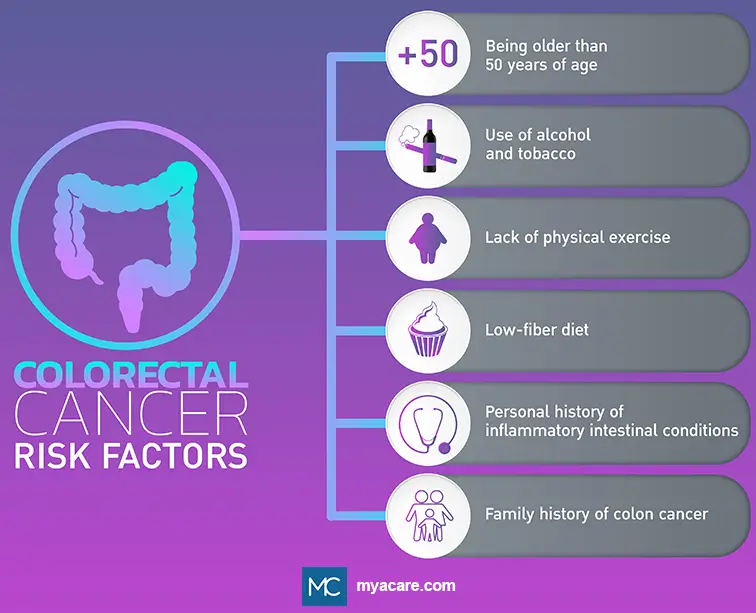
While dietary interventions cannot influence some risk factors, knowing about them is crucial for early screening and prevention. These include genetic conditions such as Lynch syndrome and familial adenomatous polyposis, which increase CRC risk. Family history also plays a role, as the risk of CRC is higher if a sibling or parent has had the disease.
Recent Rising Trend in Young Adults
Colorectal cancer risk increases with age, but recent trends have shown that the rate is also increasing in young adults.
What is causing colon cancer in young people?
The reason that colorectal cancer is rising specifically among people younger than 50 is not yet understood. However, excess body weight and long-term diets high in red or processed meat are established risk factors for colorectal cancer. Besides diet, lifestyle factors like level of physical activity, body weight, and smoking can influence your risk of CRC.
Plant-based diets are recommended for colorectal cancer prevention, and emerging evidence suggests that they may also improve prognosis in people who have colorectal cancer, particularly with high intake of whole grains and fiber. Other high-fiber foods that support colon health include nuts, dried fruit, and vegetables.
Some studies suggest increasing calcium reduces CRC risk, and this pattern holds regardless of calcium source or tumor location.
Research and Emerging Considerations
Ongoing research continues to explore the role of diet in colon cancer prevention and the risk factors for colorectal cancer. Some current findings relate to plant chemicals called polyphenols and aspects of when and how much one eats.
Polyphenols
These are natural compounds found in berries, turmeric, and tea. They may help in colon cancer prevention through anti-oxidative, anti-inflammatory, and anti-carcinogenic properties, and by supporting the gut microbiome. Including polyphenol-rich foods in the diet may help prevent colon cancer.
Timing/Frequency of Meals
Eating close to bedtime or eating frequently throughout the day, especially when combined with an unhealthy diet, has been correlated to a higher risk of colorectal cancer. These eating patterns may relate to a patient’s circadian rhythm, which influences colon cancer. A disruption to this clock has a negative effect on treatment and on colon cancer.
When to See a Healthcare Professional
Early diagnosis of colon and rectal cancer is vital, which can be achieved by knowing the symptoms and acting fast.
These signs could indicate the need to consult a healthcare provider for an evaluation:
- Rectal bleeding
- Unexplained weight loss
- Change in bowel habits
Increased screening frequency may be advised for individuals with risk factors for CRC, such as polyps in the colon or a family member who has had colorectal cancer.
Conclusion
Dietary patterns play a key role in reducing colorectal cancer risk. Eating a diet abundant in fiber, whole grains, and plant-based foods, while limiting red meat, ultra-processed items, and alcohol, may help foster a healthy gut microbiome and reduce inflammation. However, while a healthy lifestyle is a powerful preventive tool, it works best alongside timely medical care. Individuals with known risk factors, such as those who have previously had colon polyps or have a family background of CRC, should consult a primary care physician or gastroenterologist to determine a personalized screening schedule.
FAQ
Can colon cancer be prevented?
You can lower your colon cancer risk through diet, weight management, and by reducing alcohol intake. Eating fiber-rich foods and avoiding tobacco also support colon health. Certain diets, such as the Mediterranean and vegetarian diets, may help further, likely due to beneficial plant compounds.
Are grits good for your colon?
Grits are good for your colon if they are whole grain, as they contain fiber and antioxidants which play a protective role against cancer. While whole grains in general are linked to a lower risk of colorectal cancer, no research has directly studied grits specifically in relation to colorectal cancer risk, so more research is needed to confirm this effect for grits.
Can any foods shrink colon polyps?
There is no evidence of a type of food that shrinks a colon polyp. However, eating foods rich in fiber and including fruits and veggies helps prevent polyps from forming.
Is taurine linked to colon cancer?
Current evidence suggests taurine may actually be protective rather than harmful. Higher taurine intake and blood levels have been shown to reduce the risk of colorectal cancer, which may help slow tumor growth. Some studies also found elevated taurine within existing colorectal cancer tissue, but that likely reflects how the cancer itself is affecting the body, not something caused by taurine.
To search for the best Cancer/Oncology healthcare providers in Azerbaijan, Germany, Hungary, India, Malaysia, Singapore, Spain, Thailand, Turkey, the UAE, the UK and the USA, please use the Mya Care search engine.
To search for the best Dietitians/Nutritionists in Croatia, Germany, India, Malaysia, Slovakia, Spain, Thailand, Turkey, the UAE, the UK, and the USA, please use the Mya Care search engine.
To search for the best doctors and healthcare providers worldwide, please use the Mya Care search engine.

Dr. Rae Osborn has a Ph.D. in Biology from the University of Texas at Arlington. She was a tenured Associate Professor of Biology at Northwestern State University, where she taught many courses to Pre-nursing and Pre-medical students. She has written extensively on medical conditions and healthy lifestyle topics, including nutrition. She is from South Africa but lived and taught in the United States for 18 years.

Abinaya Muralidharan holds an M. Pharm in Pharmacology. She specializes in turning complex science into clear, credible content, with experience spanning clinical safety, regulatory affairs, and medical communications. She has worked across various therapeutic areas, including but not limited to oncology, dermatology, hematology, and cardiology. She has authored publications in peer-reviewed journals, including original research papers and review articles.
References:
Featured Blogs

Medically Induced Coma: What It Is, How It Works, Who Benefits, and Recovery Outcomes