
Aspiration in the Elderly: Risks, Prevention, Best Practices

Medically Reviewed by Abinaya Muralidharan, M. Pharm - July 22, 2026
Fact Checked by Dr. Rae Osborn, Ph.D. - July 22, 2026
Aspiration & Aspiration Pneumonia
Why the Elderly Are More Vulnerable
Aspiration is a frequently overlooked but serious health risk in older adults. While it may appear subtle or harmless at first, repeated aspiration can lead to aspiration pneumonia and increased mortality. The swallowing difficulties that underlie aspiration risk also contribute to malnutrition through reduced oral intake. Understanding why aspiration occurs, identifying who is most vulnerable, and tracking its progression are essential for prevention and early intervention.
Understanding Aspiration and Aspiration Pneumonia
What is aspiration?
Aspiration occurs when food, liquids, saliva, or gastric contents enter the airway and lungs instead of passing safely into the esophagus and stomach. This can happen during swallowing, vomiting, GERD, or even while resting, particularly in individuals with impaired protective reflexes.
Not all aspiration events are immediately noticeable. Small amounts of aspirated material may not trigger coughing or obvious distress but can still cause inflammation and infection over time.
What is the difference between aspiration and choking?
Although often confused, aspiration and choking are not the same.
- Choking is a sudden airway obstruction, usually caused by a foreign body blocking airflow. It is a serious emergency that leads to sudden trouble with breathing.
- Aspiration involves material entering the airway but not necessarily causing complete blockage. Breathing may continue, and symptoms can be mild or absent initially.
Aspiration is often silent and repetitive, whereas choking is dramatic and immediately life-threatening.
How are aspiration and pneumonia linked?
When aspirated material contains bacteria — particularly from the mouth or stomach — it can introduce pathogens into the lungs. Over time, such events can lead to aspiration pneumonia, a lung infection caused by inhaled substances rather than airborne pathogens.
Repeated aspiration or a compromised immune system, cough reflex, or lung function increases the risk. Poor oral hygiene, dysphagia, reduced consciousness, and difficulty clearing secretions due to impaired reflexes further increase this risk.
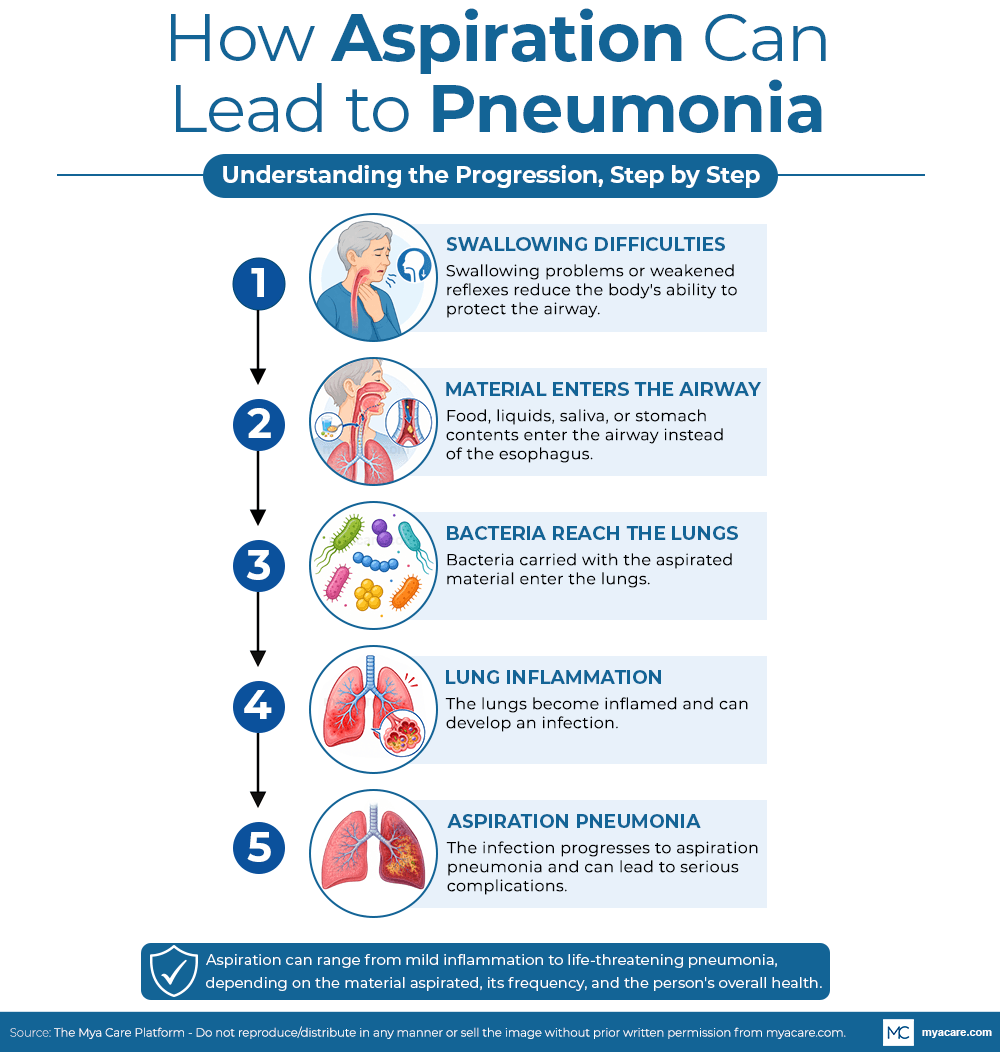
Infographic Added - August 10, 2026
Why is silent aspiration particularly dangerous?
Silent aspiration refers to aspiration that occurs without coughing, choking, or visible distress. This happens when protective reflexes are blunted, allowing material to enter the lungs unnoticed.
Since there are no obvious warning signals in silent aspiration, signs and symptoms often go undetected until complications arise, such as:
- Recurrent chest infections
- Unexplained weight loss and muscle atrophy
- Chronic cough or voice changes
- Sudden functional decline
Silent aspiration is particularly common in older adults with neurological disease and is a major contributor to aspiration pneumonia in long-term care settings.
How common is aspiration in the elderly?
Aspiration risk increases significantly with age. Studies suggest that:
- A substantial proportion of older adults (~17.3%) show age-related swallowing impairment (presbyphagia), some of whom may have increased aspiration risk, particularly if other health issues are present.
- Aspiration is frequently observed in elderly patients with stroke or advanced dementia, with rates varying widely depending on disease severity and assessment method.
- Aspiration pneumonia is one of the leading causes of infection-related death in older adults.
Despite its prevalence, aspiration often remains challenging to diagnose until serious complications occur.
What Causes Aspiration in Elderly Adults?
Aging itself does not inevitably cause aspiration, but it introduces physiological and medical changes that increase vulnerability — especially when combined with illness or frailty.
Age-Related Swallowing Changes (Presbyphagia)
Presbyphagia refers to normal, age-related changes in swallowing. These may include:
- Slower swallow initiation
- Reduced tongue strength
- Delayed airway closure
- Increased residue in the throat after swallowing
While presbyphagia is not a disease, these age-related changes can make swallowing less efficient and may increase the risk of aspiration in older adults, especially those who are ill, frail, or have other medical conditions.
Impaired Airway Reflexes
Airway protective reflexes, which include coughing, swallowing coordination, and airway closure mechanisms, may be diminished, especially in individuals with neurological disease or prolonged illness. This causes the aspirated material to reach and remain in the lungs.
With age, the cough reflex may become less sensitive or delayed, particularly when other health conditions are present.
Neurological Conditions
Neurological disorders are among the strongest risk factors for aspiration in the elderly. Common conditions include:
- Stroke, which can disrupt swallowing coordination
- Parkinson’s disease, leading to muscle rigidity and delayed swallowing
- Dementia, affecting awareness, posture, and feeding behaviors
These conditions often impair the mechanical, neural, and cognitive aspects of swallowing, as does the presence of feeding tubes (where needed), increasing the risk of both overt and silent aspiration.
Muscle Weakness and Frailty
Generalized muscle loss (sarcopenia) affects not only the limbs but also the muscles involved in swallowing and breathing. Weakness in the tongue, throat, and respiratory muscles can lead to:
- Poor bolus control
- Incomplete airway protection
- Reduced ability to clear aspirated material
Frailty also increases fatigue during meals, further compromising swallowing safety.
Poor Oral Health and Dentition
The mouth is a major source of bacteria that can cause aspiration pneumonia. Poor oral hygiene, decayed teeth, ill-fitting dentures, and dry mouth all increase bacterial load.
When oral secretions or food particles are aspirated, they carry these bacteria into the lungs, significantly increasing infection risk — even when aspiration volumes are small (due to the high bacterial load), especially in older adults with reduced oral function and impaired swallowing.
Medicines and Aspiration Risk
Many commonly prescribed medications in older adults can impair swallowing or increase aspiration risk, including:
- Sedatives and benzodiazepines, which reduce alertness and reflexes
- Antipsychotics, which may alter muscle function or cause sedation
- Anticholinergic medications, which cause dry mouth and impair bolus formation
- Antidepressants and antiepileptics can reduce consciousness
Older, frail adults often take many medicines, which may increase their risk of swallowing problems and, subsequently, of aspiration.
Blood pressure medicines and swallowing problems
Most blood pressure medicines do not directly cause swallowing problems. There is no primary evidence that antihypertensive drugs directly cause true dysphagia.
- Calcium channel blockers (e.g., verapamil, nifedipine, diltiazem)
- May relax the valve between the food pipe and stomach and slow food movement.
- This can sometimes increase acid reflux and throat discomfort.
- ACE inhibitors (e.g., lisinopril, enalapril)
- Sometimes, it can lead to swelling in the lips, tongue, or throat, known as angioedema.
- This can lead to difficulty swallowing and may require urgent medical attention.
- Diuretics (e.g., hydrochlorothiazide)
- May cause dry mouth.
- This can make swallowing feel uncomfortable, but it does not affect the swallowing structure.
What Are the Common Risk Factors for Aspiration?
Aspiration rarely occurs due to a single cause. In most elderly individuals, it results from a combination of physical, neurological, and situational risk factors that reduce swallowing safety or airway protection.
Dysphagia
Dysphagia, or difficulty swallowing, is a risk factor for aspiration. It may involve problems with chewing, moving food toward the throat, coordinating the swallow, or protecting the airway during swallowing.
Dysphagia can be subtle and may fluctuate over time, particularly in older adults with certain neurological diseases.
Bedridden Status or Limited Mobility
Older adults who are bedridden or have severely limited mobility are at increased risk of aspiration due to:
- Inability to sit upright during meals
- Reduced lung expansion and cough reflex
- Pooling of oral secretions
Immobility also increases the risk of reflux, which contributes to aspiration.
Tube Feeding
Although tube feeding bypasses oral swallowing, it does not eliminate aspiration risk. Aspiration can still occur due to the following:
- Tube feed refluxes into the airway and esophagus
- Aspiration of saliva or oral secretions
- Incorrect tube placement, displacement, or other feeding-related factors
The risk is higher when patients are fed while lying flat or when gastric emptying is delayed, resulting in increased reflux.
Gastroesophageal Reflux Disease (GERD)
GERD increases aspiration risk by allowing stomach contents to reflux into the esophagus and potentially enter the airway, particularly during sleep or when lying down.
Acidic gastric contents can cause lung inflammation even in small amounts, making reflux-related aspiration especially harmful.
Reduced Level of Consciousness
Reduced consciousness impairs swallowing coordination and airway protection. This includes:
- Sedation from medications
- Acute illness or infection
- Delirium
- Advanced dementia
When consciousness is reduced, there is a higher likelihood of diminished cough and gag reflexes, but this varies between individuals. Therefore, consciousness alone is not a reliable indicator of a patient’s airway protection.
Poor Posture During Meals
Difficulty maintaining a proper position during meals can increase the risk of aspiration, though there is no single body position that is effective for all patients.
Poor posture alters the normal alignment of the swallowing structures, making it easier for material to enter the airway.
Even individuals without diagnosed dysphagia may aspirate if posture is inadequate, especially when alertness is reduced.
Anatomical Differences
Structural abnormalities of the mouth, throat, or esophagus can interfere with normal swallowing mechanics. These may include:
- Cervical spine changes affecting neck position
- Esophageal strictures or diverticula
- Head and neck surgical changes
- Poorly fitting dentures
Such anatomical factors impair swallowing and can contribute to aspiration risk in older adults, often without early warning signs.
What Are the Signs of Aspiration?
Aspiration can present with obvious symptoms or remain silent. Recognizing early warning signs is essential for preventing complications.
Wet or Gurgly Voice
A wet, gurgly, or hoarse voice — particularly after eating or drinking — suggests that liquid or secretions may be sitting on the vocal cords and can be associated with dysphagia or aspiration risk.
Recurrent Chest Infections
Repeated lower respiratory infections, or pneumonias, should raise concern for aspiration, even if swallowing difficulties have not been reported.
Elevated Respiratory Rate
An increased breathing rate may be an early sign of aspiration-related lung infections, particularly in older adults.
Unexplained Weight Loss
Patients at risk of aspiration often reduce their oral intake due to fear of choking, fatigue during meals, or inefficient swallowing. Over time, such behavior can result in unintentional weight loss and malnutrition.
Fever After Eating
A recurrent low-grade fever without another clear cause may indicate aspiration-related inflammation or infection, particularly in patients with known swallowing difficulties.
Shortness of Breath or Fatigue During Meals
Breathlessness, coughing, or noticeable fatigue while eating may reflect poor coordination between breathing and swallowing. Meals that take excessively long or require frequent pauses are a warning sign of dysphagia that can result in aspiration pneumonia.
Vomiting
Vomiting increases the risk of aspiration of gastric contents, particularly in individuals with reduced consciousness or poor airway protection.
How Long Does It Take to Show Signs of Aspiration?
The timeframe for aspiration symptoms varies widely and depends on the volume aspirated, the material involved, and the individual’s health status.
Immediate or Early-Onset Signs (Minutes to Hours)
These may include:
- Coughing or throat clearing
- Voice changes
- Shortness of breath
- Increased respiratory rate
In some cases, especially with silent aspiration, these signs may be minimal or absent.
Delayed or Progressive Symptoms (Hours to Days)
The onset of signs and symptoms of aspiration pneumonia and aspiration pneumonitis varies.
Aspiration pneumonitis (chemical): onset within minutes to hours, resolves in 24–48 hours.
Aspiration pneumonia (bacterial): develops 48–72 hours after the aspiration event.
Symptoms can include:
- Fever
- Fatigue or confusion
- Worsening breathing difficulty
- Reduced oxygen saturation
- Productive or non-productive cough
Chronic or Late-Onset Effects (Weeks to Months)
Repeated micro-aspiration can lead to:
- Chronic cough
- Recurrent infections
- Weight loss and frailty
As progression can be subtle, aspiration is often recognized only after significant lung involvement.
What Are the Complications of Aspiration?
Aspiration can lead to a wide spectrum of complications, ranging from mild, self-limited inflammation to life-threatening illnesses. The severity depends on the volume and type of material aspirated, the frequency of events, and the individual’s overall health.
Can aspiration cause sudden death?
Yes, in rare cases, aspiration can contribute to sudden death, but this is uncommon and usually occurs in the context of severe underlying illness.
The most serious complications include the following:
- Aspiration pneumonia, which can progress to respiratory failure or sepsis
- Acute airway obstruction, particularly if solid material blocks airflow
- Severe chemical pneumonitis; when acidic stomach contents harm the lung tissue
Sudden deterioration is more likely in frail elderly individuals, those with advanced neurological disease, or patients with reduced consciousness.
What is the life expectancy of patients with aspiration?
There is no single life expectancy for individuals who aspirate. Outcomes vary widely based on:
- Frequency and severity of aspiration
- Presence of recurrent aspiration pneumonia
- Underlying neurological or pulmonary disease
- Nutritional status and frailty
- Timeliness of diagnosis and prevention measures
Occasional aspiration with prompt intervention may have minimal long-term impact. In contrast, aspiration pneumonia in advanced dementia or severe neurological disease, which frequently recurs, is associated with markedly reduced survival. Importantly, early recognition and preventive strategies can substantially improve quality of life and outcomes.
How Is Aspiration Diagnosed?
Diagnosing aspiration often requires combining clinical suspicion with imaging, laboratory tests, and specialized swallowing assessments.
Imaging
- A chest X-ray is commonly the first test, and may show patches of cloudiness or shadowing (alveolar infiltrates) in areas of the lungs where fluid tends to settle. These findings alone are not diagnostic – they must be correlated with clinical signs like dysphagia, impaired airway reflexes, or a witnessed aspiration event.
- A CT scan of the chest provides greater detail and may detect early or subtle aspiration-related changes not visible on X-ray.
Imaging findings should be interpreted alongside clinical symptoms, as early aspiration may not immediately appear on scans.
Blood Tests
Blood tests can support the diagnosis and assess severity.
- An infection may be indicated by a high white blood cell count
- Inflammatory markers (such as CRP) help monitor response to treatment
- Blood gases may reveal impaired oxygen exchange in severe cases
Sputum Tests
Sputum cultures can help identify bacterial organisms in aspiration pneumonia. Results guide antibiotic selection but are not always definitive.
Bronchoscopy
Bronchoscopy allows direct visualization of the airways and may be used when:
- A foreign body is suspected
- The diagnosis is unclear
- There is a poor response to treatment
It can also be used to obtain samples for culture in complex cases.
Swallowing Studies: Individualized Swallowing Assessments
Formal swallowing evaluations are essential in suspected aspiration cases because dysphagia is linked to aspiration pneumonia. These may include:
- Bedside swallow assessments by trained clinicians to check for dysphagia - as a screening tool
- Videofluoroscopic swallow studies (VFSS)
- Fiberoptic endoscopic evaluation of swallowing (FEES)
These assessments identify the specific phase of swallowing impairment and guide personalized management strategies rather than relying on one-size-fits-all restrictions.
How Is Aspiration Treated?
Treatment focuses on managing acute complications while addressing the underlying cause to prevent recurrence.
Antibiotics
Antibiotics are indicated only when aspiration pneumonia is present, not for aspiration alone. Choice and duration depend on severity, risk factors, and local resistance patterns.
Oxygen Therapy and Mechanical Ventilation
- Supplemental oxygen may be required for low oxygen levels.
- In severe cases, non-invasive or invasive mechanical ventilation may be necessary to support breathing.
Bronchodilators
Bronchodilators are used for bronchospasm, COPD, or asthma. Nebulized bronchodilators may be used to treat aspiration where necessary. It isn’t a standard or primary treatment for aspiration pneumonia.
Other Treatments and Preventive Interventions
- Speech and swallowing therapy: Aims to improve swallowing in elderly adults, strengthening the muscles involved, and teaching safe techniques.
- Tube feeding: Recommended when oral feeding is unsafe; however, the possibility of aspiration persists.
- ACE inhibitors: In some patients, limited evidence shows that these may enhance cough reflex sensitivity.
- Surgery: Reserved for selected patients with refractory aspiration, involving correctable structural abnormalities.
Management plans should always be individualized, balancing safety, nutrition, comfort, and quality of life.
How Long Does Recovery Take?
The duration of recovery from aspiration pneumonia in the elderly depends on the extent of lung involvement and the individual’s baseline health.
- Mild aspiration pneumonitis usually resolves within 24-48 hours.
- Aspiration pneumonia typically requires around 1 week of antibiotic treatment, with fatigue and weakness lasting longer.
- Recurrent or severe cases may take weeks to months and often involve prolonged rehabilitation.
In chronic aspiration, the goal often shifts from complete recovery to risk reduction and prevention of further decline.
How to Prevent Aspiration in the Elderly: Practical Tips
Preventing aspiration requires a proactive, multidisciplinary approach that addresses swallowing safety, positioning, oral health, medications, and daily routines.
Safe Eating and Drinking Practices
Small bites and slow pacing
Taking small bites and sips allows better control of food and liquid in the mouth and reduces the likelihood of material spilling into the airway. Since swallowing relies on the coordinated action of multiple muscles, eating slowly and taking breaks between bites is recommended for safer swallowing.
Rushing meals is a common contributor to aspiration, especially when fatigue sets in or when caregivers feel pressured to finish feeding quickly.
Avoiding distractions while eating
Reducing distractions during meals, such as turning off the television and minimizing background noise, helps patients focus on swallowing and lowers the risk of aspiration.
Mealtimes should be calm, quiet, and unhurried — particularly for individuals with cognitive impairment or neurological disease.
Dietary Changes
Appropriate food textures and liquid thickness
Modifying food texture and liquid consistency is one of the most commonly used strategies to prevent aspiration.
- Soft, moist foods are generally safer than dry or crumbly textures.
- Thin liquids are often the most difficult to control and may require thickening.
- Mixed textures (e.g., soup with chunks) with thin liquid components are particularly high risk.
Dietary changes should always be based on a formal swallowing assessment, as unnecessary restrictions can lead to dehydration, malnutrition, and reduced quality of life.
Swallowing Support
Role of speech and language therapists
Speech and language therapists (SLTs) or speech-language pathologists (SLPs) play a central role in aspiration prevention. They:
- Assess swallowing safety
- Recommend diet modifications
- Teach compensatory techniques
- Design personalized swallowing exercises
Their involvement is critical in both acute care and long-term management.
Swallowing exercises and techniques
Targeted exercises may improve strength, coordination, and airway protection. While exercises are not appropriate for everyone, they can be beneficial in selected patients when guided by a specialist.
Chin-tuck (chin-down) technique
The chin-tuck maneuver involves lowering the chin toward the chest while swallowing. This position can:
- Narrow the airway entrance
- Improve airway protection
- Reduce aspiration in certain swallowing patterns
It is not universally beneficial and should only be used when recommended after assessment.
Positioning and Posture
Upright positioning during and after meals
Correct positioning is essential:
- Sit upright during meals (fully upright or head of bed ≥30° if bedbound).
- Maintain an upright posture for at least 30 minutes after eating.
- Minimize reclining unless clinically indicated.
Proper alignment allows gravity to assist safe swallowing and reduces reflux-related aspiration.
Feeding Protocols for Tube Feeding
Do feeding tubes prevent aspiration?
No. Feeding tubes do not eliminate aspiration risk. Aspiration can still occur from the following:
- Refluxed tube feeds
- Oral secretions
- Gastric contents entering the airway
Tube feeding should be viewed as a nutritional strategy, not an aspiration-proof solution.
Aspiration risk with tube feeding
Aspiration risk increases when:
- The head of the bed is not elevated
- Feeding rates are too fast
- Gastric emptying is delayed
- Sedation impairs protective airway reflexes
How to pace feeding with a tube
Whether using continuous or bolus feeds:
- Keep the head of the bed elevated (30 degrees or higher)
- Avoid lying flat during and after feeds
- Allow adequate time between bolus feeds
- Stop feeding immediately if coughing, distress, or reflux occurs
Careful pacing reduces reflux and lowers aspiration risk.
Monitoring Sedation and Medication Timing
Medications that cause drowsiness, muscle relaxation, or dry mouth can significantly increase aspiration risk. Strategies include:
- Reviewing medications regularly
- Minimizing unnecessary medication that causes sedation, when possible
- Ensuring adequate alertness prior to oral feeding
Oral and Dental Care
Importance of daily oral hygiene
Good oral hygiene is one of the most overlooked yet effective ways to prevent aspiration pneumonia.
Denture care and fit
Ill-fitting dentures impair chewing efficiency and increase aspiration risk. Dentures should:
- Fit properly
- Be cleaned daily
- Be removed at night unless otherwise advised
Reducing oral bacteria to lower pneumonia risk
Regular brushing of teeth, gums, tongue, and dentures — ideally twice daily — has been shown to reduce pneumonia rates in elderly and institutionalized populations.
Conclusion
Aspiration prevention is not about eliminating all risk; it is about reducing frequency, severity, and consequences while maintaining dignity, nutrition, and quality of life. Regular reassessment, caregiver education, and individualized care plans are essential, particularly as health status changes.
FAQ
How can aspirated food be removed from the lungs?
Once food or liquid has entered the lungs, it cannot be manually removed without medical intervention. The body relies on:
- Coughing
- Immune response
- Medical treatments (e.g., antibiotics, bronchoscopy in selected cases)
This is why prevention is far more effective than attempting removal after aspiration occurs.
How can aspiration while sleeping be prevented?
Aspiration during sleep often results from reflux or reduced airway protection. Prevention strategies include:
- Elevating the head of the bed
- Avoiding meals close to bedtime
- Managing reflux symptoms
- Ensuring an appropriate sleeping position to prevent aspiration, such as lying on the left side
- Limiting sedation
For high-risk individuals, maintaining a semirecumbent position rather than lying flat during rest or sleep may help reduce aspiration by minimizing gastroesophageal reflux and the subsequent inhalation of gastric contents.
To search for the best doctors and healthcare providers worldwide, please use the Mya Care search engine.
The Mya Care Editorial Team comprises medical doctors and qualified professionals with a background in healthcare, dedicated to delivering trustworthy, evidence-based health content.
Our team draws on authoritative sources, including systematic reviews published in top-tier medical journals, the latest academic and professional books by renowned experts, and official guidelines from authoritative global health organizations. This rigorous process ensures every article reflects current medical standards and is regularly updated to include the latest healthcare insights.

Abinaya Muralidharan holds an M. Pharm in Pharmacology. She specializes in turning complex science into clear, credible content, with experience spanning clinical safety, regulatory affairs, and medical communications. She has worked across various therapeutic areas, including but not limited to oncology, dermatology, hematology, and cardiology. She has authored publications in peer-reviewed journals, including original research papers and review articles.

Dr. Rae Osborn has a Ph.D. in Biology from the University of Texas at Arlington. She was a tenured Associate Professor of Biology at Northwestern State University, where she taught many courses to Pre-nursing and Pre-medical students. She has written extensively on medical conditions and healthy lifestyle topics, including nutrition. She is from South Africa but lived and taught in the United States for 18 years.
References:
Featured Blogs

Medically Induced Coma: What It Is, How It Works, Who Benefits, and Recovery Outcomes