
Cutaneous Larva Migrans: Causes, Symptoms, and Treatment of Creeping Eruption

Medically Reviewed by Dr. Sony Sherpa, (MBBS) - July 23, 2025
Cutaneous Larva Migrans (CLM), often referred to as “creeping eruption”, is a parasitic skin condition that usually affects cats and dogs. Humans can become accidental hosts when their skin makes contact with contaminated soil or sand, typically in warm, tropical, or subtropical climates.
The term “creeping eruption” alludes to the characteristic winding, snake-like red lesions that appear as the larvae migrate just beneath the surface of the skin. These tracks are not only visually alarming but also intensely itchy, causing significant discomfort.
Understanding CLM is especially important for travelers, as it is one of the most common skin infections acquired in tropical regions. Walking barefoot on beaches, lying on infested sand, or coming into contact with contaminated soil during travel can easily lead to infection. Awareness of how this condition occurs, its symptoms, and the available treatment options can help prevent misdiagnosis and ensure proper care.
What Causes Cutaneous Larva Migrans?
The condition is triggered by the larvae of hookworms, such as Ancylostoma braziliense and Ancylostoma caninum, which typically infect the intestines of dogs and cats. These animals shed hookworm eggs in their feces, contaminating soil and sand. In warm, moist conditions, like those found in tropical and subtropical climates, these eggs hatch into larvae that can survive for several weeks in the environment.
Where Is It Commonly Found and Who Is Most at Risk?
CLM is most prevalent in warm, humid areas such as the Caribbean, Central and South America, Southeast Asia, Africa, and the southern United States. Tourists visiting tropical destinations, particularly those who walk barefoot on beaches or lie directly on sandy or grassy areas, are at increased risk. Children playing outdoors, gardeners, and construction workers in endemic regions are also at a higher risk of exposure.
Commonly Affected Areas
The feet, buttocks, thighs, hands, and lower legs are the most commonly affected areas, essentially any part of the body that may have come into direct contact with contaminated soil or sand. In children, the torso and limbs are often involved due to play activities on the ground.
How It Spreads and the Life Cycle
Following exposure, the larvae penetrate the outer layer of the skin but cannot enter deeper tissues or complete their life cycle. Instead, they migrate just beneath the skin's surface, creating the characteristic red, winding rash. The larvae eventually die in the skin after several weeks if left untreated.
Symptoms and Appearance
The Classic Rash: What Does Cutaneous Larva Migrans Look Like?
The hallmark of cutaneous larva migrans is a red, raised, serpentine, or winding rash that slowly migrates across the skin. This "creeping" appearance is caused by the movement of the hookworm larvae beneath the surface. The rash usually begins as a small red bump at the site of entry, which then evolves into a thin, snake-like track that can extend several centimeters or more.
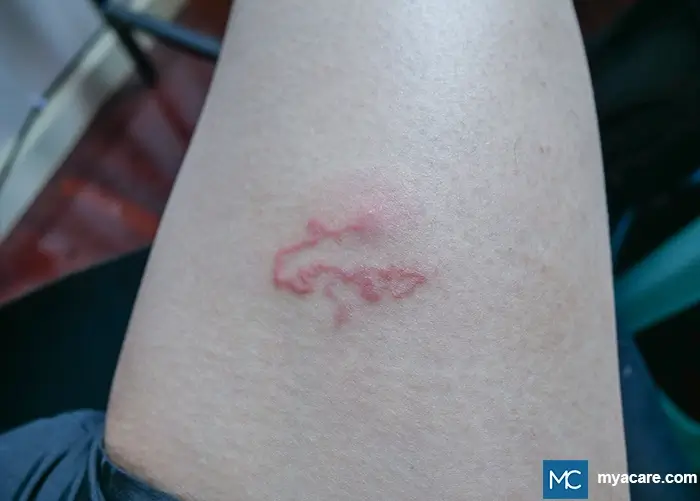
Lesion Progression Over Time
Within a few days of infection, the larvae begin to migrate through the epidermis. The rash typically has a slow progression rate of less than 1 to 2 cm per day, varying with the larva's depth and activity. It may appear in new areas while fading in others, giving the illusion of a moving, twisting pattern. The path of the rash is often itchy and inflamed, and scratching can worsen symptoms or lead to bacterial infection.
Other Possible Symptoms
While the main symptom is intense itching (pruritus), which often worsens at night, burning or stinging sensations can also occur. The area may become swollen or blistered. Some people report intermittent pain, which “comes and goes” as the larva shifts position beneath the skin or the immune system reacts. Although the condition is generally not dangerous, it can cause significant discomfort and disturbed sleep.
Complications
Although cutaneous larva migrans is typically not painful, discomfort and burning sensations may arise as the immune system reacts to the larvae. In some patients, a secondary infection, typically involving Streptococcus pyogenes, may result in cellulitis.
In rare cases, especially with heavy or repeated exposure, complications can include:
- Secondary bacterial infections from excessive scratching.
- Allergic reactions, including hives.
- Very rarely, the larvae may migrate deeper or trigger Löffler’s syndrome, a mild form of pulmonary involvement in which larvae reach the lungs, causing coughing, wheezing, and eosinophilia. This is extremely uncommon with CLM, as the larvae typically remain confined to the skin in humans.
Cutaneous Larva Migrans: Black Spots and White Spots
Some patients may notice tiny black spots (residual inflammation, pinpoint scabs, or secondary infection) or white spots (post-inflammatory hypopigmentation) along or around the lesion. These are not common primary symptoms of CLM but can appear during healing or due to scratching and skin damage.
Diagnosis
Clinical Diagnosis: Appearance and Exposure History
Cutaneous larva migrans is primarily a clinical diagnosis, meaning it is typically identified based on the appearance of the rash and a history of relevant exposure, such as recent travel to tropical or subtropical regions, barefoot walking on beaches, or contact with soil contaminated by animal feces. The classic red, serpiginous (snake-like) track that migrates over time is highly characteristic of CLM.
Other Diagnostic Tools
While a visual examination is often sufficient, certain non-invasive tools may assist in uncertain or atypical cases:
- Dermoscopy can help visualize the larval tracks beneath the skin more clearly, revealing linear or branching structures.
- Optical Coherence Tomography (OCT) and Reflectance Confocal Microscopy (RCM) are advanced imaging techniques that can provide high-resolution views of the larva in the skin, although they are not widely available.
- Serological tests (blood tests detecting antibodies) are rarely used because they are non-specific and may not be very helpful for localized cutaneous infections.
Why Biopsy Is Not Recommended
A skin biopsy is generally not useful or recommended for diagnosing CLM. The larvae tend to move quickly and erratically, and by the time the biopsy is taken, the parasite has often moved on from the sampled area. This makes it difficult to detect the larvae histologically. Biopsy may also lead to unnecessary scarring and discomfort without adding diagnostic value.
Differential Diagnosis: Conditions That Can Mimic CLM
Because of its unusual presentation, CLM may be confused with other skin conditions. Here's how it compares:
- Cutaneous Larva Migrans vs. Larva Currens:
Larva currens, caused by Strongyloides stercoralis, produces faster-moving rashes (up to 10 cm per hour), usually around the buttocks and groin. CLM moves slowly (mm to cm per day) and typically affects the feet or legs. - Cutaneous Larva Migrans vs. Scabies:
Scabies causes intensely itchy, linear burrows, but they are much shorter and usually found on the fingers, wrists, elbows, and genitals. Unlike CLM, scabies burrows do not migrate visibly over time. - Visceral vs. Cutaneous Larva Migrans:
Visceral larva migrans occurs when Toxocara species larvae migrate through internal organs, not the skin. It can cause fever, coughing, abdominal pain, and vision problems, but not the creeping skin rash seen in CLM. - Dracunculiasis vs. Cutaneous Larva Migrans:
Dracunculiasis, caused by the Guinea worm (Dracunculus medinensis), is acquired through contaminated water, and the worm emerges slowly from a blister, usually on the leg. Unlike CLM, it does not cause a moving rash, and the worm is much larger and visible upon emergence. - Cutaneous Larva Migrans vs. Eczema
Especially in early or atypical stages, CLM may resemble eczema, contact dermatitis, or tinea corporis (ringworm) due to redness, inflammation, and itchiness. However, eczema does not progress in a linear or creeping pattern and lacks the serpiginous tracks of CLM.
Treatment
CLM is generally self-limiting, meaning the larvae eventually die within 4 to 8 weeks, and the rash resolves without treatment. However, because of intense itching, the risk of secondary bacterial infection, and prolonged discomfort, medical treatment is highly recommended.
Antiparasitic Medications
The cornerstone of treatment involves oral antiparasitic drugs, which effectively kill the migrating larvae and rapidly relieve symptoms:
- Albendazole: 400 mg once daily for 3–5 days.
- Ivermectin: A single oral dose of 200 µg/kg.
These medications are generally well tolerated, with most patients reporting symptom relief within 48 to 72 hours.
Topical Treatments
For mild or localized infections, topical antiparasitics may be considered:
- Thiabendazole 10–15% cream: Applied 2–3 times daily for 5–10 days.
However, topical treatments are often less effective since the migrating larvae can quickly move beyond the treated area.
Symptom Relief
To manage associated irritation and discomfort:
- Oral antihistamines reduce itching.
- Topical corticosteroids may help alleviate inflammation but should be used with caution.
- Clean the area regularly to prevent infection due to scratching.
Home Remedies and Their Limitations
While some may turn to home remedies such as garlic paste, vinegar, or herbal applications, these are not clinically proven to stop larval migration or eradicate the parasite. Worse, they may irritate the skin further or lead to infection.
Keeping the skin cool, wearing loose clothing, and avoiding scratching may offer minor symptomatic relief, but prescription antiparasitic medications remain the most effective option.
How long does Cutaneous Larva Migrans last?
- With treatment: Using antiparasitic medication, symptoms usually improve within 2 to 3 days, and the rash clears in 1 to 2 weeks.
- Without treatment: The rash may persist for 4–8 weeks or longer before the larvae die and symptoms resolve on their own.
What to Avoid and Why
- Cryotherapy (freezing): Previously used but now discouraged. Larvae migrate quickly, making it difficult to freeze the right area. It may result in damaged skin or visible scars.
- Scratching: Increases the risk of bacterial infection and potential permanent scarring.
When to Seek Medical Help
While the condition often resolves on its own, it is important to know when medical attention is necessary. You should see a doctor promptly if you experience:
- Persistent or Worsening Rash:
If the rash continues to spread, becomes more inflamed, or does not begin to improve within a few days, medical treatment may be required to eliminate the larvae and relieve symptoms. - Severe Itching or Discomfort:
Severe itching or discomfort can interfere with sleep, concentration, and daily activities. Seeking medical attention is crucial when symptoms become difficult to manage, as it can help protect the skin and enhance well-being.
- Signs of Infection:
Intense scratching can break the skin, leading to secondary bacterial infections. Watch for:- Pus or oozing from the lesion
- Fever or chills
- Increasing redness, warmth, or swelling around the rash
- Recent Travel to Endemic Areas:
If you have traveled to tropical or subtropical regions such as the Caribbean, Southeast Asia, or South America and develop a red, itchy, or migrating skin lesion, consult a healthcare provider. A travel history is a key clue in diagnosing CLM.
Prevention Tips
Taking simple precautions, especially when traveling to or living in tropical and subtropical areas, can significantly reduce the risk of cutaneous larva migrans. Here are some effective strategies:
- Avoid walking barefoot on beaches or soil in endemic areas:
Wearing shoes or sandals when walking outdoors can provide essential protection against skin contact with infected soil. - Use barriers, such as beach mats or towels, when sitting or lying down:
Direct contact with contaminated sand or soil is a key route of transmission. Always use a mat, towel, or blanket as a barrier when sunbathing or resting on the ground, especially on beaches in high-risk areas. - Ensure pets are regularly dewormed:
Regular deworming of dogs and cats helps reduce environmental contamination with infective larvae. Proper disposal of animal waste and maintaining clean surroundings can limit the spread of hookworm eggs and larvae. Raising public awareness and encouraging responsible pet care are key to prevention. - Consider travel precautions when visiting endemic regions:
If you are planning to travel to tropical destinations, research the risk of CLM in the area. Pack appropriate footwear, plan for safe outdoor activities, and consider consulting a travel health clinic for region-specific advice.
Frequently Asked Questions (FAQ)
1. Does Neosporin treat cutaneous larva migrans?
No, Neosporin is an over-the-counter antibiotic ointment that prevents or treats bacterial skin infections. It does not kill parasites and is ineffective against CLM. However, it may be used to prevent secondary bacterial infections if the skin has been scratched.
2. Does Permethrin kill cutaneous larva migrans?
Permethrin is an antiparasitic cream effective for lice and scabies, but it is not effective against CLM. The larvae that cause CLM are deeper in the skin and require oral antiparasitics, such as albendazole or ivermectin.
3. How do you treat cutaneous larva migrans during pregnancy?
During pregnancy, treatment must be approached with caution. Topical thiabendazole may be considered in mild cases, as it poses a lower systemic risk. Oral antiparasitic medications like albendazole and ivermectin are generally avoided in the first trimester but may be used in later stages under medical supervision. Always consult a healthcare provider for safe, individualized treatment during pregnancy.
To search for the best Dermatology Healthcare Providers in Croatia, Germany, Greece, India, Malaysia, Singapore, Slovakia, Spain, Thailand, Turkey, Ukraine, the UAE, UK, the USA, please use the Mya Care search engine.
The Mya Care Editorial Team comprises medical doctors and qualified professionals with a background in healthcare, dedicated to delivering trustworthy, evidence-based health content.
Our team draws on authoritative sources, including systematic reviews published in top-tier medical journals, the latest academic and professional books by renowned experts, and official guidelines from authoritative global health organizations. This rigorous process ensures every article reflects current medical standards and is regularly updated to include the latest healthcare insights.

Dr. Sony Sherpa completed her MBBS at Guangzhou Medical University, China. She is a resident doctor, researcher, and medical writer who believes in the importance of accessible, quality healthcare for everyone. Her work in the healthcare field is focused on improving the well-being of individuals and communities, ensuring they receive the necessary care and support for a healthy and fulfilling life.
References:
Featured Blogs

Medically Induced Coma: What It Is, How It Works & Recovery