
Metabolic Syndrome Explained: Symptoms, Risks, and Treatment

Edited by the Mya Care Editorial Team - November 03, 2026
Key Takeaways
- Metabolic syndrome defines a set of metabolic abnormalities that elevate the risk of type 2 diabetes, cardiovascular disease, and other health complications.
- Diagnosis requires at least three of five criteria: abdominal obesity, elevated blood pressure, high fasting glucose, elevated triglycerides, and low HDL cholesterol.
- Insulin resistance, excess visceral fat, genetics, aging, poor sleep, and lifestyle factors contribute to metabolic syndrome, which often develops without noticeable symptoms.
- Management combines weight control, balanced nutrition, regular exercise, adequate sleep, and medications or surgery when indicated.
- Emerging approaches include continuous glucose monitoring-based risk prediction, newer obesity medications, digital interventions, and integrated cardiovascular-kidney-metabolic care.
Introduction
Metabolic syndrome, formerly known as Syndrome X, refers to a group of interlinked metabolic abnormalities that raise the risk of type 2 diabetes and cardiovascular disease. Metabolic syndrome can present with subtle symptoms in its early stages.
A person may feel well even as underlying metabolic dysfunction progresses, making routine blood pressure, glucose, lipid, and waist circumference measurements important. Metabolic syndrome disorders may develop gradually, which is why prevention should take priority over waiting for symptoms.
The worldwide burden is significant and trending upwards. A recent comprehensive review and modeling study of more than 45 million persons found that metabolic syndrome prevalence grew from 11.9% in 2000 to 28.4% in 2023, affecting nearly 1.54 billion adults worldwide. In 2023, the prevalence was 31.0% for women and 25.7% for men. These figures reflect the rising global prevalence of obesity, diabetes, hypertension, and cardiovascular disease.
The diagnostic criteria and reported prevalence of metabolic syndrome vary depending on the terminology used and the population studied. Understanding these criteria, recognizing signs of poor metabolic health, and addressing modifiable risk factors, such as diet, physical activity, sleep, and excess weight, are essential to potentially reverse metabolic syndrome.
What Is Metabolic Syndrome?
Metabolic syndrome, also known as Syndrome X, insulin resistance syndrome, or dysmetabolic syndrome, is a collection of interconnected metabolic disorders that raise the risk of cardiovascular disease and type 2 diabetes. Gerald Reaven coined the name "Syndrome X" to characterize the relationship between insulin resistance, hyperinsulinemia, glucose intolerance, hypertension, and hyperlipidemia.
Metabolic syndrome is characterized by an increased waist circumference, elevated triglycerides, low HDL cholesterol, high blood pressure, and high fasting blood glucose levels. The presence of at least three of these five components meets the criteria for a diagnosis of metabolic syndrome.
These metabolic abnormalities are interconnected disturbances that affect adipose tissue, glucose regulation, lipid metabolism, and vascular function. Although insulin resistance is strongly associated with metabolic syndrome, it is not required for diagnosis because direct testing is not practical in routine clinical settings.
The ensuing metabolic imbalance is clinically significant because different components can interact to increase cardiometabolic risk. Recognizing these abnormalities early allows you to address modifiable metabolic disorders before they advance to diabetes or heart disease.
What Are the Symptoms of Metabolic Syndrome?
Metabolic syndrome symptoms are often subtle or absent, particularly in the early stages. Many of its components, hypertension, dyslipidemia, and early dysglycemia, may be clinically asymptomatic and only diagnosed by routine tests. A noticeable rise in waist circumference may be a crucial indicator, but hyperglycemia can bring symptoms such as increased thirst, frequent urination, lethargy, and impaired vision.
Body Shape and Central Adiposity
An apple-shaped body with higher abdominal or visceral fat deposition is more strongly associated with cardiometabolic risk than a pear-shaped distribution centered on the hips or thighs. However, body form alone cannot identify metabolic syndrome.
Signs of Insulin Resistance
Certain skin-related findings may provide significant clinical information. Acanthosis nigricans, characterized by velvety hyperpigmentation, and numerous skin tags (acrochordons) are both linked to insulin resistance and decreased glucose metabolism. These symptoms are sometimes referred to as metabolic syndrome skin signs and may require additional metabolic testing.
Difficulty Losing Weight
Some people have persistent excess weight or struggle to lose it, especially if they have insulin resistance. Nonetheless, trouble losing weight is a general symptom of metabolic syndrome and should not be used to diagnose the condition.
Causes and Risk Factors of Metabolic Syndrome
Metabolic syndrome is caused by a complex interaction of genetic, metabolic, and environmental variables rather than a single cause. Insulin resistance is a key mechanism: impaired insulin signaling leads to compensatory hyperinsulinemia, aberrant glucose and lipid metabolism, and progressive metabolic dysfunction, increasing the risk of obesity, type 2 diabetes, and prediabetes.
Other Risk Factors
-
Excess visceral fat
Visceral adipose tissue surrounds abdominal organs and has a higher metabolic rate than subcutaneous fat beneath the skin. Excess visceral fat is closely related to insulin resistance, inflammation, and metabolic syndrome.
-
Chronic inflammation
Dysfunctional adipose tissue can cause continuous low-grade inflammation, which contributes to insulin resistance, as well as vascular and metabolic problems.
-
Hormonal factors
Hormonal conditions, such as endocrine diseases that affect glucose or lipid metabolism, might raise cardiometabolic risk.
-
Genetic factors
Genetic predisposition influences insulin sensitivity, adipose distribution, lipid metabolism, and blood pressure regulation, although environmental factors are also relevant.
-
Poor sleep
Short or interrupted sleep, as well as sleep disorders such as obstructive sleep apnea, are linked to an increased metabolic risk.
-
Sedentary lifestyle and stress
Physical inactivity and persistent psychosocial stress can lead to weight gain, insulin resistance, and poor metabolic health. Metabolic syndrome is thus better classified as a hypokinetic lifestyle-related disorder rather than a hyperkinetic condition.
-
Aging
Changes in body composition, physical activity, insulin sensitivity, and vascular health all contribute to an increase in risk as people age.
-
Ethnicity and ancestry
Metabolic risk varies by ethnicity and ancestry, with certain groups experiencing central obesity and anomalies at lower BMI or waist circumference. South Asian populations had higher cardiometabolic risk even with lower levels of adiposity.
These factors commonly interact; therefore, metabolic syndrome risk is determined by a combination of obesity, insulin resistance, lifestyle, genetics, sleep, age, and social and environmental factors.
Conditions and Complications Linked to Metabolic Syndrome
Metabolic syndrome is connected with a wide range of metabolic diseases and long-term consequences. Its primary effects include a higher risk of type 2 diabetes, cardiovascular disease, and stroke, as well as metabolic dysfunction-associated steatotic liver disease (MASLD), chronic renal disease, obstructive sleep apnea, and gout.
Dyslipidemia is a central feature of the condition, and chronic metabolic abnormalities may contribute to progressive end-organ damage and, indirectly, osteoarthritis via obesity and mechanical loading.
Metabolic syndrome has been linked to dementia through vascular and metabolic pathways. However, the causality and significance of individual components are still being investigated. Metabolic dysfunction and related diseases, including MASLD, have been linked to an elevated risk of some malignancies; nonetheless, metabolic syndrome should not be considered a direct cause of cancer.
Metabolic Syndrome: Women's Health vs. Men’s Health
In women, the metabolic abnormalities associated with metabolic syndrome closely resemble those seen in PCOS/PMOS (Polyendocrine Metabolic Ovarian Syndrome), and the condition is also linked to reduced reproductive function. Adiposity, insulin resistance, and dyslipidemia may worsen during the menopausal transition and after menopause, increasing the risk of cardiometabolic disease.
Whereas, in men, metabolic syndrome is linked to reduced testosterone levels, impaired sperm quality, and an increased risk of erectile dysfunction. These relationships appear to be due to the combined impact of obesity, insulin resistance, vascular dysfunction, and other metabolic abnormalities.
How Is Metabolic Syndrome Diagnosed?
Metabolic syndrome is diagnosed using a mix of anthropometric measurements, blood pressure monitoring, and laboratory testing, rather than a single diagnostic test. The harmonized international definition includes metabolic syndrome when any three of the five risk factors are detected. The clinical evaluation involves measuring blood pressure and waist circumference, as well as blood tests for fasting glucose, triglycerides, and HDL cholesterol.
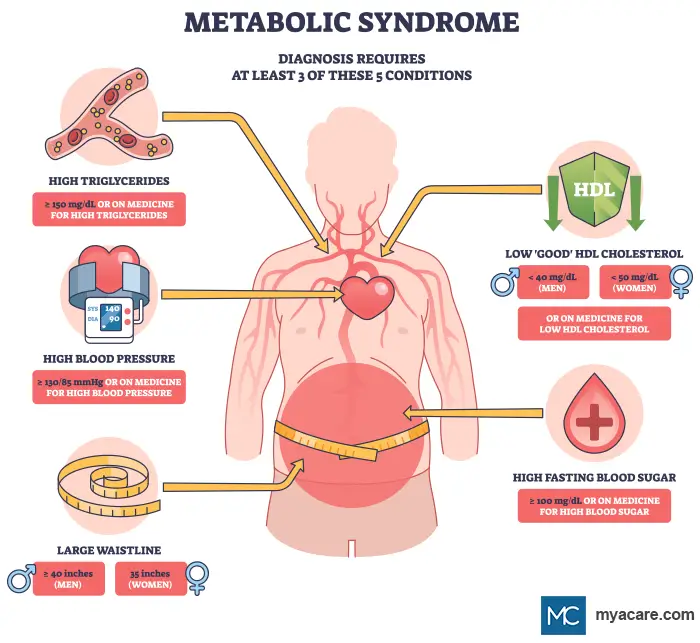
Diagnostic Criteria
| Risk factor | Diagnostic threshold |
| Waist circumference | Population- and ethnicity-specific thresholds; commonly ≥102 cm in men or ≥88 cm in women in US populations |
| Blood pressure | ≥130/85 mmHg or antihypertensive treatment |
| Fasting glucose | ≥100 mg/dL or glucose-lowering treatment |
| Triglycerides | ≥150 mg/dL or lipid-lowering treatment |
| HDL cholesterol | <40 mg/dL in men or <50 mg/dL in women, or treatment for low HDL |
The waist circumference criteria should be interpreted based on the appropriate demographic or ethnicity, as cardiometabolic risk varies with central adiposity levels. Lower waist thresholds, for example, are widely used among Asian cultures. Diagnosis should also include therapy of an established abnormality, which might be considered a positive criterion even if the measured value is currently below the threshold.
Differential Diagnosis
When examining a patient, it is important to look for conditions that can cause overlapping features of metabolic dysfunction. These include:
-
Cushing’s syndrome
Excess cortisol can contribute to central weight gain, hypertension, elevated blood sugar, and insulin resistance. Unlike typical metabolic syndrome, Cushing’s syndrome may also cause easy bruising, purple stretch marks, and muscle weakness.
-
Hypothyroidism
Reduced thyroid function can contribute to weight gain and elevated cholesterol and triglyceride levels. Fatigue, cold intolerance, and constipation may also occur. Hypothyroidism is distinguished by reduced thyroid hormone production and can be evaluated using thyroid function tests.
-
Polyendocrine metabolic ovarian syndrome
PMOS (previously known as PCOS) shares features with metabolic syndrome, particularly insulin resistance, abdominal adiposity, and an increased risk of type 2 diabetes. However, PMOS/PCOS is associated with reproductive and hormonal features, such as irregular menstrual cycles, excess androgen levels, and ovulatory dysfunction.
-
Lipodystrophy syndromes
These rare conditions involve the partial or widespread loss of adipose tissue. Despite reduced body fat in affected areas, people may develop severe insulin resistance, elevated triglycerides, fatty liver disease, and diabetes. The unusual distribution or loss of body fat helps distinguish lipodystrophy from typical metabolic syndrome.
Clinical history, examination, and targeted investigations, including hormonal and metabolic tests, can assist in differentiating these conditions from metabolic syndrome and find potentially treatable secondary causes.
Metabolic Syndrome Treatment
No single medication can treat all aspects of metabolic syndrome. Management is individualized and focuses on addressing high blood pressure, glycemic imbalances, lipid abnormalities, excess adiposity, and sleep disorders while reducing the overall risk of cardiovascular disease and diabetes.
Medical Treatment
-
High blood pressure
Antihypertensive therapy is selected according to blood-pressure level, kidney function, diabetes status, cardiovascular risk, and other comorbidities. Sustained blood-pressure control is central to reducing cardiovascular and renal complications.
-
Diabetes and insulin resistance
Prediabetes is primarily addressed through intensive lifestyle intervention and weight reduction. When type 2 diabetes develops, glucose-lowering therapy is individualized; metformin remains an established option, while agents with cardiovascular or weight-loss benefits may be appropriate for selected patients.
-
Cholesterol abnormalities
Statins are the principal pharmacological treatment for elevated LDL cholesterol and are prescribed according to overall cardiovascular risk. Triglyceride management may require additional lifestyle measures or medications in selected high-risk patients.
-
Weight-loss medications
For eligible individuals with overweight or obesity, anti-obesity pharmacotherapy can complement diet and physical activity. GLP-1 receptor agonists and related incretin therapies can produce clinically meaningful reductions in body weight and waist circumference.
Surgery may be considered for appropriately selected patients with severe obesity when lifestyle and pharmacological approaches are insufficient. It can produce substantial and durable weight loss and improve several metabolic abnormalities.
-
Sleep disorders
Obstructive sleep apnea should be recognized and treated, commonly with positive airway pressure when indicated. Insomnia and inadequate sleep should also be addressed through behavioral and sleep-focused interventions.
How to Improve Metabolic Syndrome Naturally
Weight management plays an important role in managing metabolic syndrome. In order to significantly improve cardiometabolic risk variables, such as glucose control, blood pressure, triglycerides, and waist circumference, a reduction of around 5–10% of the starting body weight may help improve these risk factors. The process of losing weight needs to be progressive, sustainable, and tailored rather than being focused on diets that are too restrictive.
Aerobic activity that ranges from moderate to vigorous intensity should be combined with resistance training during exercise. Resistance exercise can maintain or increase lean mass, while aerobic exercise can improve cardiorespiratory fitness and metabolic health. High-intensity interval training, or HIIT, has the potential to alleviate numerous aspects of metabolic syndrome and can be an effective alternative for people who have been thoroughly assessed.
Improving Diet
Dietary patterns that prioritize vegetables, fruits, legumes, whole grains, high-fiber foods, adequate protein, nuts, seeds, and unsaturated fats are recommended over those high in processed foods. Both the Mediterranean and DASH (Dietary Approaches to Stop Hypertension) diets have demonstrated benefits in lowering blood pressure, glycemia, lipid profiles, and overall cardiometabolic risk. The consumption of ultra-processed meals, beverages sweetened with sugar, an excessive amount of refined carbs, and an excessive amount of saturated fat should be restricted.
Since the gut microbiome is a relatively new area of metabolic research, microbiome-focused diets or supplements cannot yet be considered a recognized therapy for metabolic syndrome. Similarly, time-restricted eating and intermittent fasting may offer benefits for certain individuals. A 2024 randomized trial found that incorporating a personalized 8–10-hour eating window into standard care led to a modest improvement in HbA1c over three months. However, further research is needed to establish the long-term benefits.
Does coffee consumption lower metabolic syndrome risk?
Coffee is not an established treatment for metabolic syndrome but may be consumed in moderation based on individual tolerance. Some studies suggest that a moderate intake of coffee may be associated with a lower prevalence of metabolic syndrome. However, findings remain inconsistent, and there is insufficient evidence to establish that coffee consumption directly reduces this risk. The association may also vary depending on the amount and type of coffee consumed.
Sleep and Stress Management
Adequate sleep, both in duration and quality, is essential to metabolic health. Unaddressed sleep deprivation and sleep apnea can negatively affect appetite regulation, glucose metabolism, blood pressure, and weight management. Stress management approaches, including structured behavioral interventions, mindfulness, relaxation techniques, and, when appropriate, psychotherapy, may help individuals maintain healthy habits and improve psychological well-being.
In general, effective reversal of metabolic syndrome should be viewed as long-term risk reduction rather than a quick cure. To sum up, an optimal approach should include sustained weight management, physical activity, a cardioprotective food pattern, appropriate sleep, stress management, and evidence-based pharmaceutical or surgical treatment when clinically indicated.
Emerging Research and Future Treatments
Metabolic syndrome research is shifting away from the classic risk-factor paradigm toward integrated, technology-enabled, cardiovascular-kidney-metabolic (CKM) approaches. Recent studies have addressed emerging contributors, biomarkers, diagnostic techniques, and long-term repercussions. At the same time, it has been emphasized that metabolic syndrome is a heterogeneous disorder that requires a personalized risk assessment.
Continuous Glucose Monitoring and Machine Learning
It is possible that continuous glucose monitoring (CGM) can provide information regarding glucose variability and postprandial reactions that is not captured by standard fasting glucose or HbA1c assays. CGM and other longitudinal health data could potentially provide tailored metabolic-risk prediction and support earlier diagnosis of dysglycemia. This would be possible when combined with machine-learning technologies. These applications are still exploratory and need validation in large, diverse clinical populations.
Lifestyle Interventions
Lifestyle change remains essential for reducing metabolic risk, despite advancements in medication. Diet, physical exercise, and behavioral therapies were shown to be cornerstone strategies across the spectrum of CKM, according to an expert panel report. A randomized clinical trial conducted in 2026 found that a structured, habit-based lifestyle program achieved a higher rate of sustained metabolic syndrome remission at 24 months than education and activity monitoring alone (27.8% versus 21.2%).
Newer Obesity Medicines
In addition to GLP-1 receptor agonists, the treatment landscape is evolving to include dual and triple incretin medicines that target GLP-1, GIP, and/or glucagon pathways. Agents such as tirzepatide and experimental agents such as retatrutide have demonstrated significant impacts on glycemic and metabolic indices, as well as body weight. Nevertheless, collecting longer-term data on cardiovascular, renal, and safety outcomes, in addition to the provision of affordable and equitable access, continues to be a significant research priority.
Digital and Behavioral Interventions
Access to lifestyle support may be improved through the use of digital health platforms, remote monitoring, mobile applications, and behavior-change interventions. These may also permit continuous monitoring of physical activity, diet, weight, and metabolic markers. Digital technologies may be most useful when combined with individualized clinical and behavioral support, rather than serving as a replacement for clinician-directed treatment.
The Cardiovascular-Kidney-Metabolic (CKM) Approach
The emerging cardiovascular-kidney-metabolic (CKM) framework integrates obesity and other metabolic risk factors, chronic kidney disease, and cardiovascular disease across a continuum of disease stages. The 2026 AHA/ACC/ADA/ASN guideline recommends CKM staging as a means of identifying risk, guiding the intensity of preventive measures and therapy, and promoting stage regression through lifestyle modification and weight control. This approach shifts clinical care from fragmented, specialty-based management toward coordinated, interdisciplinary prevention throughout the lifespan.
Myths and Misconceptions
Myth 1: Only People With Obesity Get Metabolic Syndrome
Metabolic syndrome is a condition that can manifest in people with a normal body mass index (BMI), including those classified as lean (BMI below 25 kg/m²) – a phenotype referred to as metabolically obese normal weight (MONW). In spite of the fact that they appear to be in good health, some people who are of normal weight have excess visceral or ectopic fat, insulin resistance, dyslipidemia, or increased blood pressure at the same time. It is therefore important to take into consideration waist circumference and laboratory risk variables in addition to body mass index, which is not a reliable marker of metabolic health.
Myth 2: Metabolic Syndrome Is the Same As Diabetes
Diabetes and metabolic syndrome are not interchangeable terms. In contrast to diabetes, which is a particular condition characterized by persistent hyperglycemia, metabolic syndrome is a clustering of risk factors for cardiometabolic disease. The chance of acquiring type 2 diabetes is increased in individuals who have metabolic syndrome; nonetheless, it is possible for a person to have metabolic syndrome without having diabetes.
Myth 3: Metabolic Syndrome Is Only a Problem for Older Adults
Metabolic syndrome can occur in younger persons, particularly in the presence of central obesity, physical inactivity, insulin resistance, poor diet, sleep disturbances, or genetic vulnerability. In general, the risk of developing metabolic syndrome increases with age. Early identification of risk factors allows for prompt intervention and management before diabetes or cardiovascular disease develops.
Myth 4: Medication Alone Can Fix It
No single medication can treat all aspects of metabolic syndrome or ensure its complete resolution. Treatment focuses on managing individual metabolic conditions and may include antihypertensive, lipid-lowering, glucose-lowering, or anti-obesity medications, depending on individual needs. Lifestyle modifications, including a balanced diet, regular physical activity, weight management, and adequate sleep, remain essential components of care and are generally recommended alongside pharmacological treatment.
Frequently Asked Questions
Is metabolic syndrome a disease?
Rather than considering it a single disease, metabolic syndrome is best viewed as a collection of risk factors associated with cardiometabolic disease. Central adiposity, raised blood pressure, dysglycemia, hypertriglyceridemia, and low HDL cholesterol are the components that, when taken together, define individuals who are at an increased risk of developing type 2 diabetes and cardiovascular disease.
What are nutritional metabolic disorders?
Inadequate, excessive, or imbalanced nutrient intake can lead to nutritional metabolic disorders. The disorders falling under this category include those related to obesity, nutrient deficits, dysglycemia, and aberrant lipid metabolism. Even while diet and nutritional status have a significant impact on the development and management of metabolic syndrome, the term "metabolic syndrome" does not refer to a nutritional condition in and of itself.
Can metabolic syndrome be prevented?
Indeed. Maintaining a healthy weight, adhering to a cardioprotective eating pattern, getting sufficient sleep, engaging in regular physical activity, and keeping blood pressure and cholesterol under control are vital components of prevention.
What supplements are recommended for people with metabolic syndrome?
There are no supplements that are expressly indicated to reverse metabolic syndrome. It is typically recommended that supplements be used to rectify deficiencies that have been documented or for specific clinical causes. Supplements should not be used as a replacement for evidence-based approaches involving diet, exercise, or medication. There is inadequate evidence to support the claim that taking dietary supplements on a regular basis can reduce cardiovascular disease or death, according to large systematic studies.
How long do people live with metabolic syndrome?
Metabolic syndrome does not consistently affect average individual lifespan. The outlook depends on the intensity and duration of each associated component, as well as how those components are managed. On the other hand, metabolic syndrome is linked to an increased risk of all-cause mortality; a meta-analysis of prospective studies discovered that those with metabolic syndrome have a relative risk of death from any cause that is roughly 46% greater than those who do not have the syndrome. The reduction of long-term risk can be accomplished through the effective management of blood pressure, lipids, glucose, weight, and lifestyle.
Can metabolic syndrome be reversed?
Some people can reverse metabolic syndrome, particularly if they stick to a weight-loss regimen, exercise regularly, and improve their nutrition. Indeed, a more recent meta-analysis suggests that combining nutrition and activity therapies may be particularly effective. This syncs with the findings of a systematic review, which revealed that lifestyle interventions were more likely to achieve reversal than conventional lifestyle education or no treatment. Improvement is dependent on baseline metabolic abnormalities, weight change, adherence, genetics, and treatment. The timeframe required for reversing metabolic syndrome is difficult to determine. Therefore, rather than expecting a fixed timeframe for resolution, regular clinical and laboratory reassessments are recommended to monitor progress.
To search for the best Endocrinology Healthcare Providers and Doctors in Germany, India, Malaysia, the UAE, the UK, and the USA, please use the Mya Care search engine.
To search for the best Cardiology Healthcare Providers and Doctors in Germany, India, Indonesia, Malaysia, Spain, Thailand, the UAE, the UK and the USA, please use the Mya Care Search engine.
To search for the best doctors and healthcare providers worldwide, please use the Mya Care search engine.

Dr. Asif Baliyan is a doctor and clinical researcher with over a decade of experience in evidence-based diagnostic medicine. A Consultant at a tertiary care hospital in New Delhi, he also serves as a medical reviewer, ensuring healthcare content remains accurate, ethical, and aligned with current clinical guidelines.
The Mya Care Editorial Team comprises medical doctors and qualified professionals with a background in healthcare, dedicated to delivering trustworthy, evidence-based health content.
Our team draws on authoritative sources, including systematic reviews published in top-tier medical journals, the latest academic and professional books by renowned experts, and official guidelines from authoritative global health organizations. This rigorous process ensures every article reflects current medical standards and is regularly updated to include the latest healthcare insights.
References:
Featured Blogs

Medically Induced Coma: What It Is, How It Works & Recovery