
Colorectal Surgery Advances: Reducing Leak Risk, Avoiding Stomas
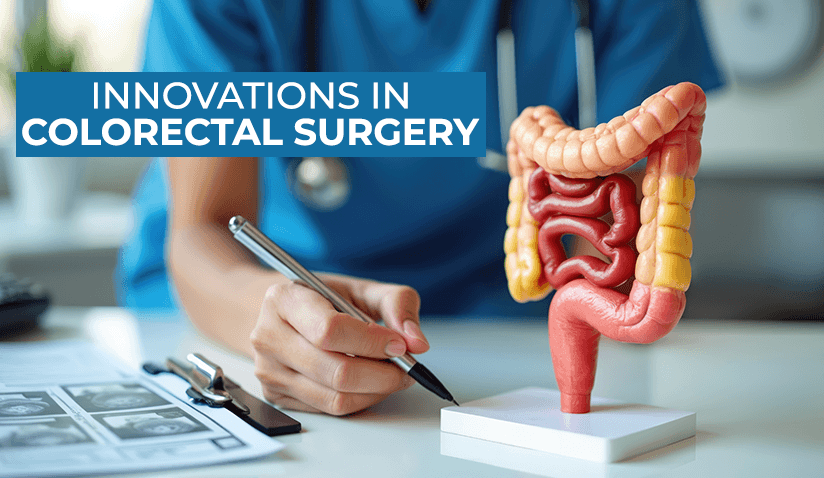
Anastomotic Leaks & the Stoma Dilemma
Advances in Reducing Leak Risk
Key Takeaways
- Advances in colorectal surgery, including minimally invasive techniques, improved stapling devices, and fluorescence-guided imaging, may help reduce complications and support safer bowel reconstruction.
- Anastomotic leakage remains a concern, with risk influenced by patient health, tissue blood supply, surgical complexity, and healing conditions.
- Preoperative optimization, nutritional support, intraoperative testing, and enhanced recovery protocols help improve surgical care and recovery.
- Temporary stomas may reduce the consequences of leakage, while permanent stomas may be necessary when safe reconstruction is not feasible.
- Emerging technologies offer potential benefits, but further clinical evidence is needed to establish their effectiveness.
Introduction
Colorectal surgery has advanced considerably, with minimally invasive techniques, improved imaging, modern stapling devices, and enhanced recovery protocols helping surgeons manage complex bowel conditions more safely. Yet two challenges remain significant: anastomotic leakage and the need for a temporary or permanent stoma.
New technologies help surgeons assess tissue blood supply, improve anastomotic precision, and identify patients who may benefit from protective diversion. However, no single technique eliminates leakage risk, and avoiding a stoma is not always safest.
This article examines advances that may reduce complications and how surgeons balance safe reconstruction with patients' preferences and quality of life.
Anastomotic Leaks and the Stoma Dilemma
What Is an Anastomotic Leak?
An anastomotic leak occurs when an anastomosis – a surgical connection between two structures – fails to contain bowel contents, allowing intestinal fluid, bacteria, or gas to escape into surrounding tissues. Causes include inadequate blood supply, excessive tension, technical problems, or impaired healing.
In colorectal surgery, anastomosis usually involves joining the remaining ends of the colon or connecting the colon to the rectum or anus after removing a diseased section. Indications for anastomosis include colorectal cancer, diverticular disease, bowel obstruction, and selected inflammatory conditions. For example, a low anterior resection of part or all of the rectum that preserves the anal sphincter allows the remaining colon to be connected to the lower rectum or anus.
Leak incidence varies by procedure, patient characteristics, definitions, and follow-up duration. Reviews cite approximately 3–19% across colorectal resections, though some procedures fall outside this range. Low rectal anastomoses generally carry a greater risk than many colonic anastomoses.
Leaks can lead to intra-abdominal infection, abscess, sepsis, prolonged hospitalization, additional procedures, or emergency surgery. Severe cases can be life-threatening. They can also compromise long-term outcomes and increase the likelihood of a permanent stoma.
Understanding Temporary and Permanent Stomas
A stoma is an opening made surgically to direct bowel contents into an external bag. Depending on the operation, it may involve the small intestine (an ileostomy) or large intestine (a colostomy).
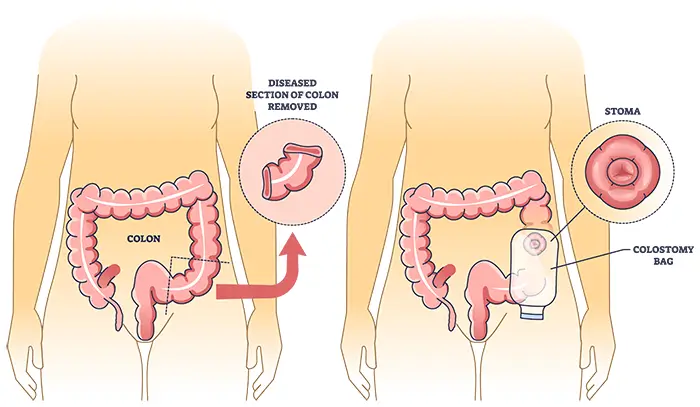
Stomas may be necessary when surgeons cannot safely reconnect the bowel, a join needs protection while healing, or complications make normal stool passage unsafe.
A temporary diverting ileostomy redirects bowel contents away from a low colorectal or coloanal anastomosis, reducing the consequences – not necessarily the occurrence – of a leak.
A permanent stoma may be needed if cancer clearance requires anal sphincter removal, sphincter function is inadequate, or reconstruction is unsafe or unsuccessful.
Temporary stomas can often be reversed, but closure requires another operation and may be delayed by complications, further treatment, or poor recovery. Some are never reversed.
Stomas can affect body image, intimacy, travel, and daily life; high-output ileostomies may cause dehydration and electrolyte imbalance. Therefore, stoma avoidance matters, but surgical safety remains paramount.
What Increases the Risk of Anastomotic Leakage?
Leakage is usually multifactorial. Preoperative risk assessment helps surgeons plan treatment, optimize the patient, and decide whether a protective stoma is appropriate.
Patient-Related Factors
The following factors may impair healing or increase postoperative complications:
- Smoking
- Poor nutritional status
- Diabetes
- Obesity
- Frailty
- Significant cardiovascular or respiratory disease
- Anemia
- Immunosuppression, including treatment with corticosteroids in selected patients
Where possible, preoperative care should address smoking cessation, glycemic control, nutritional deficiencies, anemia, and physical deconditioning. These measures cannot eliminate risk, especially in emergencies.
Disease and Treatment-Related Factors
Emergency surgery, bowel obstruction, perforation, contamination from infection, and extensive local disease can make an operation more difficult. Previous pelvic surgery and radiotherapy may affect tissue quality and the technical demands of reconstruction.
Neoadjuvant radiotherapy or chemoradiotherapy for rectal cancer may influence healing, although the overall risk depends on the treatment, patient, and operation.
Surgical Factors and Low Rectal Anastomoses
Low rectal anastomoses are challenging because limited access and visibility deep in the pelvis can complicate stapling. Tension or compromised blood supply may further increase risk, making protective diversion more likely for lower joins.
The surgical team's experience and coordination also matter. The international EAGLE trial evaluated a standardized quality-improvement intervention for right colectomy, combining education, an intraoperative checklist, and harmonized surgical techniques. It highlighted the importance of team engagement and consistent implementation of safe-anastomosis practices.
Risk assessment should therefore combine patient health, disease severity, anatomical difficulty, planned reconstruction, and the team's experience rather than rely on a single risk factor.
Surgical Advancements That May Reduce Leak Risk
Laparoscopic and Robotic Colorectal Surgery
Laparoscopic colorectal surgery uses small incisions, a camera, and specialized instruments to remove diseased bowel and reconstruct the digestive tract. Compared with open surgery, it can reduce wound complications, postoperative pain, and recovery time in appropriately selected patients.
Robotic-assisted surgery offers a magnified three-dimensional view and articulated instruments for greater control, potentially helping surgeons operate within the confined pelvis during rectal cancer surgery.
Robotic surgery may improve access and enable precise dissection, but leak outcomes vary by procedure and surgeon experience; costs and training needs are also higher.
Neither approach guarantees stoma avoidance; decision-making prioritizes a well-perfused, tension-free, and safe anastomosis.
Transanal Total Mesorectal Excision (TaTME) and TAMIS
Transanal total mesorectal excision (TaTME) is an alternative approach to removing the rectum and surrounding mesorectal tissue during selected rectal cancer operations. Instead of completing the entire dissection from the abdomen, surgeons work from both the abdominal and anal ends.
It was developed partly to address technical difficulties deep in the pelvis, particularly with obesity, a narrow pelvis, or very low rectal tumors.
TaTME may facilitate access to the lower rectum and support sphincter preservation, but that does not guarantee normal bowel function or stoma avoidance.
The technique has a substantial learning curve and requires specialized training. Concerns about unusual recurrence patterns and serious technical complications led Norway to pause its use in 2018. The subsequent international COLOR III trial, published in 2026, compared TaTME with laparoscopic total mesorectal excision for mid and low rectal cancer, providing randomized evidence on its short-term outcomes.
TaTME should therefore be considered a specialized option rather than a universal replacement for conventional rectal surgery.
Transanal minimally invasive surgery (TAMIS) removes selected benign lesions and some early rectal cancers through the anus using specialized instruments. Unlike TaTME, it does not replace radical surgery when complete mesorectal excision is needed.
Improvements in Stapling and Suturing
Circular staplers are commonly used to create colorectal and coloanal anastomoses. Modern devices incorporate refinements in staple formation, compression, and tissue handling to improve consistency and reduce technical failure.
Reinforced staple lines, barbed sutures, and other reinforcement techniques may help in selected situations. Barbed sutures can maintain tissue approximation without conventional knots, while reinforcement materials aim to support vulnerable tissue.
However, device design alone cannot overcome poor blood supply, excessive tension, or unhealthy tissue. Evidence for individual stapling innovations and reinforcement products varies, and no particular device can guarantee an intact anastomosis.
The most important principles remain appropriate tissue selection, careful technique, adequate perfusion, minimal tension, and systematic assessment before completing the operation.
Intraoperative Assessment: Checking the Anastomosis
Fluorescence-Guided Surgery Using Indocyanine Green (ICG)
A notable recent development is indocyanine green fluorescence angiography (ICGFA).
Intravenous ICG, visualized with near-infrared imaging, shows real-time blood flow to the bowel, helping surgeons adjust transection sites before anastomosis.
Adequate blood flow supplies oxygen and nutrients for healing; poorly perfused bowel ends are more prone to breakdown.
In a 2021 comparative study of 284 TaTME patients, leaks occurred in 11.3% without ICG fluorescence versus 2.5% with ICG. However, the study was observational and therefore cannot establish causation.
More recent evidence includes a 2026 meta-analysis of randomized trials (3,772 patients), which found less leakage with ICGFA in left-sided resections. Assuming a 10% baseline leakage rate, the authors estimated that ICGFA would prevent one leak for every 27 patients assessed.
Another 2026 meta-analysis reported similar findings across colorectal resections, with benefits most apparent in left-sided and rectal procedures.
These findings support ICG as a useful adjunct to conventional assessment. Nevertheless, fluorescence interpretation can vary, and the technology assesses perfusion rather than every aspect of anastomotic integrity. It cannot reliably exclude all causes of leakage.
Mechanical and Endoscopic Leak Testing
Surgeons may check the anastomosis using an air-under-fluid test or endoscopy to detect defects or leaks before completing surgery.
Testing may reveal technical defects, incomplete staple lines, or leaks, prompting repair, reconstruction, retesting, or protective diversion.
A negative test cannot rule out a later leak caused by poor perfusion, infection, or impaired healing. Therefore, mechanical testing should complement, not replace, clinical judgment and assessment of blood supply and tension.
Perioperative Strategies That Support Healing
Preventing leakage involves preoperative optimization and coordinated postoperative care.
Enhanced Recovery After Surgery (ERAS)
ERAS protocols reduce surgical stress and support recovery through education, appropriate fasting, early mobilization and feeding (when clinically suitable), and multimodal analgesia.
During surgery, careful fluid management helps avoid inadequate circulation and fluid overload. Maintaining normal body temperature and appropriate oxygen delivery also supports tissue perfusion.
ERAS does not directly prevent every anastomotic leak, but it can reduce other complications and promote efficient recovery.
Nutritional Optimization and Prehabilitation
Malnutrition and significant deficiencies can impair wound healing. Cancer surgery patients may be particularly vulnerable due to reduced food intake, weight loss, inflammation, or treatment-related side effects.
Preoperative assessment should identify the need for dietetic support, supplements, or intensive nutrition therapy. While immunonutrition (arginine, omega-3 fatty acids, and nucleotides) has variable benefits, it is not a proven standalone leak prevention method.
Prehabilitation may include exercise, nutrition, smoking cessation, and management of underlying medical conditions, tailored to health status and available preparation time.
Mechanical Bowel Preparation and Antibiotics
Mechanical bowel preparation uses laxatives to empty the colon, but does not reliably prevent anastomotic leaks on its own.
For selected elective procedures, mechanical preparation plus oral antibiotics and appropriate intravenous prophylaxis can reduce surgical-site infections and may improve other outcomes. Regimens depend on local guidance, patient factors, and the operation.
Bowel preparation should follow the treating team's protocol, as it is not appropriate for all patients or emergency procedures.
Avoiding a Stoma: How Surgeons Make the Decision
Diverting Ileostomy vs. No Stoma
A diverting ileostomy directs small-bowel contents away from a low colorectal or coloanal anastomosis, reducing the clinical consequences of leakage and pelvic contamination, though it may not prevent leakage itself.
Randomized trials and systematic reviews support selective diversion in patients undergoing low anterior resection, particularly when the anastomosis is very low or other risk factors are present.
However, stomas also carry risks of dehydration, electrolyte imbalance, skin irritation, obstruction, prolapse, and complications during reversal. Surgeons must weigh these burdens against the likelihood and consequences of leakage.
When Can Diversion Be Safely Avoided?
Not all colorectal surgery patients need a stoma. Diversion may be avoided when blood supply is good, the join is tension-free, technical checks are satisfactory, and patient risks are acceptable.
Leak consequences also matter. Even a technically sound join may warrant diversion when it is very low, tissue quality is poor, contamination is significant, or multiple healing risks exist.
Risk prediction models may guide assessment. One study developed and validated a model predicting stoma-free survival after rectal cancer resection complicated by anastomotic leakage. Such models can support discussions but should not replace clinical judgment or be treated as guarantees for individual outcomes.
Alternatives and Emerging Approaches to Diversion
A ghost ileostomy prepares or marks a potential ileostomy site without immediately bringing the bowel to the skin, enabling later diversion if complications occur. Its suitability and benefits depend on patient selection and local expertise.
Intraluminal bypass devices aim to divert bowel contents without an external stoma, but evidence is limited, and their benefits remain uncertain.
Currently, neither is a proven substitute for a conventional stoma in patients at high risk of serious leakage.
Life Without a Stoma: Function, Reversal and Quality of Life
Sphincter-Preserving Surgery for Low Rectal Cancer
Sphincter-preserving surgery aims to remove rectal cancer while retaining the anal sphincter and restoring bowel continuity. Intersphincteric resection (ISR) is an option for selected very low rectal tumors when adequate cancer clearance is possible without removing the external sphincter.
Suitability depends on tumor location and extent, the surgical margins achievable, and expected postoperative function; however, patients may still experience urgency, frequency, clustering, or incontinence even without a permanent stoma.
Selected patients who have an excellent clinical response to neoadjuvant treatment may undergo multidisciplinary watch-and-wait surveillance instead of immediate radical surgery. It is not suitable for everyone and requires reliable follow-up because local regrowth can occur.
Stoma Reversal: When Is It Possible?
Temporary stomas can often be reversed once the join heals and the patient recovers. Before closure, clinicians may assess symptoms and examine the patient, using imaging or endoscopy when indicated.
Reversal may be delayed by ongoing cancer treatment, frailty, infection, anastomotic leakage, persistent narrowing, or other postoperative complications. Some patients cannot safely undergo another operation.
The TENTACLE-Rectum study found that one-year stoma-free survival after a leak following rectal cancer resection varied considerably with leak severity and treatment, highlighting the long-term impact on patients' likelihood of living without a stoma.
Minimally invasive stoma reversal may suit selected patients, depending on adhesions, anatomy, bowel condition, and overall health.
When Is a Permanent Stoma Necessary?
Permanent diversion may be safest when cancer clearance requires sphincter removal, sphincter function is inadequate, or safe reconstruction is not feasible.
A permanent stoma does not necessarily mean surgery failed. Sometimes it optimally supports disease removal, prevents further complications, and preserves quality of life.
Other Challenges in Colorectal Surgery
Beyond preventing leaks and unnecessary stomas, colorectal care must address other complications.
Postoperative infections require prompt treatment. Ileus (temporarily impaired bowel activity) can delay feeding and discharge, while long-term dysfunction, including low anterior resection syndrome, may affect patients despite successful healing.
Pelvic surgery can also affect urinary and sexual function because of the nearby nerves and organs. Careful surgical planning, nerve-preserving techniques where oncologically appropriate, rehabilitation, and clear postoperative counseling can help address these concerns.
Successful care combines disease control, safe recovery, and long-term quality of life – not stoma avoidance alone.
Emerging Technologies in Colorectal Surgery
Research continues to explore tools that could make colorectal surgery more personalized and precise.
-
Artificial Intelligence and Prediction Models
AI-assisted systems may help estimate leakage risk using clinical characteristics, laboratory results, imaging, and operative data. Their usefulness will depend on external validation, reliable data, and proof that their recommendations improve patient outcomes.
-
Advanced Perfusion Imaging
Laser speckle contrast imaging, hyperspectral imaging, laser Doppler flowmetry, and diffuse reflectance spectroscopy are being investigated as alternatives or complements to ICG for measuring tissue blood flow or oxygenation, but their clinical roles remain less established than conventional assessment and ICG fluorescence.
-
Image-Guided and Augmented-Reality Surgery
These tools may help surgeons visualize anatomy and plan complex dissections. Their potential benefits must be assessed against practical limitations, including registration accuracy, equipment requirements, and the quality of supporting evidence.
-
Tissue Sealants and Biomaterials
Sealant glues, absorbable meshes, protective sleeves, and other reinforcement materials are being investigated to support anastomotic healing. They may help in selected settings, but cannot compensate for inadequate blood supply, excessive tension, or poor surgical technique.
-
Magnetic Compression Anastomosis
Uses magnets to join tissues, but requires more clinical evidence before routine use.
Overall, emerging technologies are promising, but adoption should depend on demonstrated safety, meaningful clinical benefits, cost-effectiveness, and appropriate training.
Frequently Asked Questions
What are the symptoms of an anastomotic leak after going home?
Symptoms may include worsening abdominal or pelvic pain, fever, chills, rapid heartbeat, weakness, abdominal swelling, vomiting, or feeling increasingly unwell. Persistent loss of appetite or unexpectedly slow recovery also warrants assessment.
Some leaks cause few obvious symptoms initially. Severe pain, confusion, collapse, or breathing difficulty require emergency medical care.
Can an anastomotic leak happen after stoma reversal?
Yes. Stoma reversal reconnects the bowel, creating another join that can leak. Risk depends on patient health, anatomy, the procedure, and bowel condition. New or worsening pain, fever, or other concerning symptoms require prompt assessment.
Does having a temporary stoma mean something went wrong during surgery?
No. A temporary stoma may be planned to protect the anastomosis. It aims to reduce the consequences of a potential leak and does not indicate a surgical complication.
Can an anastomotic leak be treated without another operation?
Sometimes. Small, contained leaks may be treated with antibiotics, observation, image-guided drainage, or endoscopy, based on the patient's status and the size and location of the leak. Severe leaks, widespread contamination, or sepsis may require urgent surgery. Treatment must be individualized, with close monitoring and timely escalation.

Dr. Ana María Otero Piñeiro, MD, PhD, is a colorectal surgeon specializing in advanced minimally invasive and robotic surgery, with particular expertise in colorectal cancer, inflammatory bowel disease, and complex colorectal procedures.
She practices at Hospital Universitari Quirónsalud Barcelona and Hospital Universitari Quirónsalud Badalona, Spain.
She holds a PhD from the Universitat Autònoma de Barcelona, where her research focused on indocyanine green fluorescence angiography and the prevention of anastomotic leakage. She also completed a colorectal surgery research fellowship at Cleveland Clinic, USA.
Her clinical expertise includes laparoscopic, robotic, and transanal colorectal surgery, with a particular focus on safe anastomotic techniques, sphincter preservation, and functional outcomes.
She is actively involved in clinical research, scientific publications, and surgical education, including training in advanced minimally invasive and transanal (TaTME) colorectal techniques.

Hospital Quirónsalud Barcelona is a multidisciplinary private hospital in Barcelona, Spain. Part of the Quirónsalud Hospital Group, it provides a broad range of medical and surgical services across multiple specialties, including general and digestive surgery, oncology, and cardiovascular care.
The hospital offers minimally invasive and robotic-assisted surgical procedures, supported by advanced technologies such as the da Vinci Surgical System. Its facilities include 14 operating rooms, modern diagnostic imaging equipment, and intensive care services.
The hospital's approach to patient care emphasizes multidisciplinary collaboration, clinical research, and individualized treatment.
References:
Featured Blogs

What Is Adenovirus? Symptoms, Risks, Treatment & Prevention