
Diverticulitis: Symptoms, Treatment, Diet, and Long-Term Recovery
Medically Reviewed by Dr. Sony Sherpa, (MBBS) - September 04, 2026
Fact Checked and Edited by Dr. Dora Matis - September 04, 2026
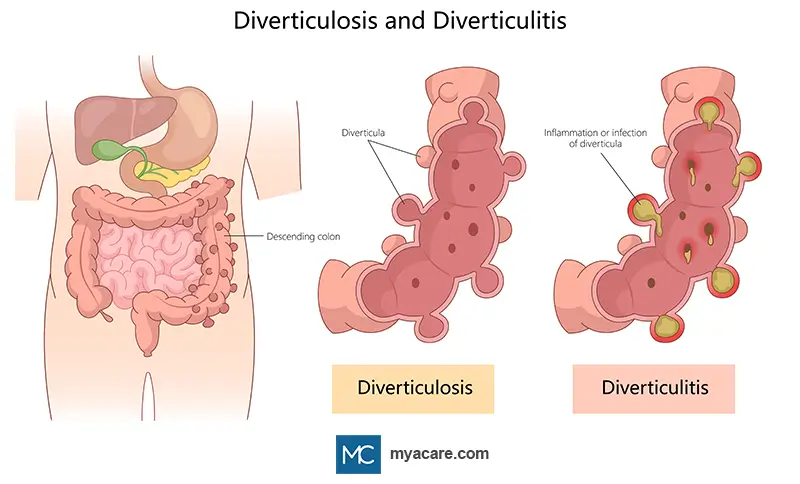
Diverticulosis vs. Diverticulitis
Complications of Diverticulitis
Diet, Nutrition, and Lifestyle
Key Takeaways
- Diverticulosis is the presence of colon pouches, while diverticulitis occurs when these pouches get inflamed or infected.
- Most people with diverticulosis have no symptoms and never develop diverticulitis, but diverticulitis can range from mild inflammation to serious complications.
- Diagnosis typically involves clinical evaluation and CT imaging, while treatment depends on severity and may include dietary changes, pain control, antibiotics, drainage, or surgery.
- A high-fiber diet, adequate hydration, regular physical activity, smoking cessation, and cautious use of certain medications (nonsteroidal anti-inflammatory drugs) can support long-term digestive health.
- Most people recover fully, although diverticulitis can recur and requires medical evaluation when severe symptoms develop.
Introduction
Diverticular disease is one of the most common conditions affecting the large intestine, particularly in older adults. Despite its common diagnosis, it is often misunderstood. Many people are told they have diverticulosis after a routine colonoscopy and immediately fear serious illness, while others experience sudden abdominal pain from diverticulitis without fully understanding what caused it or how to prevent future episodes.
The confusion largely stems from the fact that diverticulosis and diverticulitis are related but not the same condition. One refers to the presence of small pouches in the colon that usually cause no symptoms. The other refers to inflammation or infection of those pouches, which can range from mild discomfort to life-threatening complications.
As populations age and screening colonoscopies become more common, more people are learning they have diverticula. At the same time, emergency visits for diverticulitis remain frequent, especially among adults over age 65. Understanding the difference between these conditions is critical for recognizing symptoms early, avoiding unnecessary fear, and making informed decisions about diet, lifestyle, and medical care.
This article provides a comprehensive, evidence-based explanation of diverticular disease. It covers how diverticula form, why most people never develop diverticulitis, what symptoms to watch for, how diverticulitis is diagnosed and treated, and how people can live well with this condition over the long term.
What Is Diverticular Disease?
Diverticular disease is a general term used to describe conditions related to diverticula, which are small pouches that develop in the wall of the colon.
What Are Diverticula?
Diverticula are small outpouchings of the inner lining of the colon that protrude through weak points in the muscular wall. These pouches form gradually over time and are most often found in the large intestine.
The term diverticulum refers to a single pouch, while diverticula refers to multiple pouches.
How Do Diverticula Form?
The colon is responsible for absorbing water and moving waste toward the rectum. When stool is hard or bulky, the colon must generate increased pressure to move it forward. Over time, repeated pressure can cause the inner lining of the colon to bulge outward through weak spots in the muscle layer.
These weak spots often occur where blood vessels penetrate the colon wall, making them natural points of vulnerability. The formation of diverticula is strongly associated with aging, changes in connective tissue, and long-term bowel habits.
Where Are Diverticula Most Common?
Diverticula most commonly form in the sigmoid colon, the lower left portion of the large intestine. This region experiences the highest intraluminal pressure during bowel movements.
In Western countries, left-sided diverticula are most common. In some Asian populations, diverticula are more frequently found on the right side of the colon, including the ascending colon. This difference is thought to reflect genetic and dietary factors.
How Common Is Diverticular Disease?
Diverticulosis is extremely common:
- About 10 percent of people under age 40 have diverticulosis
- Approximately 30 percent of people over age 50 have diverticulosis
- More than 50 to 60 percent of people over age 60 have diverticulosis
Despite this high prevalence, only a minority of people with diverticulosis will ever develop diverticulitis.
While age is a primary risk factor for developing diverticulosis and diverticulitis, the gender-based prevalence shifts over time. In adults under 50, men are diagnosed with diverticulitis more frequently than women; however, this trend reverses after age 50, when the condition becomes more common in women.
What Is Diverticulosis?
Diverticulosis refers to the presence of diverticula in the colon without associated inflammation or infection. It is considered a benign condition and, by itself, does not constitute disease.
Why Diverticulosis Is Often Asymptomatic
Most people with diverticulosis experience no symptoms at all. The diverticula do not interfere with digestion or bowel movements, and the colon continues to function normally.
Because diverticulosis is usually silent, it is commonly discovered incidentally during:
- Screening colonoscopy
- CT scans performed for unrelated abdominal pain
- Imaging studies for kidney stones or gynecological concerns
Many people are surprised to learn they have diverticulosis, especially when they feel completely well.
Possible Symptoms of Diverticulosis
Most people with diverticulosis have no symptoms. A subset may develop symptomatic uncomplicated diverticular disease (SUDD), which may be associated with mild, nonspecific symptoms such as:
- Bloating or increased gas
- Mild abdominal discomfort
- Changes in bowel habits
- Constipation or diarrhea
These symptoms are not specific to diverticulosis and often overlap with functional bowel disorders such as irritable bowel syndrome. Importantly, diverticulosis does not cause fever, significant pain, or signs of infection.
What Is Diverticulitis?
Diverticulitis develops when one or more diverticula become inflamed. In some cases, inflammation is accompanied by infection. This can result in localized pain, systemic symptoms, and, in severe cases, complications involving surrounding organs.
How Diverticulitis Develops
Diverticulitis develops when the environment within a diverticulum changes in a way that promotes inflammation. Proposed mechanisms include:
- Obstruction of a diverticulum by stool
- Changes in gut bacteria
- Reduced blood supply to the colon wall
- Microperforation of the diverticulum
It is important to note that diverticulitis is not inevitable. Most people with diverticulosis never develop inflammation.
Acute and Chronic Diverticulitis
Acute diverticulitis refers to a sudden onset of symptoms that typically resolve with appropriate treatment.
Some patients experience chronic diverticulitis as recurrent episodes, while a small minority develop persistent or “smoldering” diverticulitis, characterized by ongoing symptoms and evidence of continued inflammation. Other patients may have persistent abdominal or bowel symptoms after diverticulitis has resolved without having ongoing inflammation. These conditions can affect quality of life and require appropriate clinical evaluation.
Prevalence
Diverticulitis occurs more frequently in:
- Adults over age 60
- Individuals with low fiber intake
- People with chronic constipation
- Those with obesity
- Smokers
- Individuals with sedentary lifestyles
- People using NSAIDs, corticosteroids, or powerful painkillers
Genetic factors and environmental influences also play a role.
Severity Spectrum of Diverticulitis
Diverticulitis ranges from mild inflammation to severe, life-threatening illness.
Uncomplicated diverticulitis
Uncomplicated diverticulitis involves localized inflammation without abscess, perforation, fistula, or obstruction. Most cases fall into this category and can often be managed outside the hospital.
Complicated diverticulitis
Complicated diverticulitis occurs when inflammation leads to:
- Abscess formation
- Perforation of the colon
- Peritonitis
- Fistulas connecting the colon to other organs
- Bowel obstruction
Complicated diverticulitis often requires hospitalization and sometimes surgery.
The Four Stages of Diverticulitis
Diverticulitis is often classified using the Hinchey system:
- Stage I: Localized inflammation or a small pericolic abscess (pus-filled pocket of infection right next to the segments of the colon)
- Stage II: Larger abscess confined to the pelvis or abdomen
- Stage III: Perforation with purulent peritonitis (infection of the abdominal lining filled with pus)
- Stage IV: Free perforation with fecal peritonitis (inflammation of the abdominal cavity through fecal matter)
Stages III and IV are medical emergencies and carry significant risk if not treated promptly.
Symptoms of Diverticulitis
Diverticulitis symptoms can vary in severity and may involve abdominal pain, systemic symptoms, and changes in bowel habits.
What Does a Diverticulitis Attack Feel Like?
A diverticulitis attack usually presents with persistent abdominal pain that develops over hours to days. The pain is typically constant rather than cramping.
Location of pain
- Most commonly in the lower left quadrant of the abdomen
- Right-sided pain can occur, particularly in individuals with right-sided diverticula
Associated symptoms
- Fever and chills
- Nausea and vomiting
- Loss of appetite
- Fatigue
- Abdominal tenderness or guarding
Changes in bowel habits
Inflammation can disrupt normal bowel function, leading to:
- Constipation
- Diarrhea
How Long Do Diverticulitis Flare-Ups Last?
- Uncomplicated cases may begin to improve within days, with a median recovery time of about two weeks.
- Complicated cases may require longer treatment and recovery, depending on the complication.
Diverticulosis vs. Diverticulitis
As discussed, diverticulosis and diverticulitis are related but distinct:
- Diverticulosis refers to the presence of diverticula
- Diverticulitis refers to inflammation of diverticula
Diverticulosis is usually harmless. Diverticulitis causes pain, fever, and sometimes serious complications.
Most people with diverticulosis never develop diverticulitis, likely due to protective factors such as regular bowel movements, adequate fiber intake, and healthy gut microbiota.
What Causes Diverticulitis?
Several risk factors may contribute to the development of diverticulitis, including diet, aging, obesity, smoking, and certain medications.
Diet and Fiber Intake
Low-fiber diets are associated with harder stools and increased colonic pressure. Fiber increases stool bulk and softness, reducing strain during bowel movements.
Aging
With age, connective tissue weakens and colonic motility changes, increasing susceptibility to diverticula formation.
Obesity and Inactivity
Obesity is associated with chronic inflammation and increased abdominal pressure. Physical activity improves bowel motility and reduces risk.
Smoking
Smoking impairs blood flow and immune function, increasing the risk of complications.
Medications
NSAIDs, steroids, and powerful painkillers are associated with increased risk of diverticulitis and complications.
Alcohol Use
Heavy alcohol use may increase the risk of developing diverticulitis, although moderate consumption has not been conclusively linked.
Complications of Diverticulitis
-
Abscess
Localized collections of pus may form near inflamed diverticula.
-
Perforation and Peritonitis
A perforation allows bacteria to spill into the abdominal cavity, leading to widespread infection.
-
Fistulas
Abnormal connections may form between the colon and bladder, vagina, or skin.
-
Bowel Obstruction
Scarring and inflammation can narrow the colon, leading to obstruction.
-
Recurrent or Chronic Disease
Repeated inflammation may cause ongoing symptoms and reduced quality of life.
How Is Diverticulitis Diagnosed?
Medical History and Physical Examination
Pain location, fever, and tenderness help guide diagnosis.
Laboratory Testing
Blood tests may show elevated white blood cell counts and inflammatory markers.
Imaging
CT scan with contrast is the diagnostic test of choice.
Colonoscopy
Colonoscopy is avoided during acute diverticulitis due to perforation risk but is recommended after recovery to exclude malignancy.
Differential Diagnosis
Conditions that can mimic diverticulitis include:
-
Irritable Bowel Syndrome
Diverticulitis typically causes acute, persistent localized abdominal pain with systemic or inflammatory features, whereas IBS causes recurrent abdominal pain associated with changes in bowel habits without acute inflammation.
-
Appendicitis
Diverticulitis most commonly causes left-lower-quadrant pain, while appendicitis typically causes right-lower-quadrant pain.
-
Colorectal Cancer
Diverticulitis usually presents acutely with pain and inflammation, whereas colorectal cancer more often causes chronic or progressive symptoms such as rectal bleeding, anemia, unexplained weight loss, or persistent changes in bowel habits.
-
Crohn’s Disease and Ulcerative Colitis
Diverticulitis is usually a localized, acute inflammation around colonic diverticula, whereas inflammatory bowel disease generally causes chronic or recurrent intestinal inflammation with characteristic colonoscopic and microscopic findings.
-
Kidney Stones
Kidney stones usually cause severe flank pain that may radiate to the groin and may be accompanied by blood in the urine.
-
Urinary Tract Infections
Diverticulitis primarily causes abdominal pain and gastrointestinal symptoms, whereas urinary tract infections typically cause painful urination, urinary frequency, urgency, and sometimes discomfort in the bladder area.
-
Gynecological Conditions
In women, gynecological conditions such as ovarian cysts, pelvic inflammatory disease, or pregnancy outside of the uterus can cause lower abdominal or pelvic pain and require consideration based on reproductive status, associated symptoms, and appropriate gynecological evaluation.
Treatment Options
Uncomplicated Diverticulitis
Supportive therapies may include
- Rest and activity modification
- Temporary dietary changes: these may be recommended during an acute episode, with a clear-liquid or liquid diet used briefly when symptoms limit food intake, followed by gradual advancement to a regular diet as symptoms improve
- Pain control
Antibiotics may be used in selected patients. Current guidelines suggest that antibiotics may not be necessary for mild diverticulitis in otherwise healthy individuals.
Complicated Diverticulitis
- Hospitalization
- Intravenous antibiotics
- Percutaneous drainage of abscesses
Surgical Treatment
Surgery for diverticulitis may be appropriate in certain cases.
Indications for surgery
- Recurrent severe episodes
- Complications such as perforation or obstruction
- Failure of medical management
Types of surgery
- Segmental colon resection: Surgical removal of the affected segment of the colon
- Temporary or permanent stoma in selected cases: Creation of an opening of the bowel through the abdominal wall to divert stool, either temporarily during healing or permanently when necessary
Diet, Nutrition, and Lifestyle
For people with diverticulitis, diet and lifestyle measures can play an important role during recovery and afterward.
Fiber Intake
After recovery from acute diverticulitis, a high-fiber diet is generally recommended, with adults typically aiming for approximately 22–34 grams of fiber per day.
Foods to Include
- Fruits and vegetables
- Whole grains
- Legumes
Foods During Acute Flares
- Clear liquids initially
- Gradual progression to low-fiber foods
Are nuts, seeds, and popcorn bad for diverticulitis?
There is no evidence that these foods increase the risk of diverticulitis.
Hydration
Adequate fluid intake is essential.
Exercise
Regular physical activity improves gut health.
Smoking Cessation
Quitting smoking reduces recurrence and complications.
Recovery and Long-Term Outlook
Most people recover fully after an episode of diverticulitis. Diverticulitis can recur, although the risk varies depending on the characteristics of the initial episode and individual patient factors. Lifestyle changes can significantly reduce recurrence risk.
When to Seek Medical Care
A hospital visit may be necessary to seek immediate care for:
- Severe or worsening abdominal pain
- High fever
- Persistent vomiting
- Blood in stool
- Signs of infection or perforation
Diverticular disease is common, manageable, and often misunderstood. Most people with diverticulosis will never develop diverticulitis, and most cases of diverticulitis resolve with appropriate care. Education, early recognition of symptoms, and long-term lifestyle changes are key to preventing complications and maintaining digestive health.
Frequently Asked Questions
Is diverticulitis curable?
Diverticulitis can usually be treated successfully, but the underlying colonic diverticulosis, or presence of diverticula in the colon, remains.
What does stool look like with diverticulitis?
Stool may be loose, narrow, or contain blood.
Is bleeding serious?
Yes. Diverticular bleeding requires medical evaluation.
Can diverticulitis turn into cancer?
No. Diverticulitis does not turn into cancer, but symptoms can overlap, requiring evaluation.
How do you calm a flare-up?
Managing a diverticulitis flare-up may involve rest, adequate hydration, temporary dietary changes, and following medical guidance based on the severity of symptoms.
What medications should I avoid with diverticulitis?
NSAIDs and strong painkillers should be used cautiously. Discuss pain relief and other medications with a healthcare provider before making changes.
Can you use weight loss injections if you have diverticulitis?
The use of weight loss injections should be discussed with a healthcare provider, who can consider your diverticulitis history, current symptoms, and overall health before advising whether they are appropriate.
Does diverticulitis cause diarrhea?
Yes. Diarrhea can occur with diverticulitis. Inflammation may play a role, although the exact mechanism is not fully understood.
What is Meckel’s diverticulitis?
This is a rare congenital diverticulum of the small intestine, unrelated to colonic diverticulitis.
To search for the best Gastroenterology Doctors and Healthcare Providers worldwide, please use the Mya Care Search engine.
To search for the best doctors and healthcare providers worldwide, please use the Mya Care search engine.
The Mya Care Editorial Team comprises medical doctors and qualified professionals with a background in healthcare, dedicated to delivering trustworthy, evidence-based health content.
Our team draws on authoritative sources, including systematic reviews published in top-tier medical journals, the latest academic and professional books by renowned experts, and official guidelines from authoritative global health organizations. This rigorous process ensures every article reflects current medical standards and is regularly updated to include the latest healthcare insights.
Dr. Sony Sherpa completed her MBBS at Guangzhou Medical University, China. She is a resident doctor, researcher, and medical writer who believes in the importance of accessible, quality healthcare for everyone. Her work in the healthcare field is focused on improving the well-being of individuals and communities, ensuring they receive the necessary care and support for a healthy and fulfilling life.

Dr. Dora Matis is a licensed medical doctor based in Germany, specializing in clinical psychiatry and psychotherapy. With a strong academic background and international training, she brings expertise in evidence-based medical practice. In addition to her clinical work, Dr. Matis has been involved in translational research, helping bridge the gap between scientific discovery and patient care.
References:
Featured Blogs
Medically Induced Coma: What It Is, How It Works & Recovery