
Hantavirus: Symptoms, Causes, Transmission, Treatment, and Prevention
Edited by the Mya Care Editorial Team - November 24, 2026
Key Takeaways
- Hantaviruses are primarily transmitted through exposure to infected rodents, particularly by inhaling contaminated particles. Person-to-person transmission is rare and mainly associated with Andes virus.
- Hantavirus infections can cause hantavirus pulmonary syndrome (HPS), affecting the lungs and cardiovascular system, or hemorrhagic fever with renal syndrome (HFRS), primarily affecting the kidneys.
- Early symptoms often resemble influenza, while severe infections may progress to respiratory failure, shock, or acute kidney injury.
- Diagnosis involves exposure history, clinical assessment, and laboratory testing. Treatment primarily focuses on supportive care, with intensive care required in severe cases.
- Prevention involves rodent control, avoiding exposure, and safely disinfecting contaminated areas.
Introduction
Hantaviruses are a group of zoonotic viruses belonging to the family Hantaviridae, predominantly transmitted from infected rodents to humans.
Hantavirus infection can cause two main clinical syndromes: hantavirus pulmonary syndrome (HPS, also called hantavirus cardiopulmonary syndrome) and hemorrhagic fever with renal syndrome (HFRS). Early hantavirus symptoms may resemble influenza, with fever, lethargy, headache, and muscle aches, but severe disease can develop rapidly, leading to respiratory failure or acute kidney injury.
Hantavirus infections are relatively rare worldwide, but the burden varies by region. The World Health Organization estimates between 10,000 and more than 100,000 infections annually worldwide, with the highest burden in Asia and Europe. HPS is less common but can be especially severe, with reported case-fatality rates commonly ranging from 20% to 40%. Mortality from HFRS varies greatly depending on the causative virus.
Latest News and Public Interest
A recent notable event was the 2026 hantavirus outbreak associated with the cruise ship M/V Hondius. WHO reported a cluster of cases with Andes virus, including deaths. Hantaviruses are not usually transmitted from person to person, although there have been cases involving the Andes virus. Public-health officials said the risk to the general population remains low.
Hantavirus also made international headlines in 2025 when Betsy Arakawa, wife of actor Gene Hackman, died of HPS.
What Is Hantavirus?
Hantaviruses are a group of viruses that are mostly spread by rodents like mice and rats. They are enveloped single-stranded, negative-sense RNA viruses of the family Hantaviridae, order Bunyavirales. These naturally occurring viruses are found worldwide, with variants circulating in different areas. While the exact evolutionary origin is not yet established, these viruses have likely circulated in rodents for thousands of years. Different hantavirus species are typically linked to distinct rodent hosts depending on their geographical location.
Not all types of hantavirus are known to cause disease in humans. Many hantavirus species have been described worldwide, but only a limited number are established human pathogens. Their ability to cause disease varies: while some cause HPS, which mainly affects the lungs and cardiovascular system, others cause HFRS, which primarily affects the kidneys. Other hantaviruses appear to have little or no proven potential to cause disease in humans, but there is incomplete knowledge about some species. Hantavirus pulmonary syndrome was identified in the United States in 1993. Hantavirus-associated kidney disease, however, had been recognized much earlier in Asia and Europe.
Historical Hantavirus Outbreaks
Hantavirus-related illnesses have been documented during several historical outbreaks. During World War II, approximately 1,000 German and 60 Finnish soldiers developed an illness in Finland in 1942, retrospectively considered likely to be hemorrhagic fever with renal syndrome. During the Korean War, approximately 3,200 United Nations soldiers were affected by a similar illness between 1951 and 1954. The Hantaan virus, associated with these infections, was identified in the 1970s. In 1993, an outbreak of HPS in the Four Corners region of the southwestern United States led to the discovery of a previously unidentified hantavirus, later named Sin Nombre virus.
How Does Hantavirus Spread?
Major Transmission Routes
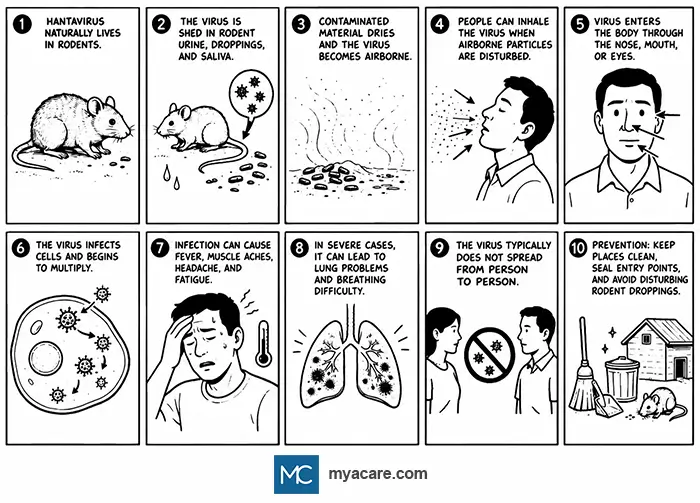
- Contact with rodent urine, droppings, and saliva: Infected rodents excrete the virus in their bodily fluids and waste, contaminating nearby surfaces, nesting materials, and dust.
- Inhalation of contaminated particles: This is the most common way to get infected. Sweeping, vacuuming, or moving dried rodent waste may release virus-contaminated particles into the air and may be inhaled.
- Rodent bites and scratches: Infection may occur through a bite or scratch by an infected rodent, but this is rare.
- Contaminated surfaces: Contact with contaminated materials, followed by contact with the eyes, nose, or mouth, or contact with broken skin, can cause infection.
Can hantavirus spread from human to human?
Given that hantavirus primarily spreads through exposure to infected rodents, a common question is: Is hantavirus contagious between people? Most hantaviruses are not spread from person to person. But the Andes virus, a variant of hantavirus that occurs in parts of South America, is a known exception. Rare transmission has occurred between people who have close and prolonged contact with one another, such as household members or intimate partners.
Is Hantavirus Common, and Should You Be Worried?
Hantavirus infection is rare worldwide but may cause severe disease in humans exposed to infected rodents. Risk varies by virus type, local rodent populations, and the nature of exposure. Just because you have seen a mouse or live in an affected area does not mean you have been infected.
Regional differences in hantavirus risk
- North America: Hantavirus pulmonary syndrome (HPS) is rare but can cause death. One of the main causes is the Sin Nombre virus.
- Central and South America: HPS is reported in a number of countries. The Andes virus is significant in parts of South America and can spread rarely between people.
- Europe: Hemorrhagic fever with renal syndrome (HFRS) is endemic, especially in northern, central, and eastern Europe.
- East Asia: HFRS is reported in China and South Korea, including cases caused by the Hantaan virus.
- India and other parts of Asia: Infection is possible, but there are few reliable, comparable national incidence estimates. Risk is influenced by local rodent populations and exposure circumstances.
Regional variations exist in the numbers reported: the WHO European Region reported 1,885 HFRS cases in 2023, and the Pan American Health Organization reported 229 HPS cases and 59 deaths in eight countries in the Americas through epidemiological week 47 of 2025. The figures represent different diseases and different surveillance systems and are not intended to be compared directly.
Who Is at Higher Risk of Hantavirus Infection?
People who regularly work or live in places where rodents are found, especially in confined or poorly ventilated areas, are at higher risk. The risk of infection depends on the amount of exposure, not just the occupation.
People at higher risk include:
- Farmers and agricultural workers: People working in fields, barns, grain elevators, and farm buildings where rodents may live.
- Rodent trappers, handlers, and cleaners: Including pest-control workers and animal handlers.
- Construction and forestry workers: Rodent-infested buildings, debris, or nesting materials pose a risk.
- Residents of rodent-prone areas: People who live in homes, cabins, sheds, or storage units with rodent infestations.
- Campers and outdoor lovers: People who stay at rodent-infested campsites, shelters, or cabins, particularly when cleaning enclosed spaces that have not been used for a long time.
What Are the Symptoms of Hantavirus Infection?
Initial signs and symptoms of hantavirus disease can be similar to influenza or other common infections. Symptoms can vary depending on the type of hantavirus and the disease it causes.
Early Signs of Infection
Typical early signs and symptoms include:
- Fever and chills
- Tiredness and lack of strength
- Muscle pain, especially in the thighs, hips, back, and shoulders
- Dizziness and headache
- Nausea, vomiting, diarrhea, or abdominal pain
Since nonspecific signs may be confused with those of other diseases, a history of possible rodent exposure is significant.
Symptoms of Hantavirus Infection in Children
Children can show symptoms similar to adults, including fever, fatigue, muscle aches, headache, and digestive problems. Depending on the virus, the infection can be serious, leading to kidney problems or breathing problems. As these symptoms overlap with many childhood illnesses, suspected exposure to infected rodents should be taken seriously.
For hantaviruses, the incubation period – the time from exposure to symptom onset – is typically 1 to 8 weeks, but depends on the virus and the person. Symptoms of Hantavirus pulmonary syndrome typically begin within this period; hemorrhagic fever with renal syndrome symptoms usually occur within 1 to 2 weeks, but may be delayed up to 8 weeks.
Symptoms of Severe Hantavirus Infection
If symptoms progress to any of the following, seek urgent medical attention:
- Trouble breathing or feeling winded
- Chest tightness or cough
- Dizziness, fainting, or signs of very low blood pressure
- Significantly less urination than normal
- Severe pain in your belly or back, or bleeding
If you may have been exposed to hantavirus, seek medical evaluation early.
What are the potential complications?
Hantavirus disease can cause fluid buildup in the lungs, respiratory failure, shock, and acute kidney injury, depending on the virus.
How Fast Can Hantavirus Infection Progress?
There is no set timeline. In cases of severe HPS, deterioration can be rapid following the onset of breathing difficulties and cardiovascular instability. The condition may become life-threatening within 24–48 hours of entering the cardiopulmonary phase. HFRS takes a different course, with kidney injury and other complications developing over time. Difficulty breathing, faintness, or a markedly reduced amount of urine suggest a hantavirus infection and require emergency medical care.
What Diseases Can Hantavirus Cause?
Hantaviruses can cause a spectrum of illnesses in humans from nonspecific flu-like illness to severe, potentially fatal disease. As already stated, the two major associated clinical syndromes are hantavirus pulmonary syndrome and hemorrhagic fever with renal syndrome. The type of disease that develops mainly depends on the hantavirus variant and the place of infection.
Hantavirus Pulmonary Syndrome (HPS)
Hantavirus pulmonary syndrome, or hantavirus cardiopulmonary syndrome, is a serious illness caused by hantaviruses that occurs primarily in North, Central, and South America. Important examples are the Sin Nombre virus in North America and the Andes virus in South America.
Symptoms and course
HPS generally has two phases of progression:
- Early phase: Fever, fatigue, muscle aches, headache, chills, dizziness, and sometimes nausea, vomiting, diarrhea, or abdominal pain. These symptoms may look like the flu or other common infections.
- Cardiopulmonary phase: Patients may develop coughing, shortness of breath, chest tightness, and rapid accumulation of fluid in the lungs, often several days later. Increased vascular permeability can result in low blood pressure, heart dysfunction, shock, and respiratory failure.
Importance of prompt medical evaluation
Once a person with HPS starts to have difficulty breathing, the disease can progress quickly. Patients may require intensive care, oxygen therapy, mechanical ventilation, careful cardiovascular support, and in selected severe cases, extracorporeal membrane oxygenation (ECMO). If you experience breathing difficulties after potential rodent exposure, get urgent medical assessment.
Hemorrhagic Fever With Renal Syndrome (HFRS)
HFRS is a group of diseases caused by hantaviruses. These viruses are most common in Europe and Asia, especially China, South Korea, and parts of northern and central Europe. Important causative viruses are Hantaan, Dobrava-Belgrade, Seoul, and Puumala viruses.
Symptoms and course
HFRS usually starts suddenly with fever, severe headache, back or abdominal pain, nausea, chills, and sometimes blurred vision or red eyes. As the disease progresses, damage to small blood vessels and increased vascular permeability may result in low blood pressure and shock caused by fluid leakage from blood vessels.
- Bleeding manifestations such as bruising or internal bleeding in severe cases
- Acute kidney injury, decreased urine output, retention of fluid and waste products
- Fluid and electrolyte derangements that can be life-threatening in severe disease
Some patients then enter a recovery phase, where urine output may increase dramatically before kidney function gradually improves. The severity of disease depends on the virus strain.
Can Hantavirus Cause Milder Disease?
Yes. Not every hantavirus infection will go on to HPS or HFRS. Some infections produce nonspecific viral symptoms with no significant lung or kidney involvement. Some may be asymptomatic. Puumala and Saaremaa viruses generally cause milder disease, while Seoul virus is typically associated with mild to moderate illness. In contrast, Hantaan and Dobrava-Belgrade viruses can cause more severe disease. However, early symptoms alone are not a good predictor of how severe an infection will be. Therefore, a history of rodent exposure should be considered in the work-up of compatible symptoms.
How Is Hantavirus Diagnosed?
Diagnosis of hantavirus infection is based on signs and symptoms, medical history, and laboratory test results. An important diagnostic clue is a history of exposure to rodents or their urine, droppings, or nesting material.
Rodent Exposure and Medical History
The clinician asks about recent or potential exposure to rodents, including cleaning rodent-infested buildings, working in barns or storage areas, or staying in cabins and other rodent environments. The timing of exposure and onset of symptoms also help guide testing.
Clinical Examination and Symptoms Assessment
Examination includes assessing fever, fatigue, muscle aches, headache, abdominal or back pain, difficulty breathing, and other relevant symptoms. The clinician may check the heart rate, blood pressure, respiratory rate, and signs of shock or dehydration.
Laboratory Tests and Blood Tests
Hantavirus infection is confirmed by laboratory tests. Tests can include:
- Hantavirus-specific antibody test: Blood tests can be used to look for hantavirus-specific IgM antibodies, most often by enzyme-linked immunosorbent assays (ELISA). IgG antibody patterns may also aid diagnosis.
- Molecular testing: Polymerase chain reaction (PCR) detects viral genetic material in the relevant clinical setting.
- Blood tests such as a complete blood count: These can show changes such as a low platelet count and help determine the severity of disease.
- Kidney function tests: Blood levels of creatinine, urea, and electrolytes can help detect acute kidney injury, particularly in HFRS.
Assessment of Kidney and Lung Function
Further investigations depending on the symptoms may include:
- Oxygen saturation and blood gas analysis to evaluate oxygen levels and respiratory dysfunction.
- Chest X-ray or other imaging of the chest if pulmonary involvement is suspected
- Urine tests and urine output monitoring to assess for any kidney injury and to detect blood or protein in the urine.
- Assess blood pressure and cardiac function in patients with suspected severe HPS or shock.
These tests help to identify the affected organ and the supportive care required. They do not confirm the hantavirus infection independently.
Why Is Early Diagnosis Difficult?
Early symptoms of hantavirus infection are nonspecific and may be mistaken for influenza, leptospirosis, or other infections. Very early testing during the first few days of illness may occasionally be negative, so repeat or additional testing may be needed when clinical suspicion remains high. In suspected cases of hantavirus, treatment should not be delayed while waiting for laboratory confirmation, especially if symptoms include difficulty breathing, low blood pressure, or decreased urine output.
Differential Diagnosis: Conditions With Similar Symptoms
Hantavirus infection can be confused with several other infectious diseases, especially in the early phases. Fever, muscle aches, headache, gastrointestinal symptoms, and difficulty breathing are not specific to hantavirus. Clinicians distinguish it from other diseases based on the pattern of illness, history of exposure, geographic location, laboratory findings, and disease-specific tests. Depending on presentation and travel history, important alternatives include COVID-19, influenza, leptospirosis, pneumonia, and other serious infections.
Hantavirus vs. COVID-19
Both diseases can cause serious illness, but they differ greatly in the way they are transmitted and how often they occur. Hantavirus is generally a much less common infection. COVID-19 has widespread prevalence.
Is Hantavirus deadlier than COVID-19?
The severity of HPS and COVID-19 cannot be assessed through fatality rates alone. According to CDC estimates, HPS has a reported case-fatality rate of approximately 38%. In comparison, the risk of death from COVID-19 varies considerably depending on factors such as age, immunity, the virus variant, underlying health conditions, and access to treatment. HPS is more likely to be a rare but rapidly progressive emergency in an infected person; COVID-19 has had a far greater overall population impact because it spreads much more readily between people. These are different measures of risk and are not to be compared directly.
Hantavirus vs. Leptospirosis (Weil's Disease)
Both can cause fever, muscle aches, kidney damage, and serious systemic illness. Leptospirosis is caused by Leptospira bacteria and is often spread through water or soil that has been contaminated with the urine of infected animals. The severe form is Weil’s disease, classically associated with jaundice, kidney failure, and bleeding. Hantavirus is a virus typically associated with aerosols contaminated with rodent excreta. Blood and urine tests help distinguish them.
Norovirus vs. Hantavirus
Norovirus usually causes sudden vomiting, watery diarrhea, nausea, and stomach cramps and often resolves within a few days. Hantavirus can cause digestive symptoms, but worry increases with rodent exposure or progression to breathing difficulty, shock, or kidney failure. Norovirus spreads easily from person to person, whereas most hantaviruses do not.
Hantavirus vs. Flu (Influenza)
Both can cause fever, headache, fatigue, and muscle aches early on. Influenza often includes cough, sore throat, or nasal symptoms, while early hantavirus can include prominent muscle aches and gastrointestinal symptoms after rodent exposure. Symptoms alone are not a reliable means of differentiating them; appropriate laboratory tests are required.
Hantavirus vs. Pneumonia
Pneumonia is not one disease. It is an infection or inflammation of lung tissue caused by a variety of organisms. Pneumonia and HPS can both cause cough, shortness of breath, low oxygen levels, and abnormal chest imaging. Diagnosis of HPS is made on the basis of exposure history, compatible clinical course, and hantavirus-specific testing. Pneumonia can also be caused by bacteria or other viruses.
Hantavirus vs. Black Death (Bubonic Plague)
Yersinia pestis bacteria cause bubonic plague. It is typically characterized by fever and painful swollen lymph nodes (buboes), most often resulting from a bite by an infected flea. Hantavirus is a virus that you usually get by breathing in particles contaminated by rodents. Since plague can also cause severe pneumonia or bloodstream infection, exposure history and specific laboratory testing are important.
Ebola vs. Hantavirus
Both cause fever and severe systemic illness, but Ebola virus disease requires direct contact with infected individuals or animals and their body fluids. Ebola can cause severe gastrointestinal symptoms, bleeding, and multi-organ dysfunction. Hantavirus is typically contracted from infected rodents and is linked with either cardiopulmonary failure or kidney injury depending on the virus. Ebola virus disease may be suspected when compatible symptoms are present in the context of relevant travel or exposure history.
Treatment for Hantavirus
Currently, there is no specific licensed treatment to cure hantavirus infection. Treatment consists mainly of supportive medical care to help the body fight the infection and prevent life-threatening complications. HPS can quickly progress to respiratory failure and shock, so it is important to recognize it early and get the patient prompt hospital care. Treatment depends upon the type of disease, the organs involved, and severity.
How Is Severe Hantavirus Infection Treated?
Patients with suspected severe hantavirus infection generally need to be hospitalized and may require intensive care. Treatment may include:
- Hospital monitoring and supportive care: Monitoring of breathing, blood pressure, cardiac function, urine output, and blood test results
- Oxygen and breathing support: Additional oxygen may be needed. Severe HPS may necessitate intubation and mechanical ventilation.
- Fluid and blood pressure control: Care needs to be taken when giving intravenous fluids, especially in HPS, where excess fluid administration can lead to pulmonary edema. You may need medicines called vasopressors to maintain blood pressure.
- Dialysis: In severe HFRS cases, patients may need dialysis if acute kidney injury leads to dangerous fluid overload, electrolyte imbalances, or waste product buildup.
- Intensive care for serious complications: Some patients with severe cardiopulmonary failure require advanced support, including extracorporeal membrane oxygenation (ECMO) in selected cases.
Can Antiviral Medications Help?
The role of the antiviral drug ribavirin in the treatment of hantavirus infection is dependent on the clinical syndrome:
- Hantavirus pulmonary syndrome: Ribavirin is not an established treatment and has not been shown to be effective in early intensive supportive care.
- Hemorrhagic fever with renal syndrome: Early treatment with intravenous ribavirin may lessen the severity of illness and reduce mortality in some HFRS infections. Usage varies with the virus, clinical situation, and local treatment protocol.
Antibiotics will not treat the actual hantavirus, but physicians may give them empirically while looking for other potential infections.
Recovery and Prognosis
Recovery from hantavirus disease depends on the type of virus, severity of the illness, affected organs, and how promptly the patient receives proper medical care. Hantavirus infections do not have a standard recovery time.
How Long Is the Recovery Time?
- Mild infection: Symptoms may resolve over days to weeks; recovery time varies.
- Hantavirus pulmonary syndrome: The critical phase may develop rapidly and require intensive care. Survivors of the acute cardiopulmonary phase may recover rapidly, depending on the severity of illness and complications.
- Hemorrhagic fever with renal syndrome: Kidney function may slowly improve over weeks to months. In the acute phase, some patients will require dialysis, and severe cases may develop long-term kidney problems.
Fatality Rates and Survival
Fatality rates vary substantially by hantavirus species and clinical syndrome.
| Type of illness | Approximate case-fatality rate |
|---|---|
| Hantavirus pulmonary syndrome (HPS) | About 38% among patients who develop respiratory symptoms; estimates can reach 50%. |
| HFRS caused by the Puumala virus | Usually below 1% |
| HFRS caused by Hantaan or Dobrava-Belgrade viruses | Approximately 5–15%, depending on the virus and setting |
These figures refer to deaths among people who develop the specified illness—not everyone exposed to hantavirus. Survival also varies with disease severity, underlying health, and access to timely supportive care.
Is Hantavirus Survival Age-Dependent?
Age alone is not the factor. Key determinants of survival include the severity of organ involvement, the hantavirus strain, underlying health conditions, and how quickly treatment is started. Available data do not support a universal hantavirus fatality rate for each age group. Individual prognosis requires clinical assessment.
How Can You Prevent Hantavirus Infection?
The best way to prevent hantavirus infection is to stay away from infected rodents and their urine, droppings, saliva, and nesting materials. You can reduce your risk by using safe cleaning methods, controlling rodents, and being careful when you are outside.
How to Clean Rodent Droppings Safely
- Clean after you disinfect: Thoroughly spray droppings and urine with a suitable household disinfectant or a freshly prepared solution of bleach. Leave wet for at least 5 minutes. Or use as directed on the product label.
- Don’t sweep or vacuum dry droppings: Sweeping and vacuuming can release contaminated particles into the air.
- Wear protective equipment: Use rubber or plastic gloves when cleaning areas contaminated by rodents. Heavy infestations may require professional cleanup and additional protective gear.
- Ventilate enclosed areas: Open doors and windows whenever possible and leave the space for at least 30 minutes before cleaning.
- Dispose of waste properly: Remove wet droppings with paper towels and place in a sealed bag. Disinfect the area around the droppings.
- Wash your hands: After removing gloves, wash well with soap and water.
How long does hantavirus survive on surfaces?
It depends on temperature, humidity, sunlight, and other environmental factors. The infectious virus may persist for hours to days under some conditions; therefore, do not assume that dried material is safe.
How to Prevent Rodents in Your Home
- Seal any holes, cracks, and gaps around doors, pipes, and walls.
- Keep food, grains, and pet food in airtight containers.
- Keep garbage covered in bins and dispose of it regularly.
- Eliminate clutter and potential nesting materials.
- Set up proper traps and get professional help for persistent infestations.
How to Reduce Risk While Camping or Hiking
- Inspect cabins, tents, and sleeping areas for rodent signs before use.
- Sleep away from rodent burrows, droppings, or nesting areas.
- Keep food and rubbish in rodent-proof containers.
- Do not disturb rodent nests or sweep up dry droppings inside cabins or shelters.
- Follow local public health advice on the risks of exposure to rodents.
These actions are consistent with CDC recommendations for prevention of hantavirus exposure.
Frequently Asked Questions
Can one get hantavirus from touching mouse droppings or from mouse bites?
Yes, infection can occur if material from an infected rodent gets into the eyes, nose, mouth, or broken skin. Hantavirus can also be transmitted by rodent bites, but this is rare. Infection is not usually spread by touching intact, uncontaminated skin. Wash your hands well and do not touch your face.
That said, the risk for an isolated incidental encounter is generally low, but depends on whether the rodent was infected and the nature of exposure. In a closed area, the risk is greater because contaminated particles can become airborne if you disturb dry droppings. Exposure does not automatically mean infection.
Is hantavirus always fatal?
No. Not everyone exposed gets sick, and hantavirus illnesses can be mild or severe. But hantavirus pulmonary syndrome can be fatal in about 38% of patients who develop respiratory symptoms. The fatality rate of hemorrhagic fever with renal syndrome differs by virus type.
Can pets carry hantavirus into the home?
In the United States, dogs and cats are not considered important sources of human hantavirus infection. Pets can bring infected rodents into the home. Do not handle rodents brought by pets without precautions. Clean up contaminated areas safely.
Is there a vaccine for hantavirus?
No internationally available hantavirus vaccine is widely licensed. Some countries, such as China and South Korea, have used vaccines for specific hantaviruses, but they are not available in all countries and may not be recommended. Prevention largely involves avoiding rodents and cleaning contaminated areas properly.
Can alcohol kill hantavirus?
Yes. Laboratory and public-health guidance suggests that hantaviruses are susceptible to 70% ethyl alcohol and several household disinfectants. Use an appropriate disinfectant on contaminated droppings or surfaces as directed on the label; do not spray alcohol on dry droppings and dislodge them. Do not consume alcohol for treatment or prevention.
Is hantavirus a side effect of the COVID-19 vaccine?
There is no proven evidence that COVID-19 vaccines cause hantavirus infection. Vaccination is not the primary way of acquiring hantaviruses. It is primarily through exposure to infected rodents.
What is the difference between Old World and New World hantaviruses?
Old World hantaviruses: Mostly in Europe and Asia; these mostly link to HFRS, which affects the kidneys and blood vessels.
New World hantaviruses: Found in the Americas; several cause HPS, affecting the lungs and cardiovascular system.
This difference determines their common geographic distribution and disease patterns, although clinical manifestations may vary.
Can you have hantavirus without a fever?
Yes, fever is common but may not be present in every infection or obvious in every patient. Symptoms may be mild or nonspecific at first. If you develop compatible symptoms after significant rodent exposure, even without a fever, seek medical advice.
Why are hantavirus infections more common in some years?
Cases may increase when environmental conditions trigger increases in rodent populations or human contact with rodents. Rainfall, availability of food, changes in vegetation, seasonal patterns, and human activities may influence rodent abundance and exposure. Trends vary by virus and region.
Can hantavirus cause long-term health problems after recovery?
Yes, some survivors, especially those with severe HPS, may need prolonged rehabilitation or follow-up for fatigue, reduced exercise tolerance, or other sequelae of critical illness. Most patients regain their kidney function after HFRS, but severe cases may result in long-lasting kidney complications. Long-term effects are mixed. Not everyone has long-term issues.
To search for the best Healthcare Providers and Doctors specializing in infectious diseases worldwide, please use the Mya Care search engine.
To search for the best doctors and healthcare providers worldwide, please use the Mya Care search engine.

Dr. Asif Baliyan is a doctor and clinical researcher with over a decade of experience in evidence-based diagnostic medicine. A Consultant at a tertiary care hospital in New Delhi, he also serves as a medical reviewer, ensuring healthcare content remains accurate, ethical, and aligned with current clinical guidelines.
References:
Featured Blogs

Feelings & the Neurochemistry That Influences Emotions