
How to Improve Sleep Quality: Science-Backed Insomnia Tips
Medically Reviewed and Edited by Abinaya Muralidharan, M. Pharm - September 29, 2026
What Causes Poor Sleep in Kids and Adults?
Sleep Supplements and Evidence
Key Takeaways
- Insomnia may cause difficulty falling asleep, staying asleep, or waking earlier than intended, with acute and chronic forms distinguished partly by symptom duration and frequency.
- Cognitive Behavioral Therapy for Insomnia (CBT-I) includes strategies such as sleep restriction, stimulus control, sleep hygiene, and relapse prevention.
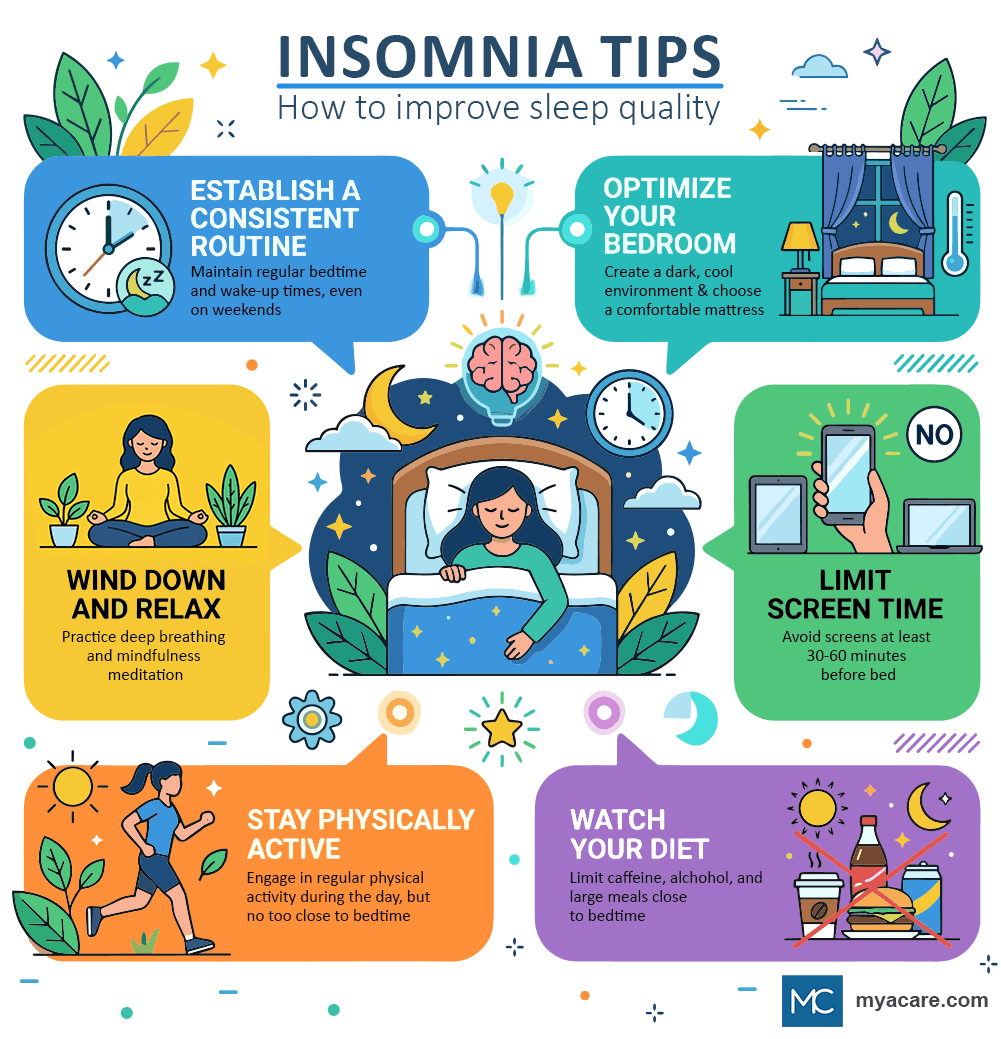
- Consistent sleep schedules, stress management, bedroom optimization, light management, diet, and physical activity may support better sleep.
- Some supplements may aid sleep, but evidence varies, and potential side effects and medication interactions require consideration.
- Underlying medical and mental health conditions can contribute to insomnia and may require appropriate treatment.
Introduction
Sleep is important for emotional regulation, cognition, and behavioral processes. It also affects memory, attention, and how well you interact with others. Sleep may also play an important role in metabolism. Inadequate sleep can disrupt energy metabolism, increasing the risk of metabolic problems such as obesity.
Insomnia has a prevalence of 12.4% based on DSM criteria. The range of occurrence of insomnia in adults is between 10% and 16%. In this article, we provide some sleep hygiene tips and suggestions on how to sleep better at night.
What Is Insomnia?
Insomnia is a disorder in which people have difficulty falling asleep, staying asleep, or waking up too early. The daytime signs of insomnia include fatigue, impaired thinking, and mood disturbances.
Occasional sleepiness or sleeplessness is an intermittent, temporary difficulty sleeping and does not necessarily mean a sleep disorder. Insomnia can also involve early-morning awakening (terminal insomnia) when people wake up much earlier than they want to.
An actual insomnia disorder is characterized by the frequency and duration of symptoms.
In acute insomnia, you have a hard time falling asleep or staying asleep, and it lasts less than 3 months.
Chronic insomnia is long-term insomnia in which you have difficulty sleeping 3 out of 7 nights, and the condition lasts 3 months or more.
Common Causes of Poor Sleep in Kids and Adults
Poor sleep in children can be due to many factors such as sleeping habits, genetics, medical conditions, and environmental factors including how much screen time they get.
Adults can have poor sleep when they have cardiovascular disease, neurodegenerative conditions, or mental health problems. Anxiety, depression, substance abuse, and pain can also lead to sleep issues.
Older adults may have problems with sleep, which is associated with increased frailty. Since insomnia can lead to a poor quality of life, it is important that patients seek treatment as soon as possible and find ways to improve sleep quality.
How to Sleep Better With Insomnia
Sleep disorder solutions include behavioral strategies. Some helpful insomnia tips include:
Behavioral Strategies for Insomnia
Cognitive Behavioral Therapy for Insomnia (CBT-I) is a therapy that involves 6 to 8 sessions and focuses on patients who have problems falling asleep and staying asleep. CBT for insomnia includes different treatment modalities that provide solutions for sleeplessness. It includes sleep restriction therapy and stimulus control therapy. CBT-I can also include cognitive therapy, sleep hygiene, and relapse prevention strategies.
Sleep restriction therapy (SRT) and sleep efficiency
Sleep restriction for insomnia helps stop middle-of-the-night awakenings. The goal is not to limit actual sleep time but to initially restrict time spent in bed. Then the amount of time spent in bed is gradually increased. To begin with, the amount of time in bed should not be below 5.5 hours.
Sleep restriction therapy is effective in improving insomnia severity and sleep continuity in the short term. However, more studies are needed to evaluate this method for long-term effectiveness.
Sleep restriction therapy can be considered as part of behavioral treatment for early morning awakening insomnia in older adults with age-related changes in their circadian rhythm
Stimulus control therapy (SCT) for insomnia
Stimulus control therapy is a behavioral treatment that helps strengthen the association between sleep and bed and weakens its association with wakefulness.
Conditioned arousal insomnia is a learned state. It occurs when the bed, or bedtime, becomes associated with being awake, or is associated with worry and physiological or cognitive arousal. As a result, entering the sleep environment can trigger alertness and make it more difficult for the person to fall asleep or stay asleep.
SCT uses changes in behavior to help with conditioned arousal insomnia. For example, only going to bed when you are tired and avoiding daytime sleeping.
Sleep diary
CBT is the recommended treatment for insomnia, and a useful component is using a digital sleep diary, which provides feedback. A sleep diary can help patients track their sleep and make adjustments after viewing the feedback. It provides a visual overview of a patient’s sleep pattern and can be helpful when combined with electroencephalography neurofeedback.
Digital devices and insomnia
Your sleeping environment is important if you are trying to sleep better. For instance, it is important to strengthen the bed-sleep association.
Digital insomnia occurs when sleep difficulties are associated with the use of digital devices or media, especially if use is excessive or near bedtime. Using digital devices interferes with sleep because of delayed bedtime, psychological or cognitive stimulation, and exposure to the light from screens.
Digital media use is linked with poor sleep quality, so avoid scrolling and reading work emails in bed and set a screen-time cutoff to reduce mental stimulation.
There is also an association between insomnia and social media, including doomscrolling. For example, studies find that people have poor-quality sleep with the use of social media.
Hyperarousal insomnia is a constant state of alertness. Such increased arousal can happen because of social media use. Also, clock-watching can lead to worse insomnia.
Sleep schedule
How to fix your sleep schedule
- Allow enough time for sleep: A consistent sleep schedule improves sleep hygiene, along with getting 7 to 9 hours of sleep and having a regular bedtime routine.
- Get out of bed if you cannot sleep: This is one of the American Academy of Sleep Medicine’s guidelines for better sleep. The 20-minute rule suggests getting up after about 20 minutes, while the 15-minute rule recommends doing so after 15 minutes. Either approach may be followed, depending on individual preference.
- Consider naps carefully: Napping when experiencing insomnia can cause or worsen the condition. However, while some recommend avoiding naps and sleeping in on weekends, the National Sleep Foundation consensus panel suggests exceptions, as naps may help make up for insufficient sleep during the week, even though consistency is ideal.
- Be aware of social jetlag: Social jetlag describes a mismatch between our social life and circadian rhythm. Shift workers also experience this mismatch because of work obligations. Social jetlag of 2 or more hours and insomnia are related to symptoms of depression in teenagers.
Stress Management and Mental Relaxation
Can stress cause insomnia?
Stress can cause both acute and chronic insomnia, but individuals with better coping skills may be less likely to have sleep problems when there is stress. There are some methods that can help prevent stress-related insomnia.
Mindfulness and meditation
- A wind-down routine is a good idea to help with sleeplessness. One way to wind down is to practice mindful breathing.
- Deep breathing and mindfulness meditation can help. There are deep breathing exercises for insomnia that can help improve sleep quality. Mindfulness meditation for insomnia has the potential to help older adults in particular, although more research is needed.
Progressive muscle relaxation and cognitive shuffling
Progressive muscle relaxation for insomnia improves sleep quality and mental health.
You can use cognitive shuffling, which is a sleep technique where you think about something pleasant or neutral for a few seconds and then shift to visualizing another image. This method was postulated to help with insomnia.
Gratitude journal and brain dump
Writing down what you are grateful for can help with sleep. Research found that gratitude was related to sleep duration and overall quality. The idea behind this is that people with fewer negative thoughts before sleep will have better sleep.
The brain dump technique is when every thought, worry, and idea is transferred onto paper or in a digital note-taking platform. Worrying at bedtime can make it difficult to fall asleep. Research found that if people wrote a to-do list before going to bed, they could fall asleep more quickly, and the more specific the list, the faster they could go to sleep. The brain dump technique and scheduling "worry time" can be done earlier in the day to reduce sleep disruption.
Bedroom Optimization
There are strategies that can be used for better sleep and to decrease insomnia.
- Keep the bedroom cool, consider white noise, and use blackout curtains. White noise can decrease disturbances during sleep.
- Decluttering the sleep environment has limited research on being an effective way to help insomnia; however, one study suggests this could be part of a treatment of insomnia in females.
- Mattress firmness can also determine sleep quality. A study found that people who slept on medium-firm mattresses had good sleep quality.
- Aromatherapy may help as well, though results depend on the scent used. Certain scents, such as lavender, may help with sleep, while unpleasant smells may hinder it. In older adults, aromatherapy for insomnia improved sleep when using lavender for less than four weeks.
Circadian Rhythm and Light Management
Circadian rhythms are controlled by the suprachiasmatic nucleus (SCN), a region found in the hypothalamus of the brain. The SCN responds to light via signals sent from the eye. This then influences melatonin production and other neurochemicals that are associated with alertness and sleep.
Morning sunlight anchors the circadian rhythm. This is because the light affects melatonin secretion, which is the hormone that triggers the start of sleep and the quality of sleep.
This is why you should avoid bright overhead lighting before bed.
Light therapy for circadian rhythm disorders
Timed light exposure can be helpful for jet lag. Further research using human subjects found that circadian-informed lighting (timed, spectrally tuned light to align with the body clock) can help those who have shift work and suffer from circadian misalignment as a result.
Blue light and sleep
Blue light from electronic devices may have an adverse impact on sleep, reducing deep sleep. This is because blue light is in the 450–480 nm band, which can suppress melatonin. It is a good idea to reduce blue light exposure or use night mode on devices to prevent this melatonin suppression.
Food and Drink Strategies
Foods that can worsen insomnia
One of the things to help sleep better is avoiding large or spicy meals and not eating close to bedtime, but rather eating a few hours before bedtime. Foods that cause insomnia are those that are spicy and lead to GERD (Gastroesophageal reflux disease), which causes disruptive sleep. However, it is not recommended to go to bed very hungry, as this can mean less efficient sleep.
Can drinking cause insomnia?
Consuming excessive evening fluids causes more awakenings during the night. Reducing alcohol, avoiding nicotine, and limiting caffeine intake may help reduce sleep disturbances and insomnia symptoms. Drinking alcohol and smoking can negatively affect sleep. Caffeine is a stimulant, so careful consumption of beverages with caffeine can reduce the odds of insomnia.
Foods that may help lower the risk of insomnia
Following a healthy diet such as the Mediterranean diet can result in less anxiety and reduced risk of insomnia. Some foods that help with insomnia include fruits and vegetables, while eating fatty foods may increase this risk. A deficiency of zinc and vitamin C may also be related to sleep problems.
Some foods may help with sleep, such as kiwi fruit, bananas, tart cherries, almonds, and dairy products, including milk. These are results from preliminary studies, and more research is needed to establish whether these food and drink items really significantly help with sleep issues.
Exercise and Physical Activity
Yoga is a physical activity that aids better sleep at night. It improves sleep duration and quality, likely because it helps muscle relaxation and is a way to decrease stress and worry.
Does exercise help insomnia?
Exercise can improve overall sleep quality. Moderate-intensity physical activities hold promise for insomnia prevention.
However, the timing of exercise can also affect sleep patterns.
Can exercise at night cause insomnia?
Intense late-night workouts can cause delayed onset of sleep and lower quality of sleep, but exercising 4 hours or more before bedtime has not been shown to impact sleep.
Can lack of physical activity cause insomnia?
It can, although there is conflicting evidence regarding sitting and insomnia. Some suggest reducing sitting to improve sleep, but others have found that this is not necessarily linked to insomnia. Studies have found that increasing physical activity decreases the risk of insomnia in a dose-response way, suggesting that being inactive is inadvisable.
Sleep Supplements: What Does the Evidence Say?
Some nutrients and herbs, namely Melatonin, Magnesium, Valerian Root, Chamomile, and L-Theanine, can aid better sleep. These are discussed in more detail below:
Melatonin
Most studies have found that this can aid sleep and is used to treat insomnia, although the evidence for how well it works is mixed. Side effects can include headaches, stomach problems, and dizziness.
Magnesium
Magnesium L-threonate is considered by some as a sleep supplement, supported by a study involving 100 adults that found it improved sleep-related impairment and also provided cognitive benefits. Side effects are uncommon, with 90% of people in the study experiencing no adverse events. However, when they do occur, they may include abdominal pain and gastrointestinal upset.
Valerian Root
While a review of studies indicated that valerian is not yet proven to be effective for treating insomnia, some analyses found it may modestly improve subjective sleep quality and is safe, with a few side effects, such as headache, dizziness, or stomach upset.
Chamomile
Some studies suggest chamomile oil helps with sleep. Chamomile contains the flavonoid apigenin, which interacts with GABAergic receptors in the brain. This influences and reduces activity of the hypothalamic–pituitary–adrenal (HPA) axis, thus affecting sleep.
Ashwagandha contains withanolides that downregulate cortisol and help with sleep onset. Chamomile and ashwagandha may promote sleep by influencing stress hormones like cortisol and the HPA axis. But Ashwagandha can cause nausea, diarrhea, belly pain, and vomiting. Stomach upset could also be a side effect of chamomile, though not usually serious. There have also been a few cases of allergic reactions to chamomile, but this is rare.
L-theanine
Taking between 200-450 mg/day of L-theanine may help to maintain sleep, with people reporting feeling refreshed after waking up. It works by competing with glutamate at receptors in the brain. Glutamate is the chemical associated with wakefulness.
Safety Considerations With Sleep Supplements for Insomnia
Melatonin, magnesium, and other supplements are sometimes used to support sleep, but they may not be appropriate for everyone. Natural products can still cause side effects, interact with medications, or be unsuitable for certain medical conditions. It is important to consult a doctor before using supplements for insomnia.
Treating Health Conditions That Affect Sleep
One of the tips for insomnia and anxiety is to treat any underlying health problems that could be responsible for the sleeplessness and worry. When a medical condition disrupts sleep in this way, it is known as secondary insomnia. A few such health conditions are listed below:
- Restless leg syndrome: This condition can be related to insomnia. Some patients with chronic insomnia may actually have restless leg syndrome.
- GERD: GERD is associated with sleep problems, but more research is needed on this.
- Allergies: A 2024 study found that 36% of people with rhinitis due to allergies have insomnia.
- Nasal congestion: Nasal congestion can cause insomnia. This can be due to allergic rhinitis. Patients with allergic rhinitis had better sleep after treatment with corticosteroids.
- Sleep apnea: Obstructive sleep apnea causes people to awaken often due to repeated apneic events. This makes it difficult for a person to sleep well at night.
- Mental disorders: Several mental health issues can cause insomnia, and insomnia can also worsen mental health conditions. Bipolar disorder can result in people having worse sleep. Insomnia occurred in 63% of bipolar patients during the depressive phase, while patients in mania or mixed stages experienced shorter sleep times and poor sleep efficiency. Patients with schizophrenia may have a harder time falling asleep, have nightmares, and have a disrupted sleep-wake cycle.
- Long COVID and Covidsomnia: Sleep problems can happen because of long COVID. Patients experienced irregular sleep, waking up often, and difficulty staying asleep if they had long COVID. Insomnia because of COVID also includes symptoms like nightmares and restless legs, and is informally referred to as COVIDsomnia.
- Skin issues and sleep: A lack of sleep means the body can not repair and rebuild tissues as easily, and is associated with worse atopic dermatitis, eczema, and psoriasis. These skin disorders in turn worsen insomnia.
- Menopause insomnia: This happens in many women. During menopause, a woman may wake up several times a night due to hormonal changes that affect nerve cells in the brain that influence body temperature and the circadian rhythm.
When to Seek Medical Help
- Insomnia lasts more than 3 months
- Excessive daytime sleepiness
- Loud snoring or breathing pauses
- Symptoms of depression or anxiety
- Sleep problems affect work or daily functioning
Conclusion
Many people suffer from insomnia at some point in their lives, but there are methods to help. Mindfulness practices, cognitive shuffling for insomnia, and reducing worry time may help. Insomnia light therapy and various cognitive behavioral therapy strategies can be helpful in reducing sleep problems. While some people like to try supplements, it is safer to check with your doctor first.
Frequently Asked Questions
How to deal with first trimester insomnia?
Women with early pregnancy insomnia should try to have a regular sleep schedule, limit screen time before bed, and avoid drinking anything with caffeine late in the day.
Is there a link between diabetes and insomnia?
Diabetes and sleep can affect each other. People with type 2 diabetes who had the condition for a long time and had hypertension were more prone to insomnia. In turn, insomnia is associated with poor control of blood sugar levels in diabetics.
There are benefits of a regular sleep schedule for diabetes prevention and management. Keeping a regular sleep-wake cycle helps sleep hygiene. Some research suggests that maintaining a sleep schedule of 7 to 8 hours may partly help reduce diabetes risk for type 2 diabetics. Daytime napping of longer than 30 minutes may also increase risk.
Can a sleep tracker cause insomnia (orthosomnia)?
It can, because people can become obsessed with looking at the data from the tracker, constantly check the tracker, and be worried if they are not reaching ideal sleep.
How can understanding my chronotype help with managing insomnia?
Understanding chronotype, whether a person is a morning, evening, or intermediate type, can help identify natural sleep-wake preferences. When daily schedules require sleeping or waking at times that do not match these preferences, circadian misalignment can occur and may affect sleep. Aligning sleep schedules more closely with chronotype may help reduce this mismatch and support better sleep.
Can taking sleeping pills cause insomnia?
Sleep medications may provide short-term relief, but long-term use can worsen sleep problems. For example, a specific class of prescription sedatives may be used in adults with anxiety and insomnia, but they are generally recommended for less than four weeks. Prolonged use can lead to dependence.
How to sleep better with the 10-3-2-1-0 trick?
The 10-3-2-1-0 method involves following five habits at specific times before bedtime: avoiding caffeine for 10 hours before sleep, avoiding food and alcohol for 3 hours, stopping work 2 hours before bed, and avoiding screens for 1 hour. The “0” refers to not hitting the snooze button at all in the morning. There are currently no specific scientific studies evaluating the effectiveness of this method.
What is the 30-30 rule for insomnia, and how does it relate to BBTI?
The 30-30 rule is a form of Brief Behavioral Treatment for Insomnia (BBTI), a short, structured adaptation of cognitive behavioral therapy for insomnia (CBT-I). Clinical trials have found BBTI to significantly improve self-reported sleep, sleep diary measures, and sleep tracked by wearable devices. It recommends getting out of bed if awake for more than 30 minutes, as spending prolonged periods awake in bed may strengthen the association between the bed and wakefulness. If nighttime wakefulness lasts more than 30 minutes, the amount of time spent in bed may be reduced. If wakefulness remains under 30 minutes and there are no prolonged awakenings during the night, time in bed may be increased. These adjustments can continue as part of the method.
What deficiency causes insomnia?
Deficiencies in iron and vitamin D are associated with sleep-related issues.
Which sleeping position is best for insomnia?
There is no research indicating that there is one best position to sleep for insomnia. However, sleep position may influence other medical conditions that may disrupt sleep. For example, side sleeping can help reduce snoring and mild sleep apnea, while back sleeping can worsen neck pain; it can help with lower back pain. For people with GERD or heartburn, sleeping on the right side can make symptoms worse.
To search for the best doctors and healthcare providers worldwide, please use the Mya Care search engine.

Dr. Rae Osborn has a Ph.D. in Biology from the University of Texas at Arlington. She was a tenured Associate Professor of Biology at Northwestern State University, where she taught many courses to Pre-nursing and Pre-medical students. She has written extensively on medical conditions and healthy lifestyle topics, including nutrition. She is from South Africa but lived and taught in the United States for 18 years.

Abinaya Muralidharan holds an M. Pharm in Pharmacology. She specializes in turning complex science into clear, credible content, with experience spanning clinical safety, regulatory affairs, and medical communications. She has worked across various therapeutic areas, including but not limited to oncology, dermatology, hematology, and cardiology. She has authored publications in peer-reviewed journals, including original research papers and review articles.
References:
Featured Blogs

Medically Induced Coma: What It Is, How It Works & Recovery