
Nipah Virus: Transmission, Outbreak Risks, and Global Threats
Medically Reviewed by Dr. Sony Sherpa, (MBBS) - February 18, 2026
Fact Checked by Dr. Asif Baliyan, MD - February 18, 2026
Nipah virus is a zoonotic infection linked to sporadic but severe outbreaks, particularly in South and Southeast Asia. Transmitted mainly from fruit bats to humans, it can cause serious respiratory and neurological illness with high fatality rates. With no approved targeted treatment, prevention, early detection, and supportive care remain central to managing infection and limiting outbreaks.
Introduction
The Nipah virus (NiV) continues to re-emerge in sporadic but severe outbreaks, particularly in South and Southeast Asia. While outbreaks are usually small and localized, they are often associated with high fatality rates and significant public health concerns. Recent clusters in countries such as India and Bangladesh highlight the virus’s ability to resurface unexpectedly, often linked to environmental, agricultural, and behavioral factors.
The World Health Organization (WHO) has classified the Nipah virus as a priority pathogen because of its high mortality rate (40–75%), the lack of approved vaccines or targeted antiviral treatments, and the potential for human-to-human transmission. These features make Nipah a serious global health threat requiring ongoing surveillance, research, and preparedness.
Nipah virus is a zoonotic infection, meaning that it spreads from animals to humans, primarily through fruit bats. While it does not currently transmit as efficiently as pandemic viruses such as influenza or SARS-CoV-2, limited human-to-human spread has been documented, especially in healthcare and household settings. That said, the potential for the virus to mutate and acquire enhanced transmissibility is a possible risk, making early detection and containment crucial. Some studies advocate increased research and preparedness for epidemic or even pandemic risk, which can be influenced by factors such as rising global trade and travel.
Nipah outbreaks are concentrated in Malaysia, Bangladesh, and India due to a combination of factors:
- Natural reservoirs of the virus (Pteropus fruit bats) are widespread in these regions
- Close contact between humans, bats, and livestock
- Consumption of raw date palm sap, a known transmission route in Bangladesh
- High population density and limited infection-control resources in some areas
These ecological and cultural factors create repeated opportunities for spillover events from animals to humans.
What Is the Nipah Virus?
Classification and Origin
Nipah virus is an RNA virus that belongs to the Henipavirus genus within the Paramyxoviridae family. It was first identified in 1998 in Malaysia during an outbreak among pig farmers, where transmission occurred from fruit bats to pigs and subsequently to humans. The following year, infected pigs imported from Malaysia were identified as the source of an outbreak in neighboring Singapore.
Henipaviruses are notable for their ability to infect multiple species, cross the animal-human barrier, and cause severe respiratory and neurological disease in humans.
Transmission and Causes of Nipah Virus Infection
Natural Reservoir – Fruit Bats
The primary natural hosts of the Nipah virus are fruit bats, otherwise known as flying foxes, of the Pteropus genus. These bats carry the virus without obvious illness, and the virus is present in their saliva, urine, and other secretions. Contact with these secretions is a core driver of spillover to other species.
Animal-to-Human Transmission
Nipah virus can move from animals into people through several pathways:
- Direct contact with infected bats
- Humans who touch bats, their droppings, urine, or saliva can be exposed.
- Intermediate animal hosts
- Pigs (and in rare outbreaks, other animals) can become infected after exposure to bats. People working closely with infected pigs or animals can then become infected. The 2014 Nipah outbreak in the Philippines was notable for being linked to sick horses, including exposure through slaughtering and consumption of horse meat.
- Contaminated food products
- Eating food or drink contaminated with bat saliva or urine, such as raw date palm sap (as well as liquor made therewith), is a well-documented route of transmission in countries like Bangladesh and parts of India.
- Other environmental exposures
- Research and outbreak investigations suggest that viral contamination of fresh water sources such as wells or rivers (from bat excreta) could theoretically lead to exposure, particularly where water is used untreated.
Human-to-Human Transmission
Once a person is infected, limited human-to-human spread can occur, especially through:
- Close contact with bodily fluids: respiratory secretions, saliva, urine, or blood from a symptomatic person.
- Caregivers and healthcare settings: outbreaks in families and hospitals have been linked to poor infection control (e.g., inadequate protection while caring for patients).
While Nipah can be transmitted between people, this is typically inefficient and requires close contact, unlike truly airborne pathogens such as measles or SARS-CoV-2. Airborne spread (through tiny aerosol particles that can travel long distances) has not been confirmed as a usual mode of transmission for Nipah.
Virus Survival Outside a Host
Nipah virus is an enveloped virus, meaning it is somewhat fragile outside a host — but it can still survive long enough on surfaces and in fluids to cause infection:
- In fruit juices and contaminated sap: up to ~3 days under local ambient temperatures.
- In date palm sap at about ~22 °C: at least ~7 days (meaning sap stored without boiling or protection can remain infectious).
- In bat urine: a half-life of ~18 hours.
- Heating: the virus can be quickly inactivated by cooking or boiling; at ~100 °C for 15 minutes, the virus is no longer infectious.
- Soap and disinfectants: effective at inactivating the virus due to its enveloped structure.
Clinical Features: Symptoms and Severity
Incubation Period
After exposure, symptoms usually begin about 4 to 14 days later. In rare cases, symptoms have appeared much later (up to ~45 days).
Symptom Onset and Progression
It is notable that in some individuals, Nipah virus infection may not show any symptoms.
Early (initial) Symptoms:
- Fever
- Headache
- Muscle pain
- Sore throat
- Fatigue
- Vomiting
These symptoms are non-specific and can resemble a typical viral flu-like illness.
Progression:
Many people develop respiratory symptoms such as cough or difficulty breathing. Neurological signs often follow or occur together, especially when the virus affects the brain.
Severity and Complications:
The most serious outcomes include:
- Encephalitis (brain inflammation): confusion, dizziness, drowsiness, altered consciousness
- Seizures
- Coma, sometimes within 24–48 hours of neurological onset
- Acute respiratory distress, which can resemble severe pneumonia
These complications can be fatal.
Long-Term Effects on Survivors
People who recover from Nipah virus infection can return to full health, but some survivors experience permanent neurological problems, such as seizure disorders or personality changes. Approximately 20% of survivors may have such long-term sequelae.
Diagnosis of Nipah Virus Infection
How to Test for Nipah Virus Infection
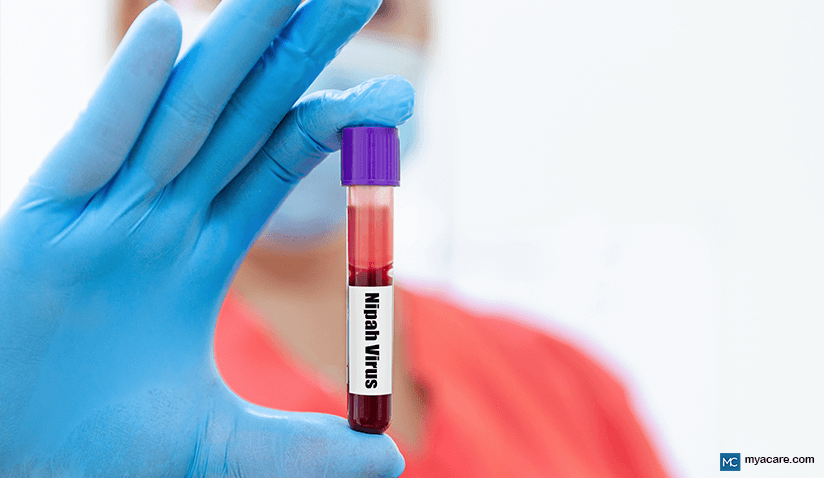
Diagnosis of Nipah virus infection relies on a combination of clinical suspicion, exposure history, and laboratory confirmation. Testing is usually initiated in patients with acute encephalitis or severe respiratory illness who have epidemiological risk factors such as contact with bats, consumption of raw date palm sap, or exposure during a known outbreak.
Since the Nipah virus is a high-risk (BSL-4) pathogen, testing is performed only in specialized laboratories with appropriate biosafety facilities.
Laboratory Confirmation
Definitive diagnosis is achieved through virological and serological tests, including:
- RT-PCR (Reverse Transcriptase Polymerase Chain Reaction):
Detects Nipah virus RNA and is the gold standard during the acute phase of illness. It is highly sensitive and specific. - ELISA (Enzyme-Linked Immunosorbent Assay):
Used to detect IgM and IgG antibodies, especially useful in later stages of infection or for retrospective diagnosis. - Virus isolation:
Possible but rarely performed due to biosafety constraints, and is mainly limited to research or reference laboratories.
Bodily Fluids Used for Testing
Nipah virus can be detected in multiple specimens, depending on the disease stage:
- Blood (serum or plasma)
- Cerebrospinal fluid (CSF)
- Throat and nasal swabs
- Urine
- Respiratory secretions (especially in patients with pneumonia)
Using multiple specimen types improves diagnostic accuracy.
Differential Diagnosis
Nipah virus infection often presents as acute febrile encephalitis, a syndrome shared by several tropical infections. Distinguishing features are crucial for accurate diagnosis and outbreak control.
Key Conditions to Differentiate From Nipah Virus
-
Japanese Encephalitis (JE):
Typically mosquito-borne, seasonal, and more common in rural areas with rice farming. JE lacks person-to-person transmission and usually does not cause severe respiratory illness.
-
Measles:
Characterized by rash, conjunctivitis, and Koplik spots. Encephalitis is a rare complication, and respiratory failure is usually secondary to pneumonia rather than viral neuroinvasion.
-
Rabies:
Associated with animal bites and presents with hydrophobia, aerophobia, and progressive paralysis. Rabies has a much longer incubation period and no respiratory outbreak clusters.
-
Dengue Encephalitis:
Occurs during dengue outbreaks and is often accompanied by thrombocytopenia, bleeding manifestations, and plasma leakage — features not typical of Nipah.
-
Cerebral Malaria:
Common in malaria-endemic regions; diagnosis is confirmed by detection of Plasmodium parasites. Respiratory involvement is less prominent, and outbreaks are mosquito-driven.
-
Scrub Typhus:
Presents with fever and encephalopathy, often with an eschar and lymphadenopathy. Responds rapidly to antibiotics, unlike the Nipah virus infection.
-
Leptospirosis:
May cause meningitis, jaundice, renal failure, and hemorrhage. Exposure to contaminated water is common, but person-to-person transmission is rare.
-
Herpes Simplex Encephalitis:
Typically involves the temporal lobes and responds to acyclovir. Lacks outbreak patterns and zoonotic exposure history.
-
Bacterial Meningitis:
Rapid onset with neck stiffness and purulent CSF findings. Responds to antibiotics and does not cause clusters linked to animal exposure.
Careful assessment of exposure history, outbreak context, respiratory involvement, and neurological progression helps distinguish Nipah virus from these conditions.
Treatment of Nipah Virus Infection
Currently, there is no approved antiviral treatment specifically proven to cure Nipah virus infection. Some antivirals and monoclonal antibodies are under investigation, but none are yet standard of care.
Supportive Care as the Primary Management Approach
Management focuses on intensive supportive care, which significantly influences outcomes:
- Maintenance of hydration and electrolyte balance
- Respiratory support, including oxygen therapy or mechanical ventilation for respiratory failure
- Management of seizures and raised intracranial pressure
- Monitoring and treatment of secondary infections
- Strict infection-control measures to prevent nosocomial transmission
Early recognition, prompt isolation, and high-quality supportive care are critical to reducing mortality.
Survival Rate
Can People Survive Nipah Virus Infection?
Yes, people can survive Nipah virus disease, but the likelihood of survival depends heavily on the severity of infection, the quality of medical care, and the outbreak context. Most survivors receive intensive supportive care, and many regain full health, though some may have long-term neurological symptoms. About 1 in 5 survivors may experience lasting complications.
Fatality Rates and Trends
- The case fatality rate (CFR) for Nipah virus infection is high and variable, typically ranging from 40 to 75% across documented outbreaks. This means that many affected individuals, often 4 or more out of every 10 diagnosed, may die from the disease, particularly in settings without rapid diagnosis and high-level supportive care.
- In some outbreaks, fatality has even been reported above these averages, depending on virus strain and healthcare infrastructure. Surviving Nipah often depends on rapid medical support, including critical care in advanced hospitals.
Experimental Therapies and Research
There are no approved targeted treatments for Nipah virus in humans yet, but several experimental approaches show promise in research settings:
Monoclonal Antibody (mAb) Therapies
- The m102.4 monoclonal antibody has been developed to block the virus from entering cells. In laboratory and animal models, m102.4 and related antibodies can neutralize the virus and protect against lethal disease. This antibody has already been given to some humans under emergency/compassionate use, and early testing has suggested it is safe and well-tolerated.
- Newer antibody therapies targeting multiple parts of the virus (e.g., bispecific nanobody + antibody combinations) are being studied to enhance potency and reduce viral escape.
- Research also includes other potent antibodies that could neutralize the virus even when administered after exposure, potentially improving outcomes if early treatment is possible.
Vaccine Development
- Several vaccine candidates are under research, although none are yet licensed for general use. Experimental vaccines using viral vectors (similar to platforms used for other diseases) have shown strong immune responses and protection in animal studies, including non-human primates and rodents.
- An mRNA vaccine candidate designed to present viral proteins to the immune system has also elicited strong neutralizing antibody responses in early research.
- Human clinical trials for some Nipah vaccine candidates (e.g., ChAdOx1-based platforms) are progressing, supported by global research programs and public-health agencies in several countries. These evaluate safety and immune response before broader use.
Antivirals and Small Molecules
- Some existing broad-spectrum antiviral drugs (for example, remdesivir) have been examined in preclinical settings to see if they might reduce Nipah virus replication, either alone or in combination with antibody therapies. These efforts aim to find drugs that can be quickly deployed in outbreaks.
- However, no specific antiviral medication has yet been proven effective in humans for Nipah virus disease; therefore, these drugs remain in the investigational stage.
Research and Development Outlook
- Due to the Nipah virus’s high lethality and epidemic potential, it is a priority for research by health authorities such as the WHO and national research institutions. Efforts focus on speeding up clinical trials for vaccines and therapeutics and strengthening outbreak response systems.
Prevention & Reducing Risk
Preventing Nipah virus infection focuses on reducing exposure, strengthening hygiene, and supporting public health systems to stop transmission at both the individual and community levels.
Reducing Exposure
Avoid Contact With Bats and Their Secretions
- Do not touch fruit bats or their roosting sites.
- Avoid areas where bats feed or urinate, especially at night.
- Prevent contamination of food by bats, including:
- Fallen fruits
- Raw date palm sap and products derived from it
- Use protective covers (e.g., bamboo screens) on sap collection pots to prevent bat contact.
Avoid Contact With Ill Animals
- Do not handle or slaughter sick livestock (e.g., pigs).
- Notify animal health authorities if animals show signs of illness.
Personal Hygiene Practices
- Wash hands frequently with soap and clean water, especially:
- After outdoor activities
- Before eating
- After contact with animals or potentially contaminated materials
- Use hand sanitizer with at least 60% alcohol when hand-washing isn’t possible.
Safe Food and Water Practices
- Avoid raw date palm sap, especially from unprotected sources.
- Wash fruits and vegetables thoroughly before eating.
- Drink only treated or boiled water; avoid potentially contaminated water from open wells, streams, or rivers.
Early Detection and Prompt Reporting
Early recognition of symptoms and exposure is critical:
- Seek medical advice immediately if you develop fever, headache, or respiratory/neurological symptoms after potential exposure.
- Inform healthcare staff of any contact with:
- Bats
- Livestock
- Suspected or confirmed Nipah cases
- Prompt reporting enables faster response and containment.
Infection Control and Caregiver Safety
In the Household
- Isolate symptomatic individuals from other family members.
- Assign only one caregiver when possible.
- Use protective measures:
- Wash hands often
- Wear masks (if available), especially when in close contact
- Avoid sharing utensils or bedding
- Clean and disinfect frequently touched surfaces.
In Healthcare Facilities
Healthcare workers must follow stringent infection control protocols:
- Wear appropriate personal protective equipment (PPE):
- Gloves
- Gowns
- N95 or equivalent respirators
- Eye protection
- Practice standard, contact, and droplet precautions.
- Use dedicated medical equipment for suspected patients.
- Place patients in single rooms, ideally with negative pressure ventilation.
- Train staff on safe specimen collection and transport for testing.
In past outbreaks, hospital-acquired (nosocomial) transmission occurred when infection control was lacking. Strict adherence prevents spread among staff and other patients.
Public Health Measures and Outbreak Control
Contact Tracing and Quarantine
- Identify and monitor all close contacts of confirmed or suspected cases for symptoms for the maximum incubation period (typically up to 14 days).
- Isolate or quarantine close contacts as needed until they are cleared.
Travel Advisories and Screening
- During outbreaks, health authorities may issue travel advisories recommending:
- Enhanced screening at borders and points of entry
- Symptom checks for travelers from affected areas
- Education about risk reduction
Use of Rapid Diagnostic Tools
- Deploy rapid diagnostic tests where available to identify and isolate cases early.
- Support mobile or laboratory networks to reduce turnaround time for confirmatory testing, such as RT-PCR.
Strengthening Surveillance Systems
Sustainable outbreak prevention requires robust surveillance:
- Monitor animal reservoirs (e.g., bats, livestock) and environmental risk factors.
- Implement community reporting systems for unusual clusters of disease.
- Integrate Nipah virus surveillance into broader infectious disease monitoring.
Strengthening regional and international surveillance ensures faster detection and coordinated response.
Community Education and Behaviour Change
Risk reduction also depends on public awareness:
- Educate communities about:
- How Nipah spreads
- High-risk exposures
- The importance of reporting symptoms early
- Use culturally appropriate messaging, especially in areas where consuming raw sap is a tradition.
Role of Policy and Infrastructure
Effective prevention requires support at policy and system levels:
- Governments and health agencies should:
- Develop and fund national Nipah preparedness plans
- Enhance laboratory capacity for early testing
- Stockpile necessary protective equipment
- Train healthcare workers in infection control
- Cross-border cooperation helps address outbreaks in neighboring regions with shared ecological risks.
Global and Regional Nipah Virus Trends
2025 Outbreak in West Bengal, India
- In late December 2025, two laboratory-confirmed cases of Nipah virus infection were reported in West Bengal State, India. Both were healthcare workers in Barasat, North 24 Parganas district. One showed clinical improvement while the other remained in critical condition as of late January 2026. Over 190 contacts identified through contact tracing were tested, and all were negative for Nipah virus infection, showing effective outbreak control.
- This represents the third documented Nipah outbreak in West Bengal (the previous outbreaks occurred in 2001 and 2007), highlighting the recurring risk of spillover from animal reservoirs in this region.
Public Health Response & Airport Health Checks
- Following the outbreak detection, several Asian countries, including Thailand, Nepal, Taiwan, and China, have reinstated health screenings at airports and border crossings, including temperature checks and health questionnaires for travellers arriving from affected regions.
- Health authorities stress that these measures are mainly precautionary and reassurance-based, and that the World Health Organization (WHO) does not currently recommend airport screenings as an effective barrier to international spread because the Nipah virus does not easily transmit between humans.
- Screening aims to encourage early reporting and manage symptomatic travellers rather than block the virus at borders.
WHO Risk Assessment
- The WHO assesses the public health risk at the subnational level as moderate, but low at the national, regional, and global levels, given the small number of cases and the successful containment efforts so far.
Historical Outbreak Patterns
Recurring Outbreaks in South Asia
- Bangladesh and India have experienced recurrent outbreaks of the Nipah virus since its identification.
- Outbreaks tend to occur seasonally between December–May, correlating with times when fruit bats are active and when cultural practices like collecting and consuming raw date palm sap are common, a key risk factor for spillover.
- In Kerala State (southern India), multiple outbreaks have been documented:
- 2018: the first confirmed case, ~17 deaths
- 2021, 2023, 2024: further small clusters occurred, some with high mortality, primarily linked to bat exposure and close contact with infected individuals or nosocomial spread.
Outbreaks Outside South & Southeast Asia
- To date, confirmed Nipah virus outbreaks have occurred mainly in South and Southeast Asia, including Bangladesh, India, Malaysia, Singapore, and the Philippines.
- Although the fruit bats that carry the virus are found in regions beyond these outbreak zones, no sustained community transmission has been documented in regions like Europe, Africa, the Americas, or Australia.
- Imported or suspected cases outside Asia have been very rare or unconfirmed, and ongoing surveillance remains focused on areas with natural bat reservoirs and established outbreak history.
FAQs About Nipah Virus
What is the Hendra virus, and is it related to the Nipah virus?
Hendra virus and Nipah virus are closely related zoonotic viruses in the Henipavirus genus of the Paramyxoviridae family.
- Both are carried by bats (Pteropodidae species) and can infect humans and animals (especially horses for Hendra).
- While both can cause severe disease, their geographic distributions and epidemiological patterns differ.
How is the Nipah virus different from the coronavirus?
Nipah virus and coronaviruses (like SARS-CoV-2) are different families of viruses:
- Transmission: Nipah spreads primarily through bats, animal hosts, contaminated foods, and close personal contact. It is generally not airborne in the way that respiratory coronaviruses like COVID-19 can be.
- Epidemic potential: Nipah has higher fatality rates but less efficient human-to-human transmission than SARS-CoV-2.
- Virus classification: Nipah is a Henipavirus; coronaviruses belong to the Coronaviridae family.
What are the psychosocial impacts of Nipah virus outbreaks?
Outbreaks can lead to significant psychological and social distress among patients, caregivers, and community members, including:
- Fear of isolation, death, or stigma
- Long-term anxiety and grief among survivors or those quarantined
- Economic and social disruption in affected communities
Research shows that Nipah outbreaks, like other severe infectious disease outbreaks, can produce lasting psychosocial impacts without adequate mental-health support integrated into public-health responses.
To search for the best doctors and healthcare providers worldwide, please use the Mya Care search engine.
The Mya Care Editorial Team comprises medical doctors and qualified professionals with a background in healthcare, dedicated to delivering trustworthy, evidence-based health content.
Our team draws on authoritative sources, including systematic reviews published in top-tier medical journals, the latest academic and professional books by renowned experts, and official guidelines from authoritative global health organizations. This rigorous process ensures every article reflects current medical standards and is regularly updated to include the latest healthcare insights.

Dr. Sony Sherpa completed her MBBS at Guangzhou Medical University, China. She is a resident doctor, researcher, and medical writer who believes in the importance of accessible, quality healthcare for everyone. Her work in the healthcare field is focused on improving the well-being of individuals and communities, ensuring they receive the necessary care and support for a healthy and fulfilling life.

Dr. Asif Baliyan is a doctor and clinical researcher with over a decade of experience in evidence-based diagnostic medicine. A Consultant at a tertiary care hospital in New Delhi, he also serves as a medical reviewer, ensuring healthcare content remains accurate, ethical, and aligned with current clinical guidelines.
References:
Featured Blogs

Medically Induced Coma: What It Is, How It Works, Who Benefits, and Recovery Outcomes