Skin in a Syringe: An Emerging Regenerative Option for Wound Repair
Medically Reviewed by Dr. Sony Sherpa, (MBBS) - March 02, 2026
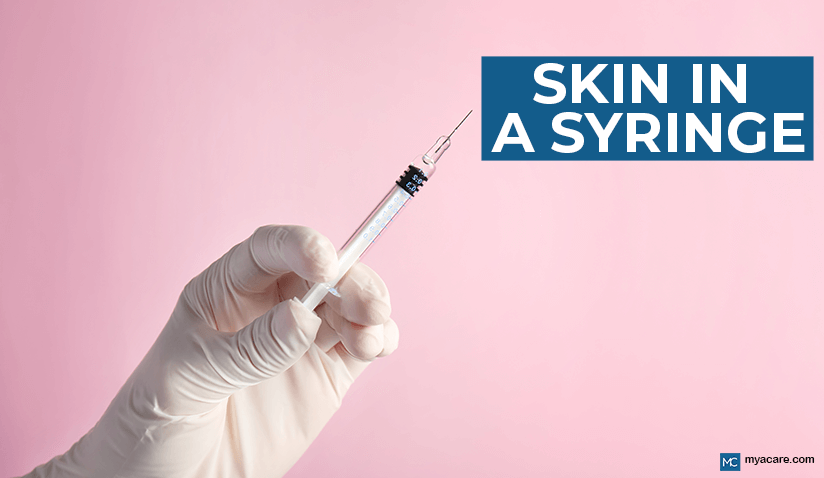
“Skin in a syringe” is an emerging regenerative therapy that delivers bioengineered skin cells and supportive materials directly into wounds to promote tissue repair. Still under investigation, this minimally invasive approach may help treat burns, chronic wounds, and complex injuries by supporting dermal regeneration rather than surface closure, potentially improving healing, function, and scarring outcomes compared to traditional grafting.
Introduction
Severe wounds and extensive burns remain among the most challenging problems in modern medicine. Traditional approaches, such as skin grafting, while life-saving, often come with significant limitations, including donor site injury, scarring, infection risk, and incomplete restoration of normal skin structure. In recent years, regenerative medicine has begun to reshape how clinicians and researchers think about wound repair. One of the most promising innovations to emerge from this field is known as “skin in a syringe.”
Rather than transplanting sheets of skin, this approach aims to deliver living, regenerative skin components directly into a wound in an injectable or spreadable form. Early research suggests it could offer a less invasive and more adaptable way to promote skin regeneration, especially in large or irregular wounds.
What Is “Skin in a Syringe”?
“Skin in a syringe” is a descriptive term for a bioengineered, injectable skin substitute designed to regenerate damaged tissue. Despite the name, it does not involve liquefying the whole skin. Instead, it refers to a carefully prepared mixture of skin cells and supportive biomaterials that can be delivered through a syringe or applied using advanced techniques such as 3D bioprinting.
Unlike traditional wound treatments that focus primarily on closing the surface of the skin, skin in a syringe is designed to promote regeneration of the dermis, the deeper structural layer responsible for strength, elasticity, and long-term skin function. By rebuilding this foundation, the approach aims to restore skin architecture rather than simply covering the wound.
This innovation reflects a broader shift in regenerative medicine towards activating the body’s repair mechanisms using cells, scaffolds, and biochemical signals.
The Science Behind “Skin in a Syringe”
What the “Skin” Actually Contains
The injectable skin material is not a single substance but a composite designed to mimic the natural environment of healthy skin. Its key components include:
Skin Cells
The primary cells used are fibroblasts, which play a central role in producing collagen and other structural proteins in the dermis. These cells are essential for rebuilding connective tissue and supporting long-term wound stability.
Extracellular Matrix Components
Biomaterials such as gelatin and hyaluronic acid are commonly used to replicate the extracellular matrix, the natural scaffold that surrounds skin cells. This matrix provides physical support and biochemical cues that guide cell behavior.
Growth-Supporting Structures and Bioactive Elements
Microparticles or microbeads may be incorporated to give cells surfaces to attach to and migrate across. Chemical crosslinking methods allow the material to shift between liquid and solid states, enabling injection while maintaining structural integrity once applied.
How These Components Support Tissue Regeneration
Within the injected construct, fibroblasts begin producing collagen and other extracellular matrix proteins, which form the structural basis of new dermal tissue. The biomaterial scaffold stabilizes these cells, protects them during early healing, and provides signals that guide cell migration and organization. At the same time, this environment supports the formation of new blood vessels, which are essential for delivering oxygen and nutrients and enabling long-term tissue survival.
Rather than forming dense scar tissue, the goal is to support organized tissue regeneration that more closely resembles normal skin.
How “Skin in a Syringe” Works
Processing Skin Into an Injectable Form
The process begins with preparing viable skin cells, which may ultimately be derived from the patient to reduce immune rejection. These cells are expanded under controlled laboratory conditions and then combined with the biomaterial scaffold.
Advanced chemical techniques allow the mixture to behave like a liquid during injection or printing. Once applied to the wound, the material rapidly stabilizes into a gel-like structure, holding the cells in place at the treatment site.
Application Methods
Depending on the clinical setting, the material may be:
- Injected directly into deep or irregular wounds using a syringe
- Spread across the wound surface
- Applied in precise layers using 3D bioprinting for complex tissue reconstruction
This flexibility is one of the major advantages over traditional skin grafts, which require flat, well-defined wound beds.
Integration With the Patient’s Tissue
After application, the injected skin substitute begins interacting with the surrounding tissue. As new blood vessels form and the scaffold gradually degrades, the temporary structure is replaced by newly formed dermal tissue that integrates with the patient’s existing skin. This process anchors the regenerated area biologically and supports durable healing.
Current Status and Clinical Progress
At present, “skin in a syringe” remains largely in the research and preclinical stage. Most published data come from laboratory studies and animal models, where researchers have demonstrated cell survival, tissue formation, and vascular growth.
As human clinical trials are still in development, precise timelines for processing, treatment, and recovery are not yet standardized. However, the long-term vision is a therapy that could be prepared relatively quickly, applied in a single procedure, and require less recovery time than conventional grafting.
Why This Innovation Matters
Severe burns and chronic wounds often heal with significant scarring, stiffness, and loss of normal skin function. Traditional grafts used in plastic and reconstructive surgery can save lives, but they do not fully restore the complex architecture of skin.
By focusing on rebuilding the dermal layer rather than merely sealing the wound surface, skin in a syringe represents a shift toward regenerative healing that prioritizes long-term structure and function.
If future clinical trials confirm its safety and effectiveness, this approach could transform the treatment of burns, traumatic injuries, and other complex wounds, offering patients healing that is not only faster but also biologically closer to true skin regeneration.
Conditions and Wounds Treated With Skin in a Syringe
The potential applications of skin in a syringe extend across a wide range of acute and chronic wounds. While clinical use is still under investigation, early research suggests that this technology may be particularly valuable in situations where traditional wound closure methods are limited or inadequate. It may also offer an alternative for patients who are not suitable candidates for conventional skin grafting due to limited donor skin, poor tissue quality, or an elevated risk of graft failure.
Chronic Wounds
Diabetic foot ulcers, pressure sores, and venous leg ulcers are examples of chronic wounds that often fail to heal due to impaired blood supply, persistent inflammation, and reduced cellular activity. Skin in a syringe may help address these challenges by delivering active skin cells and supportive matrix components directly into the wound bed. By stimulating cellular regeneration and encouraging new blood vessel formation, this approach could help restart the stalled healing process commonly seen in chronic wounds.
Burns
Extensive burns, especially those involving large surface areas or deep dermal damage, are a primary target for injectable skin technologies. Conventional skin grafting in burn patients is often limited by the availability of healthy donor skin and the physical stress of multiple plastic-reconstructive surgeries. Skin in a syringe offers the possibility of covering irregular or widespread burn wounds more efficiently, while promoting regeneration of the dermal layer and potentially reducing long-term scarring and contractures.
Surgical Wounds
Complex surgical wounds, including those that heal poorly after major operations or reconstructive procedures, may also benefit from this technology. Injectable skin could be used to support healing in areas with compromised tissue quality, such as previously irradiated skin or sites of repeated surgical intervention. By enhancing tissue integration and repair, it may reduce the risk of wound breakdown and infection.
Traumatic Skin Injuries
Traumatic injuries caused by accidents, crush injuries, or penetrating wounds often result in uneven tissue loss that is difficult to treat with flat skin grafts. Skin in a syringe can be applied directly into irregular wound shapes, allowing for better coverage and integration. This adaptability may be particularly useful in emergency or battlefield settings, where rapid and flexible wound treatment is essential.
Patients With Poor Healing Potential
Certain patients are at higher risk of delayed or failed wound healing, including older adults and individuals with diabetes, vascular disease, or immune compromise. In these populations, the delivery of regenerative cells and supportive biomaterials may help overcome biological deficits that impair natural healing. Furthermore, as a minimally invasive approach, this technique may be better tolerated by medically complex patients, potentially reducing operative stress, anesthesia exposure, and postoperative complications. Although further research is needed, injectable skin therapies may one day offer a targeted option for patients who are not ideal candidates for traditional grafting.
Benefits Over Conventional Skin Grafting
Skin in a syringe is being explored not as a replacement for all skin grafts, but as a complementary or alternative approach in selected cases. Compared with conventional grafting, it offers several potential advantages.
Minimally Invasive Approach
Traditional skin grafting requires surgical removal of donor skin, which creates an additional wound that must heal. Injectable skin, by contrast, can be delivered through a syringe or minimally invasive application, reducing surgical trauma and associated complications.
Smaller Donor Skin Requirements
When patient-derived cells are used, only a small skin sample may be needed to generate sufficient cells for treatment. This is particularly important in patients with extensive burns, where donor skin availability is limited.
Faster Coverage of Large or Irregular Wounds
Since injectable skin can be spread or injected into complex wound shapes, it may allow for quicker and more uniform coverage compared with grafts that must be carefully shaped and secured. This could be particularly beneficial for large or uneven wounds.
Reduced Pain and Scarring
By minimizing donor site injury and supporting more organized tissue regeneration, skin in a syringe has the potential to reduce both postoperative pain and long-term scarring. Improved dermal regeneration may also help preserve skin flexibility and function.
Potential for Outpatient Treatment
In the future, if processing and application methods become streamlined, certain wounds could potentially be treated in outpatient or day-procedure settings. This would reduce hospital stays, lower healthcare costs, and improve patient comfort and recovery.
Limitations and Challenges
Despite its promise, skin in a syringe faces several important limitations that must be addressed before widespread clinical adoption.
Regulatory Status
At present, skin in a syringe remains primarily in the research and early translational stages. Most evidence comes from laboratory and animal studies, with limited human clinical data available. Regulatory approval will require robust clinical trials demonstrating safety, effectiveness, and reproducibility before it can become a standard treatment.
Availability and Cost
The production of injectable skin involves advanced laboratory techniques, specialized materials, and skilled personnel. These factors may limit availability and increase costs, particularly in resource-limited healthcare settings. Cost-effectiveness compared with existing treatments remains to be established.
Blood Vessel Formation Limitations
Successful skin regeneration depends heavily on the formation of new blood vessels. While early studies show encouraging signs of vascular ingrowth, achieving consistent and rapid vascularization in large or deep wounds remains a significant challenge. Inadequate blood supply could limit the survival and function of the implanted cells.
Need for Specialized Equipment and Expertise
The preparation and application of injectable skin often require specialized facilities, such as cell culture laboratories and bioprinting or controlled delivery systems. Widespread adoption would depend on training clinicians and expanding access to these technologies.
Not Suitable for All Wound Types
Skin in a syringe may not be appropriate for every wound. Infected wounds, wounds with extensive tissue necrosis, or those requiring immediate structural coverage may still require conventional surgical approaches. Careful patient and wound selection will remain essential.
Long-Term Outcome Data Still Evolving
Long-term outcomes, including durability of regenerated skin, functional recovery, and cosmetic results, are not yet fully understood. Ongoing and future research will be critical to determine how regenerated tissue performs over time and how it compares with traditional grafts in real-world clinical settings.
The Future of Skin in a Syringe
As research progresses, future studies are expected to focus on optimizing cell types, scaffold composition, and delivery methods, as well as identifying which patient populations benefit most from this therapy.
The Role of 3D Bioprinting and In-Situ Bioprinting
One of the most promising extensions of skin in a syringe is its integration with 3D bioprinting technologies. In this context, the injectable skin material functions as a bioink that can be printed directly into a wound.
In-situ bioprinting involves depositing living cells and biomaterials directly onto the patient’s wound in real time, matching the exact size, depth, and shape of the defect. This approach offers precise control over tissue architecture and cell distribution, potentially allowing clinicians to recreate layered skin structures more accurately.
As bioprinting systems become more portable and refined, in-situ bioprinting could enable rapid, customized wound coverage at the bedside or in emergency settings. While still experimental, this combination of injectable skin and bioprinting represents a significant step toward personalized regenerative wound care.
Other Innovative Wound-Healing Techniques
Skin in a syringe is part of a broader movement toward biologically driven wound therapies. Several other innovative techniques are currently used or under active investigation.
Fish Skin Grafts
Fish skin grafts, typically derived from cod, are rich in collagen and omega-3 fatty acids. These grafts act as a natural scaffold that supports cell migration and tissue regeneration. Their structure closely resembles human skin, and they have been used successfully in chronic wounds and burns. Fish skin grafts are also associated with low immune reaction and reduced risk of disease transmission.
Spray-On Skin Cells
Spray-on skin cell therapy involves applying a suspension of the patient’s own skin cells directly to a wound using a spray device. This technique allows for rapid coverage of large areas using a relatively small donor skin sample. It is primarily used in burn care and focuses on accelerating epithelial regeneration rather than deep dermal reconstruction.
Cultured Epithelial Autografts (CEA)
Cultured epithelial autografts involve growing sheets of the patient’s epidermal cells in a laboratory and transplanting them onto the wound. This method is especially useful for patients with extensive burns and limited donor skin. However, CEAs are fragile, time-consuming to produce, and often lack a dermal component, which can affect long-term durability.
Amniotic Membrane Therapy
Amniotic membrane therapy uses tissue derived from the placenta, which contains growth factors, anti-inflammatory properties, and a natural extracellular matrix. These membranes are used to promote wound healing, reduce inflammation, and support tissue regeneration in chronic and surgical wounds. They function primarily as a biological dressing rather than a true skin replacement.
Platelet-Rich Plasma (PRP)
Platelet-rich plasma is created from the patient’s own blood and contains concentrated growth factors that promote healing. PRP is used to stimulate tissue repair, reduce inflammation, and enhance angiogenesis. While it does not replace skin tissue, it can support and accelerate the healing process when used alongside other treatments.
Bioengineered Skin Substitutes
Bioengineered skin substitutes are laboratory-produced constructs that combine cells and scaffolds to mimic skin structure. Some products contain living cells, while others provide acellular frameworks that encourage the patient’s own cells to repopulate the wound. These substitutes have become valuable tools in managing chronic wounds and burns, though availability, cost, and handling requirements vary widely.
To search for the best Dermatology Healthcare Providers in Croatia, Germany, Greece, India, Malaysia, Singapore, Slovakia, Spain, Thailand, Turkey, Ukraine, the UAE, UK, the USA, please use the Mya Care search engine.
The Mya Care Editorial Team comprises medical doctors and qualified professionals with a background in healthcare, dedicated to delivering trustworthy, evidence-based health content.
Our team draws on authoritative sources, including systematic reviews published in top-tier medical journals, the latest academic and professional books by renowned experts, and official guidelines from authoritative global health organizations. This rigorous process ensures every article reflects current medical standards and is regularly updated to include the latest healthcare insights.
Dr. Sony Sherpa completed her MBBS at Guangzhou Medical University, China. She is a resident doctor, researcher, and medical writer who believes in the importance of accessible, quality healthcare for everyone. Her work in the healthcare field is focused on improving the well-being of individuals and communities, ensuring they receive the necessary care and support for a healthy and fulfilling life.
References:
Featured Blogs
Medically Induced Coma: What It Is, How It Works & Recovery