Latest Developments in the Treatment of Brainstem Injuries & Disorders
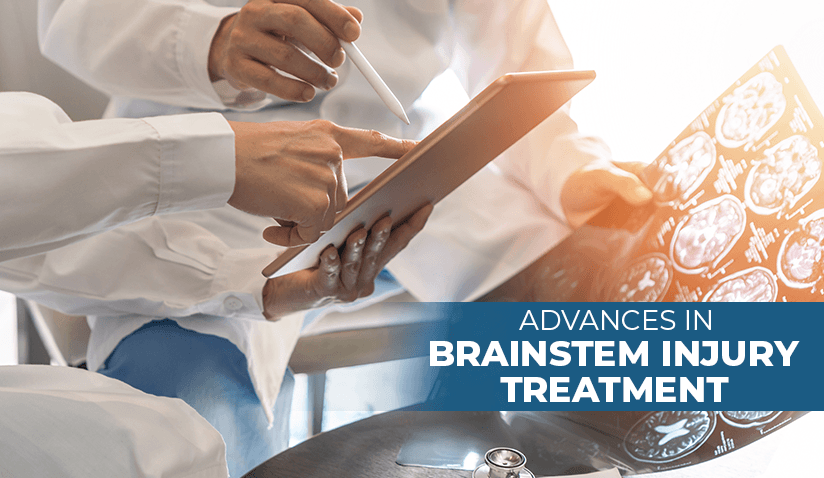
Evolution of Treatment Strategies
Minimally Invasive & Adjunctive Techniques
Brainstem injuries and disorders affect a critical region controlling essential life functions. Advances in imaging, microsurgery, radiosurgery, minimally invasive techniques, and artificial intelligence have expanded treatment possibilities while prioritizing neurological preservation. Modern approaches emphasize precise diagnosis, careful patient selection, and multidisciplinary care to improve safety, functional outcomes, and long-term recovery.
Introduction
The brainstem, or brain stem, is one of the most important and compact parts of the human nervous system. It serves as a life-support control center, controlling vital involuntary functions like breathing, heart rate, blood pressure, swallowing, and consciousness. It also acts as the primary communication link between the brain and the spinal cord, transmitting motor and sensory signals that enable the body to function and respond to its surroundings.
Since it plays a critical role in survival and neurological function, even minor injuries or structural abnormalities in the brainstem can have serious or fatal consequences.
Furthermore, a significant consideration in brainstem health and treatment is the high density of critical neural structures in a small anatomical space. The majority of cranial nerve nuclei are situated in the brainstem and control facial movement, eye movement, hearing, balance, and sensations. It also contains densely packed ascending and descending tracts that transport motor and sensory information from the brain to the body.
Therefore, brainstem disorders, which encompass a diverse group of diseases, are particularly significant since they affect one of the most vital and structurally compact regions of the nervous system.
Common Brainstem Conditions
Brainstem Gliomas
These arise from glial cells and may range from slow-growing focal tumors to aggressive infiltrative lesions. Symptoms often include double vision, facial weakness, balance problems, or limb weakness, depending on tumor location and growth rate.
Cavernous Malformations
These are clusters of abnormal blood vessels that can leak or bleed. In the brainstem, even small hemorrhages may cause sudden neurological symptoms due to the tight concentration of critical neural pathways.
Metastases
Metastases occur when cancers from other organs spread to the brainstem through the bloodstream. These lesions often present with rapidly progressive neurological deficits.
Vascular Malformations
Vascular anomalies, including arteriovenous malformations (AVMs), disrupt normal blood flow and elevate the risk of bleeding or ischemia within the brainstem.
Cranial Nerve Tumors
Tumors affecting the cranial nerves, such as schwannomas, may arise near or compress the brainstem, leading to progressive nerve dysfunction affecting facial movement, hearing, swallowing, or eye movements.
Symptom Spectrum
As the brainstem contains cranial nerve nuclei, motor and sensory tracts, and autonomic control centers, symptoms are often complex and multifocal.
-
Cranial Nerve Deficits:
Double vision, facial weakness, hearing loss, swallowing difficulty, or speech problems due to involvement of cranial nerve nuclei.
-
Motor and Sensory Impairment:
Weakness, paralysis, numbness, or coordination problems caused by damage to ascending and descending neural tracts.
-
Autonomic Dysfunction:
Abnormalities in breathing, heart rate, or blood pressure when autonomic regulatory centers in the brainstem are affected.
The wide range of possible symptoms, combined with the deep location and small size of the brainstem, often makes diagnosis and treatment planning particularly complex. Careful neurological examination and advanced neuroimaging are usually required to identify the exact lesion type and location.
Evolution of Brainstem Treatment Strategies
For much of neurosurgical history, the brainstem was considered a region best left untouched. The high density of vital nuclei and tracts, combined with limited visualization and surgical precision, meant that treatment was often restricted to observation or symptom control. Over time, however, a series of conceptual and technological advances has reshaped how brainstem disorders are approached.
From Conservative Management to Selective Intervention
Earlier strategies favored conservative management due to the catastrophic consequences of even minor injury. Today, the approach has shifted toward selective intervention, where treatment is offered when the anticipated benefit clearly outweighs the neurological risk. This shift reflects improved anatomical understanding, refined microsurgical techniques, and the ability to better predict outcomes.
Technology Enabling Safer Intervention
Advances in technology have played a decisive role in this transition:
- High-resolution MRI allows precise lesion characterization
- Functional imaging and DTI tractography map motor, sensory, and cranial nerve pathways
- Neuronavigation systems provide real-time spatial accuracy during surgery
- AI-assisted tools increasingly support imaging interpretation, trajectory planning, and risk prediction
Together, these tools have reduced uncertainty and expanded the range of lesions considered amenable to treatment.
From Anatomical to Precision-Guided, Function-Preserving Care
The focus of brainstem treatment has shifted from purely anatomical lesion removal toward preserving neurological function. This paradigm emphasizes:
- Respecting safe entry zones
- Avoiding critical nuclei and tracts
- Accepting subtotal resection when necessary
- Prioritizing long-term quality of life over aggressive intervention
Precision guidance and functional preservation now inform decision-making as much as lesion size or appearance.
Risk Stratification and Patient Selection
Careful patient selection is central to modern brainstem management. Treatment decisions typically consider:
Lesion-Related Factors
- Location within the brainstem
- Size and growth pattern
- Relationship to critical structures
- Hemorrhagic risk (for vascular lesions)
Patient-Related Factors
- Neurological status at presentation
- Age and comorbidities
- Functional independence
Disease-Specific Considerations
- Timing after hemorrhage (e.g., cavernous malformations)
- Tumor biology and growth behavior
- Systemic disease burden (for metastases)
These frameworks guide whether observation, microsurgery, radiosurgery, or combined approaches are most appropriate.
Microsurgery for Brainstem Disorders
Microsurgery involves operating under high magnification using an operating microscope and fine instruments, enabling precise manipulation of delicate neural and vascular structures.
A craniotomy is the surgical opening of the skull to access intracranial pathology. In brainstem surgery, craniotomies are typically small, targeted, and tailored to the lesion’s location to minimize disruption.
Indications for Microsurgical Intervention
Microsurgery is generally considered when:
- The lesion causes progressive neurological deficits
- There is recurrent hemorrhage (e.g., cavernous malformations)
- The lesion is surgically accessible through a safe corridor
- Expected benefit outweighs functional risk
Microsurgery is often part of a multimodal strategy, rather than a standalone solution.
Embolization for Vascular Malformations Near the Brainstem
For arteriovenous malformations (AVMs) and complex vascular lesions, endovascular embolization is frequently used as a preoperative or adjunctive step. By reducing blood flow and lesion complexity, embolization can lower intraoperative bleeding risk and improve surgical safety, particularly for deep or high-flow AVMs near the brainstem.
Microsurgical Clipping for Aneurysms
Microsurgical clipping involves placing a clip across the neck of an aneurysm to permanently exclude it from circulation. In selected brainstem-adjacent aneurysms, clipping offers:
- Immediate and durable aneurysm occlusion
- Direct visualization of perforators and cranial nerves
- Long-term protection against rebleeding
Microvascular Decompression (MVD)
Microvascular decompression is a specialized microsurgical procedure widely regarded as the gold standard for treating cranial nerve compression syndromes, such as hemifacial spasm and trigeminal neuralgia. The technique involves separating an offending vessel from the affected nerve, relieving symptoms without damaging neural tissue.
Microsurgical Approaches Designed for Safety
Modern brainstem microsurgery is built around safety principles, including:
- Use of recognized safe entry zones
- Continuous intraoperative neurophysiological monitoring
- Minimal tissue retraction
- Precise anatomical and functional planning
These strategies have significantly reduced morbidity when applied in specialized centers.
Safe entry zones: Based on detailed anatomical and clinical studies, 13 established safe entry zones have been described within the brainstem. These zones are distributed across the midbrain, pons, and medulla oblongata. They represent surface regions where surgical entry carries the lowest risk of damaging critical nuclei and neural pathways.
Neuroendoscopy as an Adjunct
Endoscopic assistance enhances visualization beyond the line of sight of the microscope. It allows surgeons to:
- Inspect hidden corners
- Identify additional neurovascular conflicts
- Reduce the need for tissue manipulation
Neuroendoscopy is increasingly used alongside traditional microsurgery rather than replacing it.
Robotic-Assisted Microsurgery
Robotic and exoscope-based systems represent an emerging advancement in microsurgery. Potential benefits include:
- Enhanced visualization
- Improved ergonomics
- Greater precision and stability
- Integration with navigation and imaging overlays
While still evolving, robotic assistance is likely to play a growing role in complex brainstem procedures.
Stereotactic Radiosurgery (SRS)
Stereotactic radiosurgery (SRS) represents one of the most important non-invasive advances in the treatment of brainstem disorders. Despite the name, SRS does not involve an incision. Instead, it delivers highly focused radiation to a precisely defined target, minimizing exposure to surrounding brainstem tissue where even small injuries can have serious consequences.
What Is Stereotactic Radiosurgery and How Does It Work?
SRS combines high-resolution imaging (MRI and CT) with stereotactic localization to create a three-dimensional map of the lesion and adjacent critical structures. Multiple radiation beams are then delivered from different angles so that they converge at the target while rapidly falling off outside it.
Key features include:
- Sub-millimeter targeting accuracy
- No requirement for craniotomy or general anesthesia in most cases
- Gradual biological effect rather than immediate tissue removal
Rather than removing a lesion, SRS works by damaging the DNA of tumor or abnormal vascular cells, stopping growth or inducing gradual regression over time. This approach is particularly valuable for deep or surgically high-risk brainstem lesions.
Technologies Used in SRS
Different platforms offer flexibility based on lesion size, shape, and proximity to critical structures.
Gamma Knife
- Dedicated exclusively to intracranial treatment
- Uses multiple cobalt-60 sources
- Extremely high precision
- Widely used for small, well-defined brainstem lesions
CyberKnife
- Robotic, image-guided system
- Frameless and adaptable to fractionated treatments
- Useful for lesions near sensitive brainstem tissue
LINAC-Based Systems
- Versatile linear accelerator platforms
- Capable of stereotactic, hypofractionated, and conventional treatments
- Widely available and adaptable
Proton Beam Therapy
- Uses protons instead of photons
- Allows dose deposition to stop precisely at the target (Bragg peak)
- Minimizes radiation beyond the lesion
Novalis Shaped Beam Surgery
- High-precision LINAC-based radiosurgery
- Advanced beam shaping for complex intracranial targets
- Often used for lesions close to eloquent brain regions
New-Generation Linear Accelerators (Varian TrueBeam)
- Image-guided, high-speed delivery
- Improved accuracy and patient comfort
- Enables advanced stereotactic and hypofractionated protocols
When to Choose SRS in Brainstem Disorders
SRS is typically selected when:
- Lesions are small and well-circumscribed
- Open surgery carries high neurological risk
- Patients are not ideal surgical candidates
- Lesions are residual or recurrent after surgery
Common indications include brainstem metastases, selected gliomas, small vascular malformations, and cranial nerve–related lesions.
Advantages of SRS
- Non-invasive and outpatient-based
- Lower immediate procedural risk
- High precision with minimal collateral damage
- Preserves neurological function in selected cases
Limitations and Risks
- Delayed treatment effect
- Less suitable for large or infiltrative lesions
- Risk of radiation-induced brainstem injury
- Requires meticulous dose planning and long-term follow-up
Role of Fractionation in Protecting Brainstem Tissue
Fractionated radiotherapy delivers radiation in multiple smaller doses over time, allowing normal brainstem tissue to recover between sessions. This approach reduces the risk of radiation injury compared to single-session SRS, especially for larger or more infiltrative lesions.
Indications
- Diffuse or infiltrative brainstem tumors
- Lesions too large for safe SRS
- Pediatric brainstem tumors
- Tumors abutting critical brainstem nuclei
Other External Beam Radiation Techniques
Modern external beam techniques use advanced planning and image guidance to sculpt radiation dose:
- IMRT (Intensity-modulated radiation therapy) allows precise dose modulation
- IGRT (Image-guided radiation therapy) improves accuracy with real-time imaging
- VMAT (Volumetric-modulated arc therapy) delivers radiation efficiently in rotating arcs
- Hypofractionated RT balances dose intensity with safety
Minimally Invasive and Adjunctive Techniques for Brainstem Lesions
To protect the brainstem’s critical functions, modern treatments focus on minimizing tissue disruption while maximizing precision. Minimally invasive and adjunctive techniques help reduce surgical impact and improve safety, either as standalone options in selected cases or in combination with microsurgery.
Endoscopic-Assisted Brainstem Surgery and EEA
Endoscopic techniques improve visualization and reduce tissue disruption. The endoscopic endonasal approach (EEA) provides access to select ventral brainstem lesions through natural anatomical corridors.
Laser Interstitial Thermal Therapy (LITT)
LITT uses MRI-guided laser energy to ablate deep-seated lesions with minimal disruption. It may be considered for selected tumors that are difficult to access surgically.
Combined Microsurgery and Laser Ablation
Hybrid approaches allow surgeons to debulk lesions safely while using laser ablation for residual high-risk areas.
MRI-Guided Focused Ultrasound (FUS)
An emerging, incision-less technology that delivers focused energy through the skull to treat deep targets without surgery.
Stereotactic Biopsy Advancements
Modern stereotactic biopsy techniques provide safer tissue diagnosis with improved targeting accuracy and reduced morbidity, even in deep brainstem lesions.
Intraoperative and Perioperative Neuroprotection
Key protective strategies include:
- Continuous intraoperative neuromonitoring: Provides real-time feedback on nerve and pathway function, allowing immediate correction to prevent permanent injury.
- Minimizing ischemia and edema: Preserves blood flow and limits swelling, reducing the risk of secondary brainstem damage.
- Functional imaging and DTI-guided planning: Maps critical neural pathways before surgery to guide safer surgical corridors and avoid vital tracts.
- CSF diversion to control pressure: Helps manage intracranial pressure and improves surgical exposure while protecting delicate brainstem tissue.
- Specialized postoperative neurocritical care: Enables early detection and management of complications, supporting neurological stability and recovery.
These measures significantly reduce neurological morbidity and support functional recovery.
Artificial Intelligence and Technological Innovations
The use of AI is an emerging development in brainstem care:
- Automated imaging interpretation: Improves detection and characterization of subtle brainstem lesions, supporting earlier and more accurate diagnosis.
- Risk prediction and outcome modeling: Helps estimate surgical risk and likely outcomes, enabling better patient selection and informed decision-making.
- Enhanced navigation and trajectory planning: Optimizes surgical pathways to avoid critical structures and improve procedural safety.
- AI-optimized radiosurgery precision: Refines dose planning and targeting, maximizing lesion control while minimizing radiation exposure to surrounding brainstem tissue.
Future systems are expected to provide real-time decision support during both surgery and radiation treatment.
Recovery and Neurorehabilitation
Recovery after brainstem treatment varies widely and depends on lesion type, treatment modality, and pre-treatment neurological status.
Recovery timelines differ by procedure. For instance, microvascular decompression often improves symptoms within weeks, microsurgical lesion removal may take several months, and minimally invasive techniques generally allow faster recovery with less tissue disruption.
Early, coordinated rehabilitation is essential to maximize function, reduce disability, and support a return to daily activities, with a focus on restoring motor, sensory, cranial nerve, and autonomic function.
Modern neurorehabilitation increasingly incorporates early multidisciplinary therapy, advanced monitoring, and technology-driven approaches such as virtual reality–based rehabilitation platforms and augmented reality (AR)–assisted therapy. AR-assisted therapy uses AR tools to overlay interactive visual cues or feedback during exercises, enhancing engagement, motivation, and task-specific motor learning while supporting functional recovery.
Future Directions in Brainstem Disorder Management
The future of brainstem disorder management is moving toward precision, personalization, and minimal invasiveness. Advances in molecular and genetic tumor profiling are improving diagnosis, prognosis, and treatment selection beyond what imaging alone can provide. Immunotherapy is emerging as a complementary strategy, with ongoing research exploring how to overcome the unique immune environment of the brainstem.
At the same time, tighter integration of advanced imaging with real-time navigation is enhancing surgical and radiosurgical accuracy and functional preservation. Together with evolving less invasive, highly precise treatment modalities, these innovations aim to maximize disease control while minimizing neurological risk and long-term disability.

Dr. Gerardo Conesa Bertrán is the Chief of Neurosurgery and Director of the Teknon Neuroscience Institute at QS Teknon Medical Center, Barcelona. Dr. Conesa offers extensive expertise in minimally invasive spinal surgery for spinal tumor removal and epilepsy surgery in adults and children. He is also specialized in awake brain surgery of highly functional areas, with more than 700 cases performed.
With over 30 years of extensive experience in Neurosurgery, Dr. Conesa has won several awards in recognition of his professional and research careers. He has also contributed to the development of augmented reality (AR) applications in neurosurgery, participating in early pioneering projects such as the Dextroscope and Dex-Ray initiatives from 2000–2010, and, more recently, in the Stereo-Dive project since 2018, which focuses on 3D stereoscopic cooperative multimodal planning systems.
Teknon’s neurosurgery center in Barcelona is one of the top brain surgery referral centers in Spain and Europe. Led by Dr. Gerardo Conesa Bertrán, our doctors have vast experience in performing advanced brain imaging and mapping to give their patients the best neurological outcomes from open brain surgery.
Teknon's brain surgery team runs one of the top specialized neurosurgery referral centers in Europe. Our surgeons, neurologists, anesthetists, and therapists have extensive experience in awake brain surgery using the safest and most advanced brain mapping techniques.
For more details, please visit https://www.quironsalud-hospitals.com/
References:
Featured Blogs

Medically Induced Coma: What It Is, How It Works, Who Benefits, and Recovery Outcomes