
Pityriasis Rubra Pilaris (PRP): Symptoms, Complications, Diagnosis, and Treatment
Medically Reviewed by Dr. Sony Sherpa, (MBBS) - August 05, 2025
Pityriasis Rubra Pilaris (PRP), also known as Devergie’s disease, is a rare and often misunderstood chronic skin disorder. It has a variable clinical presentation and affects individuals of all genders and ethnicities. The incidence of PRP varies globally. In the United States, it is estimated to occur in approximately 1 out of every 3,500 to 5,000 patients seen in dermatology clinics. In contrast, the condition appears less frequently in India, with an estimated rate of 1 in 50,000. Among children, PRP is relatively more common, with a reported frequency of around 1 in 500. It typically affects the scalp, forehead, neck, chest, elbows, knees, palms, soles, and occasionally the nails and mucous membranes.
What makes PRP especially challenging is its rarity and the high risk of misdiagnosis. Its symptoms closely mimic other common dermatological conditions, such as psoriasis, eczema, and seborrheic dermatitis, leading to potential delays in appropriate treatment.
What is Pityriasis Rubra Pilaris?
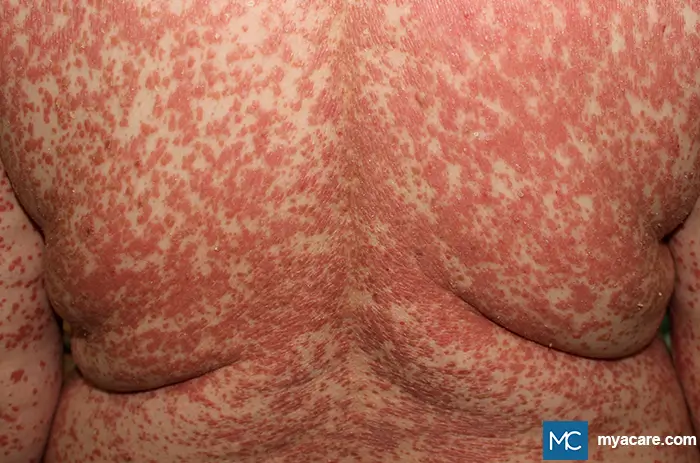
PRP causes abnormal keratinization, the process by which skin cells mature and form the outer layer of the skin. The disease presents with distinct features, such as follicular papules (small, rough bumps arising around hair follicles), orange-red scaly plaques, and palmoplantar keratoderma (thickened skin on the palms and soles). A classic hallmark is the presence of “islands of sparing”, or patches of normal skin surrounded by inflamed areas.
The condition often starts on the scalp, face, or upper body before spreading downward. In some cases, it can progress to widespread erythroderma, generalized redness, and scaling that can cover most of the body.
Causes and Risk Factors
The causes of pityriasis rubra pilaris are not fully understood, but it is broadly divided into two categories: genetic (familial) and acquired (sporadic) forms.
Genetic vs. Acquired Forms
- Genetic PRP: Typically presents in childhood and follows an autosomal dominant inheritance pattern. Mutations in the CARD14 gene have been linked to familial PRP, especially in Type V (atypical juvenile PRP).
- Acquired PRP: More common than the genetic form and may be triggered by unknown factors. It can appear suddenly in otherwise healthy individuals.
Potential Triggers for Pityriasis Rubra Pilaris
- Infections: Particularly upper respiratory tract infections.
- Autoimmune mechanisms: PRP has been found in association with autoimmune diseases such as lupus and myasthenia gravis.
- Malignancy: Some cases have been reported as paraneoplastic syndromes.
- Medications: Rarely, drug-induced pityriasis rubra pilaris has been reported. Drugs such as beta-blockers, antimalarials, and imatinib have been implicated.
Who is at Risk?
- PRP can affect individuals of all ages, but most cases are seen in adults aged 40–60 years.
- Genetic PRP is more common in children and teenagers with a family history.
- There is no strong gender bias.
Key Characteristics of PRP
- Follicular papules: Tiny, rough bumps often starting on the upper trunk and spreading downward.
- Orange-red scaly plaques: Widespread patches of inflamed, scaling skin.
- Islands of sparing: Small, normal-appearing skin areas within affected regions.
- Palmoplantar keratoderma: Thickened, waxy skin on the palms and soles, often painful and prone to cracking.
- Hyperkeratosis: Abnormal thickening of the outer skin layer, leading to a dry and rough texture.
Other Symptoms and Complications
Beyond the primary skin manifestations, PRP can affect multiple body systems:
- Nail and scalp involvement: Thickening, ridging, or discoloration of the nails; heavy scaling and redness on the scalp.
- Pruritus (Itching): Can be intense and significantly impact quality of life.
- Pain from fissures and joint pain (arthralgias): Especially in areas with thickened or cracked skin.
- Hair loss (alopecia): Due to scalp inflammation and scaling.
- Eye involvement: Rare but may include conjunctivitis or dryness.
- Ear canal scaling: Leading to hearing discomfort or blockage.
- Systemic effects of erythroderma: In severe cases, the skin loses its protective barrier, resulting in:
- Difficulty with body temperature regulation.
- Swelling (edema) of the limbs due to protein loss and fluid imbalance.
- Increased risk of infection, particularly bacterial and fungal, due to impaired skin integrity.
Types of Pityriasis Rubra Pilaris
PRP is classified into six main subtypes based on Griffiths’ classification, which considers the age of onset, clinical features, and prognosis. A seventh, genetically distinct variant has also been recognized.
Type I – Classic Adult PRP
- Age of Onset: Typically between 40 and 60 years.
- Presentation: Begins with scalp and face involvement, followed by widespread orange-red plaques, follicular papules, and palmoplantar keratoderma. May progress to erythroderma.
- Prognosis: Most common subtype. Self-limiting in about 80% of cases within 3 years.
Type II – Atypical Adult PRP
- Age of Onset: Also in adulthood.
- Presentation: More chronic course, ichthyosiform scaling, and alopecia. Ectropion (eyelid turning outward) may be present.
- Prognosis: Persistent and long-lasting, with limited spontaneous remission.
Type III – Classic Juvenile PRP
- Age of Onset: 0–10 years, usually between 5–10 years.
- Presentation: Similar to classic adult type. Can involve scalp scaling, follicular papules, and generalized erythroderma.
- Prognosis: Around 50% of PRP cases tend to resolve within three years, though the timeline can vary significantly, and some cases may persist long-term.
Type IV – Circumscribed Juvenile PRP
- Age of Onset: Children and adolescents.
- Presentation: Localized to elbows, knees, palms, and soles. Well-demarcated plaques and keratoderma.
- Prognosis: Good; chronic but localized, and may persist without systemic involvement.
Type V – Atypical Juvenile PRP
- Age of Onset: This form of PRP often begins in early childhood and, in some cases, may be present from birth. It is typically very persistent and long-lasting.
- Presentation: Chronic, familial pattern, often with scleroderma-like changes, alopecia, and follicular hyperkeratosis.
- Prognosis: Persistent; may last for years and recur in families.
Type VI – HIV-Associated PRP
- Age of Onset: Any age in people living with HIV.
- Presentation: Resistant to standard therapies, extensive erythroderma, prominent scaling, follicular papules, and pruritus.
- Prognosis: Linked to immune suppression; often improves with antiretroviral therapy (ART).
CARD14-Associated Papulosquamous Eruption
- It is not part of Griffiths’ original classification.
- It is linked to CARD14 gene mutation, overlapping features of PRP and psoriasis.
- Typically presents in children with persistent, scaly plaques, follicular papules, and a family history of similar skin disease.
Diagnosis
Diagnosing pityriasis rubra pilaris requires a combination of clinical evaluation and histopathological confirmation.
Clinical Evaluation
Clinical evaluation involves a thorough history-taking and physical examination, which are essential for identifying characteristic features of PRP. Key clinical signs that doctors look for include follicular keratotic papules, orange-red plaques with islands of sparing, thickened skin on the palms and soles, as well as possible nail changes, alopecia, or erythroderma. A skin biopsy is often performed to support the diagnosis and to help distinguish PRP from other similar dermatoses, such as psoriasis.
Differentiating PRP from Similar Conditions
PRP often mimics other dermatoses. Here’s how it might be distinguished:
Pityriasis Rubra Pilaris vs Psoriasis
- Similarities: Scaly plaques, involvement of scalp, nails, and erythroderma.
- Differences:
- PRP: Orange-red hue, follicular papules, islands of sparing, waxy palmoplantar thickening.
- Psoriasis: Silver-white scales, no follicular papules, Auspitz sign positive, common nail pitting.
PRP vs Eczema/Dermatitis
- Eczema: Intense itch, oozing vesicles, flexural involvement.
- PRP: More scaling, keratoderma, and follicular changes.
PRP vs Ichthyosis
- Ichthyosis: Lifelong, symmetric, generalized dryness.
- PRP: Acquired, asymmetric onset, inflammatory.
PRP vs Lichen Planus
- LP: Violaceous, polygonal papules with Wickham striae.
- PRP: Orange-red plaques, follicular papules.
PRP vs Secondary Syphilis
- Syphilis: Mucosal involvement, palms/soles rash, systemic symptoms, VDRL positive.
- PRP: No systemic signs or sexual risk factors unless coincidental.
PRP vs Cutaneous T-cell Lymphoma (CTCL)
- CTCL: Chronic, patch-plaque tumor stage, often misdiagnosed.
- PRP: Faster progression, lacks atypical lymphocytes on biopsy.
PRP vs Erythrokeratoderma Variabilis
- EKV: Early onset, transient erythematous patches, and stable hyperkeratosis.
- PRP: Progressive spread, erythroderma, follicular papules.
PRP vs Subacute Cutaneous Lupus Erythematosus (SCLE)
- SCLE: Annular or papulosquamous lesions, photosensitivity, positive ANA.
- PRP: Non-photo-distributed, orange hue, islands of sparing.
PRP vs Shingles (Herpes Zoster)
- Shingles: Dermatomal, painful vesicles, unilateral.
- PRP: Bilateral scaling plaques, no vesicles or nerve involvement.
PRP vs Pityriasis Rosea
- PR: Herald patch, followed by Christmas tree distribution, self-limiting.
- PRP: No herald patch, chronic course, follicular and palmoplantar changes.
Treatment
Treating PRP remains a challenge, and there are presently no FDA-approved treatment options. Treatment requires a multi-pronged approach, combining topical therapies, systemic medications, biologic agents, and supportive care to manage symptoms, reduce inflammation, and improve quality of life. The choice of treatment depends on disease severity, subtype, patient age, and overall health status.
Topical Therapies
Topical treatments are commonly used in mild to moderate PRP or in combination with systemic therapy for severe cases. They help reduce scaling, soothe inflammation, and protect the skin barrier.
- Emollients: Intensive moisturizers are essential to relieve dryness, reduce scaling, and improve skin flexibility. Apply multiple times daily to maintain hydration.
- Topical corticosteroids: Mid to high-potency steroids can reduce inflammation and redness. Useful for localized lesions or flare-ups, but prolonged use should be monitored due to the risk of skin thinning.
- Calcipotriol (Vitamin D analog): Helps regulate keratinocyte growth and may improve scaling. Often combined with topical corticosteroids.
- Topical retinoids: Promote skin turnover and reduce hyperkeratosis. May cause irritation, especially on facial or sensitive areas.
- Keratolytics : Used to soften and remove thick scales.
Systemic Treatments
Systemic agents are often necessary for moderate to severe or generalized PRP, especially when topical therapies are insufficient.
Retinoids
- Normalizes skin cell growth and reduces scaling.
- Dose: Typically 0.5–1 mg/kg/day.
- Effectiveness: Often the first-line systemic treatment.
- Side Effects: Dryness of skin/lips, liver toxicity, teratogenicity (strict contraception required in women of childbearing age).
Methotrexate
- An anti-inflammatory and immunosuppressive drug used as a second-line treatment.
- Beneficial in erythrodermic or resistant cases.
- Dosed weekly and requires folic acid supplementation.
- Monitor for liver, renal, and hematological toxicity.
Other Immunosuppressants
- Cyclosporine: For rapid control of inflammation, especially in severe cases.
- Azathioprine or mycophenolate mofetil: Occasionally used off-label, particularly in recalcitrant PRP or if retinoids are contraindicated.
Biologics
Currently, there are no FDA-approved treatments for PRP, though the use of biologic therapies has been documented in the medical literature. Biologic therapies target specific immune pathways and are emerging as effective options in treatment-resistant PRP, particularly those with overlapping features of psoriasis or CARD14 mutations.
- TNF-alpha inhibitors: Infliximab, etanercept, adalimumab – effective in some severe PRP cases.
- IL-12/23 inhibitors: Ustekinumab has shown promising results in clinical reports.
- IL-17 and IL-23 inhibitors: Secukinumab, ixekizumab, and guselkumab may offer benefits based on shared inflammatory pathways with psoriasis.
Note: Use is often off-label and requires specialist guidance.
Phototherapy
Narrowband UVB phototherapy may be used in selected cases, especially when systemic therapies are not tolerated. It helps reduce scaling and inflammation. However, caution is advised if the skin is already erythrodermic or extremely sensitive.
Supportive Care
Supportive measures are essential to improve comfort, prevent complications, and address the psychological burden of chronic skin disease.
- Pain Management: Emollients, barrier creams, and analgesics help relieve fissures, cracking, and skin pain.
- Antihistamines: Oral non-sedating antihistamines may help reduce pruritus (itching).
- Psychological Support: Chronic visible skin diseases like PRP can cause anxiety, depression, and social withdrawal. Mental health screening and counseling can be invaluable.
- Wound care: In severe fissuring or infection-prone lesions, sterile dressings and topical antibiotics may be required.
Diet for Pityriasis Rubra Pilaris
While there is no specific "PRP diet", certain nutritional strategies may help support overall skin health and reduce systemic inflammation:
- Anti-inflammatory foods: Incorporate omega-3 fatty acids (fatty fish, flaxseed), colorful fruits and vegetables, and whole grains.
- Hydration: Drink plenty of water to help maintain skin moisture.
- Limit processed foods and sugars: May reduce systemic inflammation.
- Avoid known triggers: Some patients report flare-ups with alcohol, gluten, or dairy, but this varies individually.
- Vitamin D: Ensure adequate levels, especially if sun exposure is limited.
- Vitamin A: Food rich in vitamin A, such as green leafy vegetables, carrots, tomatoes, and eggs, may help control the condition.
Is Pityriasis Rubra Pilaris Curable?
PRP is not considered curable in the traditional sense, especially for chronic types. However, many patients achieve remission either spontaneously or with treatment and experience long-term relief. In others, it can be controlled effectively with ongoing care, making recovery from pityriasis rubra pilaris achievable for many.
When to See a Doctor
Timely consultation with a dermatologist is key to early diagnosis and effective treatment of PRP.
Seek medical attention if you experience:
- Rapidly spreading red or scaly patches
- Painful fissures or thickened palms and soles
- Persistent itching or skin discomfort
- Nail or scalp changes
- Signs of systemic involvement (fever, chills, fatigue, swelling)
Urgent care is needed if:
- There is widespread erythroderma (redness covering most of the body)
- Signs of infection appear (oozing, crusting, fever)
- The skin condition fails to respond to initial treatment
Living with PRP
Chronic skin diseases like PRP can significantly impact daily activities, self-esteem, and social life. Symptoms such as visible scaling, redness, and cracking can cause embarrassment, discomfort, and functional limitations.
Coping with Visible Skin Symptoms
- Clothing choices: Opt for soft, breathable fabrics to reduce irritation and cover affected areas.
- Work and social life: Flare-ups can be unpredictable, affecting confidence and interactions. Open conversations with employers or educators can help secure support.
- Skin care routines: Consistent emollient use, gentle cleansing, and sun protection are essential.
Mental Health Considerations
It is common to feel anxious, depressed, or isolated due to PRP. This is especially true for children and adolescents facing peer pressure or adults managing chronic visible symptoms.
- Support groups: Joining online or in-person PRP communities can reduce isolation and provide valuable tips.
- Professional help: Mental health support, therapy, or counseling may be crucial to improve overall well-being.
Prognosis and Outlook
The course of pityriasis rubra pilaris varies widely depending on the type and individual factors. While some forms are self-limiting, others may become chronic and relapsing, requiring long-term management.
- Type I (Classic adult) PRP is self-limiting in most cases, with spontaneous remission in 1–3 years.
- Juvenile types (Type III and IV) generally have a favorable prognosis and may resolve within a year.
- In contrast, Type II (Atypical adult) and Type V (Atypical juvenile) tend to persist for many years and are often treatment-resistant.
- Recalcitrant PRP refers to severe or unresponsive cases, where conventional therapies fail and biologics or novel approaches may be required.
To search for the best Dermatology Healthcare Providers in Croatia, Germany, Greece, India, Malaysia, Singapore, Slovakia, Spain, Thailand, Turkey, Ukraine, the UAE, UK, the USA, please use the Mya Care search engine.
The Mya Care Editorial Team comprises medical doctors and qualified professionals with a background in healthcare, dedicated to delivering trustworthy, evidence-based health content.
Our team draws on authoritative sources, including systematic reviews published in top-tier medical journals, the latest academic and professional books by renowned experts, and official guidelines from authoritative global health organizations. This rigorous process ensures every article reflects current medical standards and is regularly updated to include the latest healthcare insights.

Dr. Sony Sherpa completed her MBBS at Guangzhou Medical University, China. She is a resident doctor, researcher, and medical writer who believes in the importance of accessible, quality healthcare for everyone. Her work in the healthcare field is focused on improving the well-being of individuals and communities, ensuring they receive the necessary care and support for a healthy and fulfilling life.
References:
Featured Blogs

Medically Induced Coma: What It Is, How It Works & Recovery