
Understanding Nummular Eczema (Discoid Eczema): Triggers, Symptoms & Relief

Eczema, also known as dermatitis, is a group of chronic inflammatory skin conditions that affect millions of people worldwide. These conditions cause dry, itchy, and inflamed skin and can significantly impact quality of life. The most common forms include:
- Atopic dermatitis
- Contact dermatitis,
- Seborrheic dermatitis
- Dyshidrotic eczema
Each of these types has distinct triggers and presentations, requiring tailored treatment approaches.
Among them, discoid eczema, also known as nummular eczema, coin eczema, or nummular dermatitis, is a unique form. It is characterized by round, coin-shaped lesions that often resemble rashes that look like ringworms but are actually distinct. This condition can be particularly frustrating due to its persistent nature and frequent misdiagnosis.
What Is Discoid Eczema?
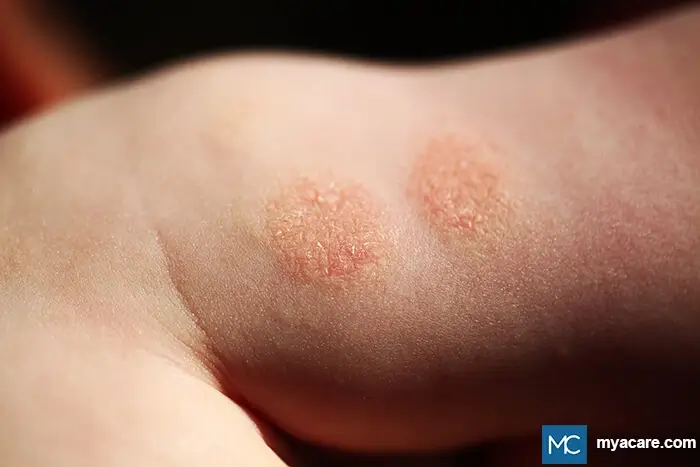
Discoid eczema or nummular dermatitis presents with round or oval, inflamed, and scaly patches on the skin. The term "discoid" is derived from the Latin word for disc, while "nummular" means coin-shaped. The condition is sometimes referred to as coin-shaped dermatitis or circular eczema.
These lesions on the limbs and trunk are often accompanied by mild to severe itching. However, iscoid eczema is sometimes harder to identify because, unlike other forms of eczema, it does not always cause itching.
In lighter skin, the lesions typically appear pink or red. In darker skin tones, nummular eczema may look dark brown, purple, or grey. In some individuals, it can go unrecognized due to its subtle presentation.
Who Gets Discoid Eczema?
This can occur at any age but is most commonly seen in adults. Middle-aged and older individuals are especially prone to this type. Men over the age of 50 are slightly more likely to develop it, although women can also be affected.
People with a history of atopic eczema, asthma, or hay fever may also be more prone to developing discoid or nummular eczema. Additionally, individuals with very dry skin or those exposed to environmental irritants are at a higher risk.
Nummular Eczema Symptoms
The primary symptom of discoid eczema is the development of coin-shaped or oval patches on the skin. These patches often start as a group of small bumps or blisters that merge into larger plaques. As the condition progresses, these plaques become scaly, cracked, and inflamed.
The early-stage discoid eczema may present with red, swollen, itchy bumps that eventually evolve into crusty, oozing, or scaly plaques. These plaques can be mistaken for tinea corporis (ringworm), but unlike fungal infections, discoid eczema does not respond to antifungal treatments.
The location of the rash is also a clue. Lesions most commonly appear on the:
- Legs and lower limbs
- Arms
- Hands and wrists
- Face and lips, in some cases
- Buttocks
- Discoid eczema in babies often presents on the limbs and torso. The rash can be itchy, although nummular eczema that’s not itchy is also a reported variation.
Scratching the lesions can break the skin, leading to a secondary bacterial infection. Infected plaques become more painful, ooze pus or yellow crusts, and may emit a foul odor. Signs of infection also include increased redness, warmth, and swelling. When such symptoms arise, it is important to seek medical care promptly.
Causes and Triggers
Nummular eczema causes are not fully understood, and the condition is often classified as idiopathic. However, multiple triggers and risk factors have been identified. The most common is dry skin, which compromises the skin's barrier function, increasing susceptibility to irritation and allergens.
Other contributing factors include:
- Environmental conditions
Cold weather and low humidity worsen dry skin.
- Skin trauma
Cuts, abrasions, or insect bites can initiate a flare-up.
- Contact with irritants
Harsh soaps, solvents, and detergents are frequent triggers.
- Stress
The connection between discoid eczema and stress is well-documented as a contributing factor to flare-ups.
Fluctuations during menopause or pregnancy can influence the skin's immune response.
- Infections
Sometimes, bacterial colonization on the skin exacerbates eczema.
While not universally confirmed, some patients report improvement by avoiding certain foods. For those with discoid eczema, it may help to avoid foods such as dairy, gluten, and processed sugar.
Risk Factors
Several risk factors can predispose individuals to discoid eczema. These include:
- Age (more common in adults over 50)
- Gender (more frequent in men)
- A history of eczema or allergic conditions
- Living in dry, cold climates
- Occupations involving frequent exposure to water or chemicals
- Poor skin hydration habits
- Circulatory issues (especially in the lower limbs)
Diagnosis
Discoid eczema is diagnosed primarily through clinical observation. Dermatologists assess the shape, distribution, and appearance of lesions. A detailed medical history helps rule out other conditions. The usual comparisons are with psoriasis, tinea corporis, ringworm and discoid lupus. All of these conditions can cause similar circular rashes.
Differential Diagnosis
Each condition can present similarly, but it has key distinguishing features; accurate diagnosis often requires clinical evaluation, sometimes supported by biopsy, fungal, or immunologic testing.
Discoid Eczema vs Psoriasis
While both conditions can appear as round, scaly patches, psoriasis is typically marked by sharply defined lesions topped with silvery scales and often accompanied by nail pitting and joint pain. In contrast, discoid (nummular) eczema usually presents as moist or crusted plaques, without the precise edging, nail involvement, or arthritic symptoms seen in psoriasis.
Discoid Eczema vs Tinea Corporis (Ringworm)
Both conditions may appear as round skin lesions, but ringworm (tinea corporis) typically features a raised, scaly border with a clear or light center. In contrast, discoid eczema presents as uniform patches that often ooze or form crusts and lack that central clearing. A potassium hydroxide (KOH) test is commonly used to confirm ringworm.
Discoid Eczema vs Discoid Lupus Erythematosus (DLE)
Discoid lupus erythematosus typically appears on sun-exposed skin; such as the face, scalp, or ears. This condition often leads to scarring, pigment alteration, and firmly adherent, scaly plaques. In contrast, nummular (discoid) eczema tends to appear in non–sun-exposed areas, presenting with moist or crusted patches that do not cause scarring or lasting pigmentation changes. Definitive differentiation requires a skin biopsy and immune-marker testing to accurately distinguish between the two conditions .
Discoid Eczema vs Athlete’s Foot (Tinea Pedis)
While discoid eczema on the feet can resemble tinea pedis, it typically does not involve the classic toe-web spaces, maceration, or the characteristic fungal odor of athlete’s foot. Differentiation is achieved through diagnostic techniques such as fungal culture or a potassium hydroxide (KOH) preparation, and eczema generally shows more favorable response to anti-inflammatory therapies.
Discoid Eczema vs Pityriasis Rosea
Pityriasis rosea typically begins with a single “herald patch,” followed days or weeks later by smaller lesions that spread over the torso in a pattern resembling a Christmas tree. It is usually self-resolving. In contrast, discoid eczema manifests as isolated, itchy plaques and does not exhibit this characteristic spread or spontaneously resolve.
When in doubt, a skin scraping may be taken for fungal culture. In cases where allergens are suspected, patch testing may be performed. Occasionally, a skin biopsy is done to confirm whether the lesion is discoid eczema or psoriasis.
Treatment
The treatment focuses on reducing inflammation, healing the skin, and preventing recurrences.
Topical therapies are usually the first step:
- Potent corticosteroids are applied to inflamed areas to reduce swelling and redness.
- Emollients or moisturizers are essential for rehydrating the skin and maintaining the skin barrier.
- Antibiotic creams may be necessary if the skin is infected.
For widespread or severe eczema, systemic treatments may be required:
- Oral antibiotics to treat or prevent infection.
- Oral corticosteroids or immunosuppressants in extreme cases.
- Phototherapy (UV light treatment) can help chronic, resistant cases.
Many people explore natural remedies for nummular eczema treatment. These may include oatmeal baths, coconut oil, and calendula ointment. While soothing, discoid eczema home remedies should be used alongside, not substitute, prescribed treatments.
A discoid eczema treatment diet might focus on anti-inflammatory foods such as fatty fish, leafy greens, and nuts and avoid processed sugars and allergens.
Management and Prevention
Managing discoid eczema involves a comprehensive skincare routine. Here are some useful guidelines:
- Use thick, unscented moisturizers multiple times a day.
- Avoid harsh soaps and opt for fragrance-free, pH-balanced cleansers.
- Wear soft, breathable clothing and avoid wool or synthetic fabrics.
- Protect the skin from injury and scratching.
- Install humidifiers in dry environments to maintain skin moisture.
- Identify and avoid known allergens or irritants.
- Keep stress levels in check with relaxation techniques or counseling.
Prevention also includes regular monitoring for flare-ups. Early intervention can prevent minor irritation from escalating into full-blown eczema.
Healing and Long-Term Outlook
With proper treatment, most cases show improvement within a few weeks to a few months. However, it is often a recurring condition. Long-term management focuses on identifying triggers, consistent moisturization, and avoiding scratching.
In some individuals, discoid eczema may go into remission for long periods or even disappear entirely. However, recurrences are common, especially during colder months or periods of stress.
The Bottom Line
Discoid eczema is a distinct and often misunderstood type of eczema that presents with round, dry patches on the skin. It is often misdiagnosed as ringworm or tinea corporis. Awareness of its symptoms, particularly in black skin or unusual areas, such as the lips or buttocks, is crucial for timely and accurate treatment.
Through a combination of medication, skin care, and lifestyle adjustments, most people can manage and even prevent flare-ups. Whether you are dealing with your first eczema circle or navigating long-term nummular dermatitis, understanding the condition and acting early can make all the difference.
Frequently Asked Questions (FAQ)
Is discoid eczema an autoimmune disease?
No. While it involves the immune system, it is not classified as an autoimmune disease.
Is there a connection between discoid eczema and arthritis?
There is no direct connection, although both can co-exist in inflammatory conditions.
Can menopause cause discoid eczema?
Yes. Hormonal changes during menopause can disrupt skin barrier function and increase susceptibility.
Is discoid eczema contagious?
No. It is not caused by an infection and cannot be spread to others.
How long does discoid eczema last?
It varies by individual. Some people recover in weeks, while others may have flare-ups that last for several months or become chronic.
What vitamin deficiency causes discoid eczema?
The exact causes of discoid eczema are still being investigated. While various factors may trigger or raise the risk of the condition, some research suggests a possible link to low levels of vitamin D, B12, or essential fatty acids in certain cases.
Can nummular eczema be cured?
Yes. Some people experience complete remission, especially with lifestyle changes.
To search for the best health providers for dermatology in Croatia, Germany, India, Malaysia, Singapore, Slovakia, Spain, Thailand, Turkey, the UAE, the UK, and the US, please use our free search engine.
To search for the best healthcare providers worldwide, please use the Mya Care search engine.

Dr. Rosmy Barrios is an aesthetic medicine specialist with international work experience. She earned her physician diploma at the Universidad Del Norte’s School of Medicine in Barranquilla, Colombia, and her specialty at John F. Kennedy University in Buenos Aires, Argentina. Dr. Barrios is a member of the Pan-American Aesthetic Medicine Association (PASAM) and the Union Internationale de Médecine Esthétique (UIME). She is an expert health writer with keen interests in aesthetic medicine, regenerative aesthetics, anti-aging, fitness, and nutrition. Currently, Dr. Barrios heads the Regenerative Aesthetics department at a renowned Internal Medicine clinic based in Belgrade, Serbia.
References:
Featured Blogs

Medically Induced Coma: What It Is, How It Works, Who Benefits, and Recovery Outcomes