
Dermatitis Herpetiformis Explained: Causes, Symptoms, Diagnosis, and Management

Medically Reviewed by Dr. Sony Sherpa, (MBBS) - August 22, 2025
Dermatitis herpetiformis (DH) is a rare skin condition characterized by intensely itchy, blistering rashes. Despite the name, it is not related to the herpes virus; rather, the term "herpetiformis" refers to the clustered, blister-like appearance of the lesions, which resemble those seen in herpes infections.
The disorder typically affects young to middle-aged adults, with the peak onset between 20 and 40 years of age. It is more commonly seen in males, with a male-to-female ratio of approximately 2:1. While DH can affect people of any ethnicity, it is most prevalent among people of Northern European descent.
What is Dermatitis Herpetiformis?
Dermatitis herpetiformis is a chronic autoimmune blistering skin condition characterized by intensely itchy, grouped vesicles and papules.
DH commonly appears on extensor surfaces, which are the parts of the body that stretch out during movement. The most frequently affected sites include:
- Elbows (a hallmark location)
- Knees
- Buttocks
- Lower back
- Back of the neck
However, it can also affect the scalp.
DH is strongly associated with celiac disease, an autoimmune disorder triggered by the ingestion of gluten, a protein found in wheat, barley, and rye. Even in the absence of gastrointestinal symptoms, people with DH typically have some degree of gluten-sensitive enteropathy, often detectable through small intestinal biopsy or serological markers. This close connection has led DH to be referred to as the “skin manifestation of celiac disease”. It is also known as Duhring's disease, named after Louis Duhring, who first described it in the late 19th century.
Can You Have Dermatitis Herpetiformis Without Celiac Disease?
Technically, overt digestive symptoms of celiac disease, such as diarrhea, bloating, or malabsorption, may be absent in people with DH. However, most patients with DH have gluten-sensitive enteropathy detectable on intestinal biopsy or show serological markers of celiac disease. So while it may appear that DH occurs without celiac disease, it is more accurate to say that DH often coexists with asymptomatic or subclinical celiac disease.
What Is the Usual Age of Onset?
Dermatitis herpetiformis most commonly begins in early to middle adulthood, typically between the ages of 20 and 40, though it can also occur later in life. The average age of diagnosis is around 43 years. It is more frequent in men than women, and while less common in children, it can still occur in pediatric populations. Childhood-onset DH may be misdiagnosed initially due to its rarity and resemblance to other pediatric skin conditions.
Is Dermatitis Herpetiformis Contagious?
No, dermatitis herpetiformis is not contagious. It is an autoimmune condition, meaning it arises from the body’s immune system attacking its tissues in response to gluten. It cannot be spread from person to person through skin contact, fluids, or airborne particles.
Causes and Risk Factors
What Causes Dermatitis Herpetiformis?
DH is caused by an autoimmune reaction to gluten, a protein found in wheat, barley, and rye. In genetically predisposed people, ingestion of gluten leads to the production of IgA antibodies that target epidermal transglutaminase (eTG), an enzyme in the skin. These antibodies deposit in the dermal papillae, triggering inflammation and the characteristic blistering rash.
While the exact reason this immune response occurs in the skin rather than only the gut (as in classical celiac disease) is not fully understood, the underlying cause remains gluten sensitivity. This makes adherence to a strict gluten-free diet essential in managing the condition.
Key Risk Factors for Dermatitis Herpetiformis
Genetic predisposition
Almost all people with DH carry specific HLA class II genes, particularly HLA-DQ2 or HLA-DQ8, which are also strongly associated with celiac disease. These genes play a role in the immune system’s ability to recognize gluten as a trigger.
Family history
People with a family history of celiac disease or dermatitis herpetiformis have a significantly higher risk of developing DH. The condition often runs in families, reinforcing the genetic basis of the disease.
Ethnicity
Ethnicity plays a role in disease prevalence. DH is most commonly seen in people of Northern European descent, particularly those of Irish, Scandinavian, or British ancestry. It is rare in people of Asian or African descent, likely due to the lower prevalence of the associated HLA genotypes in those populations.
Environmental triggers
While gluten is the main trigger, other environmental factors may contribute to the onset or severity of DH. These can include:
- Infections (which may act as immune system stressors)
- Iodine-rich foods or medications, which can exacerbate the rash
- Stress or physical trauma to the skin (Koebner phenomenon)
Symptoms
What Does Dermatitis Herpetiformis Look Like?
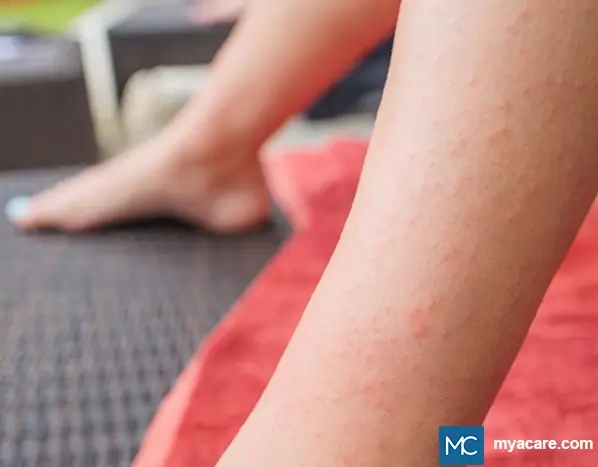
The condition typically presents as clusters of small, intensely itchy bumps and fluid-filled blisters, often mistaken for acne, eczema, or insect bites. These lesions are usually red or skin-colored and may rupture easily, leading to crusting and scratching marks. Due to severe itchiness, many patients scratch the lesions before they blister fully, meaning intact blisters are not always seen on examination.
Sensation
One of the most distinctive features of dermatitis herpetiformis is the intense itching, stinging, or burning that precedes the appearance of the rash. This pruritus can be so severe that patients often scratch the skin raw before blisters can form, leading to erosions and secondary infections.
Symmetry of Lesions
The rash tends to appear in a symmetrical pattern, for example, both elbows or both knees are affected simultaneously. This symmetry is a key diagnostic clue and helps distinguish DH from other dermatologic conditions.
Non-Skin Symptoms
Although DH is a skin condition, it is closely linked to celiac disease, a gastrointestinal autoimmune disorder triggered by gluten. As a result, some patients with DH may also experience:
- Mild abdominal discomfort
- Bloating
- Diarrhea or constipation
- Iron-deficiency anemia
- Fatigue or weight loss
Complications
Due to the strong link between the two, if left untreated, both DH and celiac disease carry a risk of significant and sometimes lasting complications.
Increased Risk of Intestinal Lymphoma and Gut Cancers
Individuals with DH, particularly those with undiagnosed or untreated celiac disease, face a higher risk of developing gastrointestinal malignancies, especially:
- Enteropathy-associated T-cell lymphoma (EATL) – a rare but aggressive form of intestinal lymphoma associated with chronic gluten exposure.
- Adenocarcinoma of the small intestine – though less common, this cancer type is also seen more frequently in people with long-standing celiac disease.
Osteoporosis and Bone Health Issues
Chronic intestinal inflammation in celiac disease can impair nutrient absorption, especially calcium and vitamin D, which are essential for bone health. This malabsorption increases the risk of:
- Osteopenia (low bone mineral density)
- Osteoporosis
- Fractures
Even in patients with DH who lack gastrointestinal symptoms, subclinical intestinal damage may still lead to compromised bone health if left untreated.
Other Autoimmune Diseases
People with DH are at increased risk of developing other autoimmune conditions, including:
- Autoimmune thyroid disease (Hashimoto's thyroiditis, Graves’ disease)
- Type 1 diabetes
- Pernicious anemia
- Vitiligo
- Autoimmune hepatitis
Regular screening for associated autoimmune disorders is often recommended as part of long-term DH management.
Dental Problems
In some cases, people with celiac disease or DH may present with dental enamel defects, especially if gluten sensitivity began in childhood. These may include:
- Pitting or grooves in the teeth
- Discoloration (yellow or brown spots)
- Increased risk of cavities
Although “oral dermatitis herpetiformis” is not a formal diagnosis, oral manifestations related to gluten sensitivity are well-documented, and a gluten-free diet may help prevent further dental deterioration.
Diagnosis
Diagnosing dermatitis herpetiformis involves a combination of clinical evaluation, skin biopsy, and serologic testing for celiac disease. Due to its resemblance to other dermatologic conditions, accurate diagnosis is essential to guide proper management and dietary interventions.
Skin Biopsy
The preferred diagnostic test for DH is often a skin biopsy with direct immunofluorescence. Interestingly, the biopsy is not taken from the blister or rash itself, but rather from normal-appearing skin adjacent to the lesion, typically within 1–2 cm of the rash.
Why is the biopsy taken from normal-appearing skin?
In active DH, granular IgA antibody deposits accumulate at the tips of the dermal papillae beneath healthy-looking skin. A biopsy of an active lesion may yield non-specific inflammation or damage that obscures these critical immune deposits. For this reason, perilesional skin is preferred to detect the pathognomonic IgA deposits, which confirm the diagnosis.
Blood Tests
Because DH is tightly linked to gluten sensitivity, serological tests are often performed to evaluate for celiac disease, even if gastrointestinal symptoms are absent. These include:
- Anti-tissue transglutaminase (tTG) IgA
- Anti-endomysial antibodies (EMA)
- Anti-epidermal transglutaminase (eTG) IgA, which is more specific to DH
Positive results further support the diagnosis and can guide dietary counseling.
Gluten Challenge and Importance of Gluten Consumption Before Testing
For accurate diagnostic testing, particularly biopsies and antibody tests, continued gluten consumption is essential. Starting a gluten-free diet before testing can cause IgA levels to drop and immune activity in the skin to resolve, leading to false-negative results.
In people already on a gluten-free diet, a gluten challenge (consuming gluten daily for several weeks) may be necessary before testing is performed, though this should be done under medical supervision.
Differential Diagnosis
DH can mimic several other skin and systemic conditions. Proper differentiation is crucial, especially when lesions present atypically.
Dermatitis Herpetiformis vs. Eczema
Both can cause red, itchy rashes, but eczema typically involves flexural areas (such as the inner elbows or behind the knees), shows dry, scaly patches, and lacks the symmetrical blistering and IgA deposition seen in DH.
Dermatitis Herpetiformis vs. Bullous Pemphigoid
Bullous pemphigoid causes large, tense blisters typically in older adults. Unlike DH, it does not involve gluten sensitivity and shows linear IgG and C3 deposition (not granular IgA) on immunofluorescence.
Dermatitis Herpetiformis vs. Keratosis Pilaris
Keratosis pilaris presents as rough, tiny bumps, usually on the upper arms and thighs, without itch or blisters. It is not linked to autoimmunity.
Dermatitis Herpetiformis vs. Psoriasis
Psoriasis lesions are thick, scaly plaques with silvery scales, often on the scalp and elbows. Itching may be present, but blisters are not typical, and it lacks an association with gluten or IgA deposits.
Dermatitis Herpetiformis and Crohn’s Disease
Crohn’s disease is a chronic inflammatory bowel condition that can cause skin changes, though these are usually non-blistering and not driven by the same immune mechanisms. DH may co-occur with Crohn’s, but it is a distinct entity.
Dermatitis Herpetiformis or Scabies?
Scabies leads to severe nighttime itching and burrows in skin folds such as the fingers, wrists, and genitals. Lesions are often excoriated and can appear similar to DH, but scabies is parasitic and contagious, confirmed by finding mites on skin scraping.
Dermatitis Herpetiformis vs. Erythema Nodosum
Erythema nodosum causes painful, red nodules typically on the shins, not itchy blisters. It is often associated with infections or systemic disease, but does not resemble DH in pattern or cause.
Eczema Herpeticum vs. Dermatitis Herpetiformis
Eczema herpeticum develops when herpes simplex virus infects areas of broken skin, often in people with pre-existing eczema. It causes painful vesicles, sometimes with fever or systemic symptoms. Unlike DH, it is viral, contagious, and rapidly progressive if untreated.
Dermatitis Herpetiformis Treatment
Gluten-Free Diet: The Cornerstone of Treatment
The most effective and long-term treatment for dermatitis herpetiformis (DH) is a strict, lifelong gluten-free diet. This not only helps clear skin lesions but also treats the underlying gluten-sensitive enteropathy even in patients without noticeable gastrointestinal symptoms.
How long does dermatitis herpetiformis last after going gluten-free?
Once a gluten-free diet is started, intestinal healing begins within weeks. Risk of intestinal lymphoma and other celiac-related complications also decreases. However, skin symptoms may take months to years to fully resolve. The rash typically improves more rapidly in children than in adults. Complete skin clearance may take up to 2 years, particularly in long-standing or severe cases. Any accidental gluten exposure can cause flare-ups.
Medications for Dermatitis Herpetiformis
While waiting for dietary changes to take full effect, medications may be used to manage skin symptoms and itching.
Dapsone for Dermatitis Herpetiformis
Dapsone is the first-line medication for DH and often provides rapid symptom relief within 1–3 days. It works by blocking the immune reaction that leads to IgA deposits in the skin.
However, dapsone has notable side effects and requires careful monitoring, including:
- Hemolytic anemia
- Methemoglobinemia (reduced oxygen delivery to tissues)
- Peripheral neuropathy
- Liver toxicity
- Hypersensitivity reactions
Because of these risks, patients on dapsone require:
- Baseline and regular blood tests (CBC, liver function, G6PD levels)
- Close follow-up with a healthcare provider
Sulfapyridine and Sulfasalazine
For patients who cannot tolerate dapsone, alternatives like sulfapyridine or sulfasalazine may be used. These are less potent and may take longer to relieve symptoms, but are generally safer for people with G6PD deficiency.
Topical Corticosteroids
Mild to moderate topical steroids may offer temporary relief from localized inflammation and itching, but are not sufficient as a standalone therapy. They are best used as adjuncts during flare-ups or in sensitive areas, such as the face.
Supportive Care
- Anti-itch lotions: Such as calamine or menthol-based creams can provide temporary symptomatic relief.
- Proper skin hygiene: Keeping the skin clean and avoiding scratching helps prevent secondary infections and scarring.
- Cool compresses: May reduce inflammation and discomfort during flare-ups.
Nutritional Counseling for Celiac Disease
Managing DH effectively means managing celiac disease, which includes working with a dietitian to follow a strict gluten-free diet.
Foods to avoid:
- Wheat, barley, rye (and all derivatives)
- Malt and malt flavoring
- Brewer’s yeast (if derived from barley or not certified gluten-free)
- Many processed and packaged foods that may contain hidden gluten
Prognosis and Long-Term Outlook
Dermatitis herpetiformis is a lifelong condition, but its symptoms can be effectively controlled with a proper diet. With strict gluten avoidance:
- Skin lesions gradually disappear
- Risk of intestinal lymphoma and other celiac-related complications decreases
- Dapsone or other medications may eventually be tapered off
However, ongoing monitoring by both a dermatologist and a gastroenterologist is recommended to assess for:
- Dietary adherence
- Nutritional deficiencies
- Associated autoimmune disorders
- Long-term complications
Living with Dermatitis Herpetiformis
Dietary Adherence
Maintaining a 100% gluten-free lifestyle is essential. Even trace amounts of gluten can trigger immune reactions and skin flare-ups.
Tips to Avoid Gluten Cross-Contamination:
- Always read ingredient labels
- Use separate utensils, cutting boards, and cookware for gluten-free foods
- Be cautious with restaurant meals and sauces, and watch for cross-contamination in shared kitchens
- Inform household members and food handlers of your dietary needs
- Choose certified gluten-free products
Emotional and Psychological Impact
Living with DH can be physically and emotionally draining. Chronic itching, dietary restrictions, and social limitations may lead to:
- Anxiety or depression
- Social withdrawal
- Body image concerns
Support from celiac disease communities, psychological counseling, and patient education can help people cope with the long-term nature of the condition and improve quality of life.
To search for the best Dermatology Healthcare Providers in Croatia, Germany, Greece, India, Malaysia, Singapore, Slovakia, Spain, Thailand, Turkey, the UAE, UK, the USA, please use the Mya Care search engine.
Also Read:
- All You Need to Know About Hair Dye Allergies: Symptoms, Causes, and Treatment
- Cutaneous Tuberculosis: Recognizing the Skin Manifestations of TB
- Superficial Fungal Infections: From Athlete’s Foot to Ringworm
The Mya Care Editorial Team comprises medical doctors and qualified professionals with a background in healthcare, dedicated to delivering trustworthy, evidence-based health content.
Our team draws on authoritative sources, including systematic reviews published in top-tier medical journals, the latest academic and professional books by renowned experts, and official guidelines from authoritative global health organizations. This rigorous process ensures every article reflects current medical standards and is regularly updated to include the latest healthcare insights.

Dr. Sony Sherpa completed her MBBS at Guangzhou Medical University, China. She is a resident doctor, researcher, and medical writer who believes in the importance of accessible, quality healthcare for everyone. Her work in the healthcare field is focused on improving the well-being of individuals and communities, ensuring they receive the necessary care and support for a healthy and fulfilling life.
References:
Featured Blogs

Medically Induced Coma: What It Is, How It Works & Recovery