
What Are the Differences Between Scabies and Eczema?
Medically Reviewed and Updated by Dr. Rae Osborn, Ph.D. - February 13, 2026
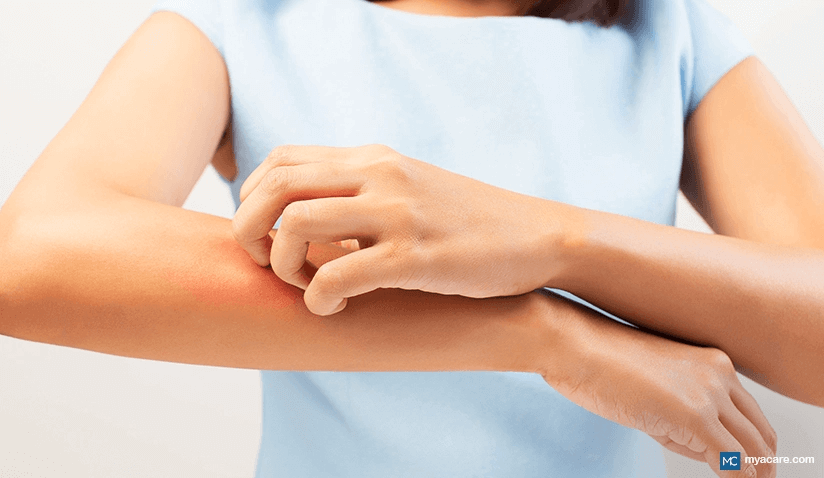
Scabies and eczema can look similar but differ in cause and treatment. Scabies is a contagious parasitic skin infestation caused by mites that triggers an intensely itchy inflammatory rash, often worsening at night. Eczema is a non-contagious inflammatory skin condition linked to genetic and environmental factors. Accurate diagnosis is important for appropriate management.
What Is Scabies?
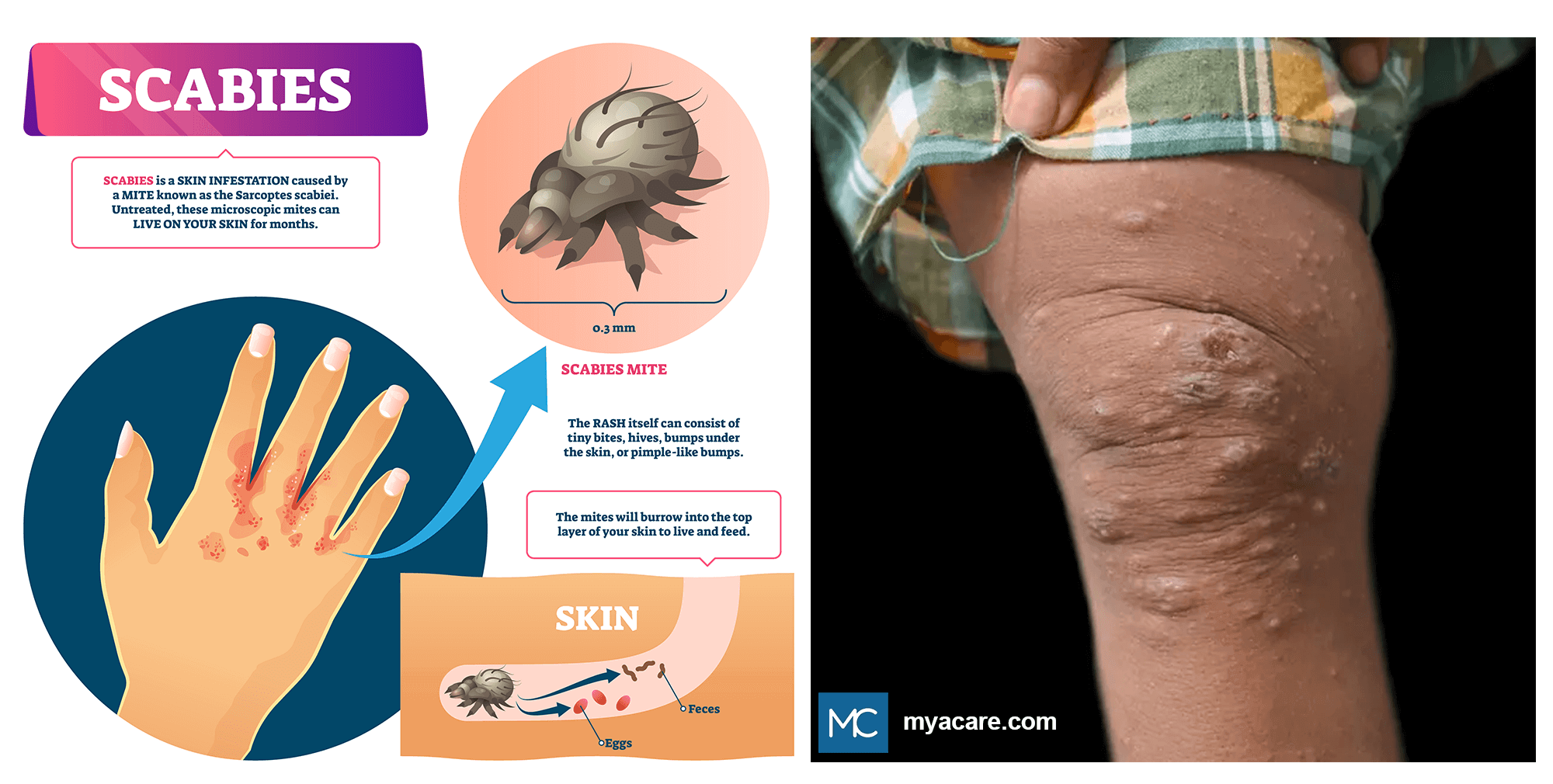
Scabies is an infestation of the human itch mite, Sarcoptes scabiei var. hominis, on the skin. These mites live under the skin and lay their eggs there. The human itch mite is responsible for causing severe itching, rashes, and allergic reactions, requiring medical attention to get rid of the mites.
A highly contagious skin condition, scabies can rapidly pass from one person to another through physical skin contact. An estimated 200 million cases of scabies are prevalent globally at any given time.
What Is Eczema?
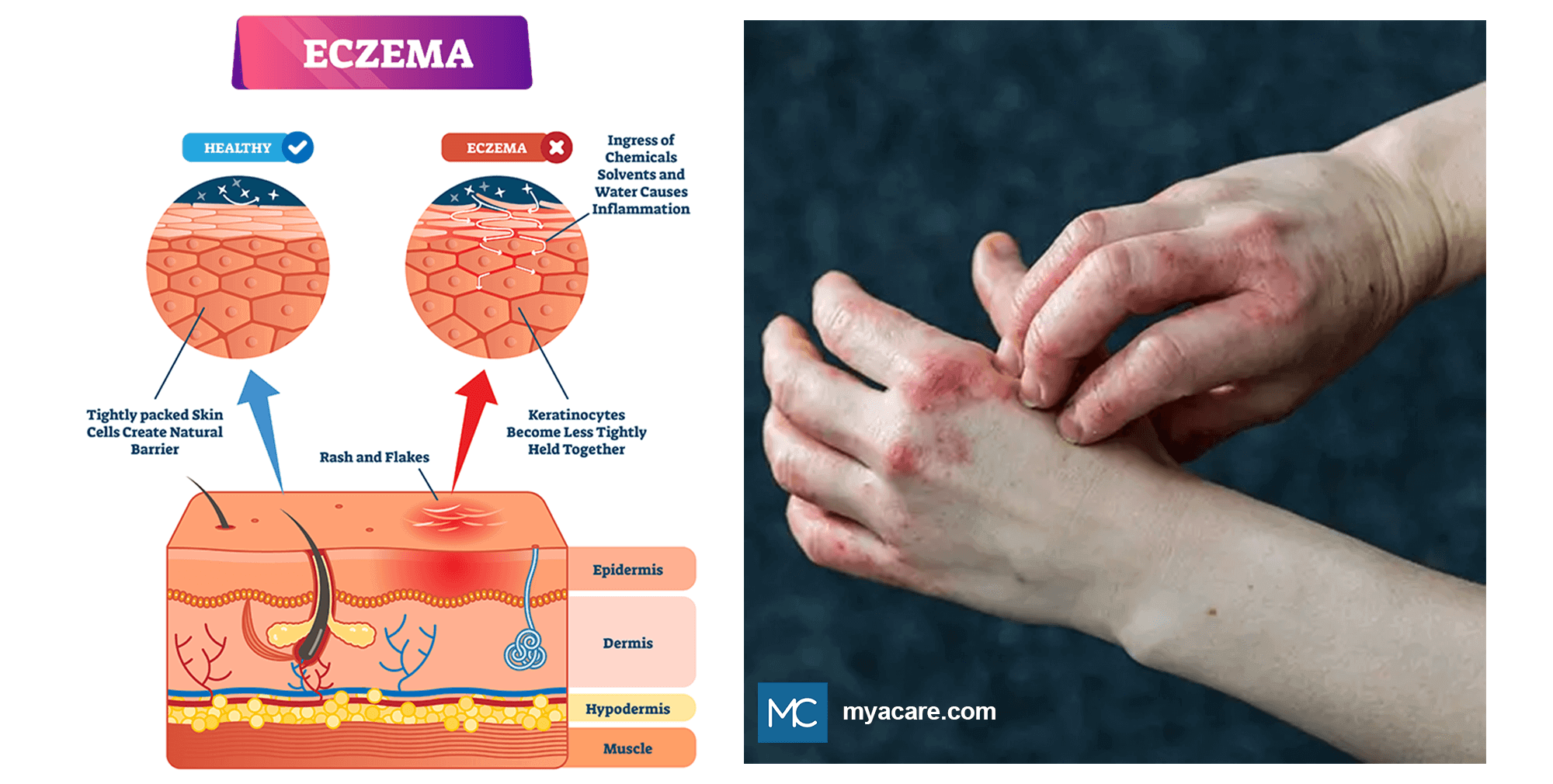
Eczema is a form of dermatitis, a group of conditions characterized by skin inflammation. It causes red, dry, itchy, and irritated skin. It also has several subtypes, such as atopic dermatitis (the most common), contact dermatitis, and dyshidrotic eczema.
The inflammatory skin condition can be triggered by multiple factors, such as immune system activation, stress, environmental triggers like allergens, and genetic factors.
Eczema is a non-contagious disease, meaning that it does not pass to another person through direct skin contact.
What Do Eczema and Scabies Look Like?
If you have eczema, your skin will appear red, purple, brown, or ash gray in color. The appearance of the skin will be dry and scaly with some swelling, including small rough bumps.
Scabies on your skin can look like pink rash-like blisters or pimples with raised bumps filled with fluid. The skin may show red scaly patches.
How to Differentiate Eczema and Scabies?
Eczema and scabies can be distinguished by a skin sample test. Moreover, a common symptom that appears in scabies is severe itching, mainly at night.
The main differences between eczema and scabies are described below:
- While both are skin conditions, scabies is contagious, whereas eczema is not.
- Eczema is caused by environmental and genetic factors, while scabies is caused by the infestation of microscopic skin mites.
- Scabies can occur in atypical areas, such as the buttocks, genital area, armpits, soles of the feet, and breasts. Eczema commonly occurs on typical areas of the body, such as the face, hands, feet, and elbows.
- The diagnosis of eczema is made by physical examination of the skin condition. In comparison, the diagnosis of scabies involves taking skin samples from the affected area and identifying the mite or mite's eggs and fecal matter under a microscope.
- The treatment for scabies vs eczema differs in that scabies treatment focuses more on killing the mites, while the treatment for eczema focuses on controlling and managing its symptoms.
- Permethrin is a drug of choice given specifically to treat scabies.
Similarities Between Scabies and Eczema
Scabies and eczema have many similarities, which include:
- Scabies and eczema are both inflammatory skin conditions.
- Both scabies and eczema come with rashes, redness, and scaly skin.
- Scabies and eczema both show itchiness.
- The appearance of scabies and eczema can look similar.
- Thick crusting on the skin can appear with eczema and scabies.
- Both scabies and eczema can appear anywhere on the body.
- The treatment of eczema and scabies includes applying topical medications and/or taking oral antibiotics. Over-the-counter topical medications like hydrocortisone or OTC antihistamines can be given to relieve the symptoms of both conditions, such as itching.
Can Scabies Lead to Eczema?
Yes. Scabies causing burrowing mites and their fecal matter, can trigger an immune reaction leading to eczema.
What Kills Scabies Instantly?
It may take time for scabies to completely disappear after medications. But you can adopt home remedies like applying aloe vera to alleviate itching and kill scabies mites. A study in 2009 revealed that aloe vera gel was as successful as benzyl benzoate cream for scabies. However, it is important to note that this study had a small sample size; therefore, the efficacy of aloe vera gel for scabies warrants further research.
How to Confirm If Your Rash Is Due to Scabies?
Scabies rashes show pimple-like bumps, scales, and tiny blisters. The intense itching gets worse at night.
Diagnosis of Scabies vs Eczema
To confirm that you have scabies, a sample from your skin will be taken for testing. If the result reveals a mite infestation, it confirms the presence of scabies. If not, it indicates some other skin condition.
To rule out eczema, the doctor will undertake a physical examination of your skin.
The Symptoms of Eczema vs Scabies
Symptoms of Eczema:
- Itchy and dry skin
- Urge to scratch
- Rough skin
- Inflamed skin
- Crusting or oozing on the skin
- Swelling at the site of rashes and itching
Where Does Eczema Appear on the Body?
Just like scabies, eczema can appear anywhere on the body. But the most common areas affected by eczema appear to include:
- Hands
- Feet
- Face
- Neck
- Insides of the elbows
- Behind the knees
- Ankles
- Around the eyes
- Wrist
- Upper chest
- Fingers
Symptoms of Scabies:
- Severe itching, especially at night
- Rashes on any part of the body
- Tiny blisters and bumps
- Pimple-like skin rash
- Thick crusts on the skin
- Sores
Where Does Scabies Occur on the Body?
Scabies symptoms can show on any part of the body. But commonly, it appears:
- On the buttocks
- Around the breasts
- On the knees
- On the soles of the feet
- Around the male genital area
- Around the waist
- In the armpits
- Between the fingers
- On the inner elbows
- On the inside of the wrists
In infants and young children, the common sites of scabies include:
- Soles of the feet
- Palms of the hands
- Scalp
What Are the Treatment Options for Eczema?
The treatment of eczema can include topical medications and symptom management.
1. Topical Medications
Topical medications can help repair skin and control itching. For example, calcineurin inhibitors are given for treating eczema.
Calcineurin inhibitors such as pimecrolimus and tacrolimus are immunosuppressants that work by altering the immune system.
To control itching in eczema, the doctor may recommend hydrocortisone cream and OTC antihistamines.
2. Oral Medications
Antibiotic creams and oral antibiotics may be given if your skin has a bacterial infection. Also, in more severe cases of eczema, the doctor may prescribe oral corticosteroids, such as prednisolone, to control inflammation.
3. Lifestyle Management
Along with medications, self-care measures are necessary to soothe inflamed skin and reduce itching in eczema.
The following are some self-care measures to treat eczema and manage its symptoms.
- Select a moisturizer compatible with your skin type and apply it at least two times a day on the affected areas.
- Don't scratch. If you feel the urge to scratch, slightly press the skin or cover the itchy area with a soft cloth or bandage.
- Apply an OTC anti-itch cream, such as hydrocortisone, daily.
- Take a bath with warm water daily.
How Is Scabies Treated?
Scabies treatment also includes oral and topical medication and lifestyle modifications. The doctor may ask you to apply medication all over the body and leave it overnight or for 8 hours.
The following treatment is recommended for scabies:
1. Topical and Oral Medications
A topical cream known as Permethrin is commonly prescribed for treating scabies. It contains chemicals that kill mites and eggs responsible for causing scabies.
Benzyl benzoate cream is used to treat scabies in children and adults. It can be used for children over 2 months of age.
Oral medication, such as Ivermectin (Stromectol), is prescribed to patients with altered immune systems or crusted scabies. It is also given to patients who don't respond to topical creams.
Over-the-counter antihistamines, hydrocortisone, and soothing lotions, such as calamine, can be taken to relieve pain and itching caused by scabies.
Antibiotic creams may be given if you have a skin infection as well.
Steroid creams are given to reduce severe inflammatory symptoms like redness, swelling, and itching.
2. Lifestyle Modifications & Home Remedies
Itching may take some time to relieve after you take or apply medications. For soothing irritation, you can follow these steps:
- Apply a soft, wet cloth to the affected areas.
- Soak your skin in cool water.
- Avoid scratching your skin as much as possible.
- Avoid physical contact and sharing of personal belongings with people, as the disease can rapidly spread from one person to another. Wash bedding and clothing in hot water to kill mites.
Conclusion
Scabies and eczema can induce inflammatory skin reactions. They can cause redness, swelling, rashes, patches, bumps, and scaling or crusting on your skin. Both can appear anywhere on your body. Scabies is commonly caused by mite infestation on the skin, while eczema is caused by genetic factors and environmental triggers.
You may confuse scabies and eczema, so it is better to get a diagnostic test and physical examination done by a doctor.
It may take time for the condition to heal completely, so following self-care measures like avoiding itching, applying anti-itch cream or soothing lotions and moisturizers, and taking medications recommended by a doctor can help manage the condition.
To search for the best health providers for dermatology in Croatia, Germany, Greece, Italy, Malaysia, Singapore, Slovakia Spain, Thailand, The UAE, the UK, and the US, please use our Mya Care search engine.
To search for the best healthcare providers worldwide, please use the Mya Care search engine.
The Mya Care Editorial Team comprises medical doctors and qualified professionals with a background in healthcare, dedicated to delivering trustworthy, evidence-based health content.
Our team draws on authoritative sources, including systematic reviews published in top-tier medical journals, the latest academic and professional books by renowned experts, and official guidelines from authoritative global health organizations. This rigorous process ensures every article reflects current medical standards and is regularly updated to include the latest healthcare insights.

Dr. Rae Osborn has a Ph.D. in Biology from the University of Texas at Arlington. She was a tenured Associate Professor of Biology at Northwestern State University, where she taught many courses to Pre-nursing and Pre-medical students. She has written extensively on medical conditions and healthy lifestyle topics, including nutrition. She is from South Africa but lived and taught in the United States for 18 years.
References:
Featured Blogs

Medically Induced Coma: What It Is, How It Works & Recovery