
What Is Pemphigus Vulgaris? A Guide to Its Symptoms, Causes, and Care

Medically Reviewed by Dr. Sony Sherpa, (MBBS) - August 11, 2025
Pemphigus vulgaris is a rare, chronic autoimmune blistering disorder that affects the skin and mucous membranes. The global prevalence is estimated at 1–5 cases per million annually, with a higher incidence in people of Middle Eastern, Jewish, or South Asian descent.
What Is Pemphigus Vulgaris?
Pemphigus vulgaris is the most common and severe form of pemphigus, a group of autoimmune disorders characterized by blistering of the skin and mucosa. In pemphigus vulgaris, the immune system mistakenly produces antibodies against desmogleins, proteins that help skin cells stick together. This attack weakens the connections between skin cells, leading to painful blisters and erosions.
Unlike other skin conditions, pemphigus vulgaris is not contagious. However, if left untreated, it can lead to serious complications such as infection, fluid loss, and even death. The disease typically begins in the mouth and later spreads to the skin and other mucosal areas.
Causes and Risk Factors
Autoimmune Mechanism
At the core of pemphigus vulgaris is an autoimmune response where antibodies attack desmoglein-3 (and sometimes desmoglein-1), disrupting the integrity of the epidermis. This results in intraepidermal blisters and erosions.
Associated Autoimmune Diseases
People with pemphigus vulgaris are at increased risk of developing other autoimmune disorders, including myasthenia gravis, autoimmune thyroid disease, and lupus erythematosus.
Genetic Predisposition
A family history of autoimmune conditions may increase susceptibility. Certain HLA gene variants (especially HLA-DR4 and HLA-DR14) have been linked to a higher risk of pemphigus vulgaris.
Environmental Triggers
While the exact trigger is not always known, several factors may provoke or worsen the condition, including:
- Medications: Especially penicillamine, ACE inhibitors, and some antibiotics.
- Infections: Individuals with a genetic susceptibility may develop symptoms after contracting a viral or bacterial infection.
- Physical stressors: Burns, surgery, or UV radiation can initiate lesions.
- Dietary and chemical exposures: Rarely implicated but suspected in isolated cases.
Ethnicity and Demographics
Pemphigus vulgaris is more common in people of Ashkenazi Jewish, Mediterranean, Indian, and Middle Eastern descent. It typically presents in middle-aged adults, with onset often between 40 and 60 years of age, although cases can occur outside this range.
Signs and Symptoms
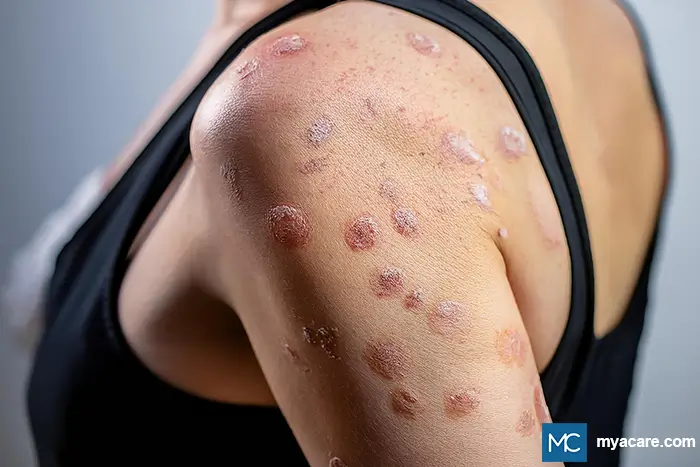
Pemphigus vulgaris symptoms typically begin in the mucous membranes, especially the mouth, before spreading to the skin. The hallmark feature is the presence of painful, fragile blisters that rupture easily, leaving raw erosions that can be slow to heal.
Mucosal Involvement
- Oral lesions are often the first sign. These erosions make eating, swallowing, and speaking difficult.
- Other mucous membranes that may be affected include the throat, nose, genitals, and esophagus.
Skin Involvement
- Blisters appear on normal-looking skin and rupture quickly, forming crusted erosions.
- The Nikolsky sign is typically positive; the outer skin layer peels away with mild rubbing.
- The Asboe-Hansen sign, or “bulla spread sign”, is also seen: applying pressure to a blister causes it to extend into adjacent skin.
Eye Involvement
Though less common, pemphigus vulgaris can affect the eyes, leading to conjunctival erosions, irritation, and redness.
Additional Symptoms and Complications
- Acantholysis, the loss of cell adhesion between skin cells, is the microscopic hallmark.
- Chronic open lesions may develop secondary bacterial infections, malodor, and lead to dehydration.
- Systemic effects include fatigue, weight loss, and nutritional deficiencies due to oral pain.
- Post-inflammatory hyperpigmentation can occur after healing.
How Is Pemphigus Vulgaris Diagnosed?
Diagnosing pemphigus vulgaris involves a combination of clinical evaluation, skin biopsy, and laboratory testing.
Clinical Examination
Initial assessment typically involves a physical exam, focusing on identifying flaccid blisters and erosions on the skin and mucous membranes. Positive Nikolsky and Asboe-Hansen signs can raise clinical suspicion.
Skin Biopsy
Two types of biopsies are performed:
- Routine histopathology shows acantholysis (loss of intercellular connections), a key feature.
- Direct immunofluorescence (DIF) reveals a “fishnet” or “chicken wire” pattern of IgG and C3 deposits around keratinocytes, confirming the autoimmune origin. This finding helps support the diagnosis and is specific to pemphigus vulgaris.
Blood Tests
- Indirect immunofluorescence (IIF) and ELISA are used to detect circulating antibodies, especially anti-desmoglein 3 and sometimes anti-desmoglein 1. The antibody levels often correlate with disease activity.
Differential Diagnosis
Several other blistering and erosive conditions may resemble pemphigus vulgaris:
-
Bullous pemphigoid vs pemphigus vulgaris
Bullous pemphigoid features tense, deeper blisters and targets basement membrane proteins; pemphigus vulgaris involves flaccid, superficial blisters and desmogleins.
-
Pemphigus foliaceus vs pemphigus vulgaris
Pemphigus foliaceus affects only the superficial epidermis and lacks mucosal involvement, unlike pemphigus vulgaris.
-
Epidermolysis bullosa vs pemphigus vulgaris
Epidermolysis bullosa is a genetic disorder with blistering due to structural protein defects, typically from birth, while pemphigus vulgaris is autoimmune and acquired.
-
Pemphigoid gestationis
An autoimmune blistering disorder of pregnancy; usually resolves postpartum.
-
Dermatitis herpetiformis
Intensely itchy, grouped vesicles, often linked to gluten sensitivity.
-
Erosive lichen planus and aphthous stomatitis
These may mimic oral pemphigus vulgaris but lack skin involvement and show different histological features.
Treatment
The treatment of pemphigus vulgaris aims to control the autoimmune response, promote healing of the skin and mucous membrane lesions, and prevent complications. Early and aggressive therapy significantly improves outcomes.
First-Line Therapy: Corticosteroids
Systemic corticosteroids are the cornerstone of pemphigus vulgaris treatment. High-dose oral prednisone or intravenous methylprednisolone helps rapidly reduce inflammation and blister formation by suppressing the immune attack on desmogleins.
Steroid-Sparing Agents
To minimize long-term steroid side effects, additional immunosuppressive drugs are commonly used, including:
- Azathioprine, mycophenolate mofetil, cyclophosphamide, or methotrexate.
- Biologic therapies such as rituximab, a monoclonal antibody targeting B-cells, have enhanced treatment outcomes and can induce durable remission.
Other Therapies
- Intravenous immunoglobulin (IVIG) can be used in resistant or severe cases to modulate the immune system.
- Plasmapheresis (plasma exchange) removes circulating autoantibodies and may be combined with immunosuppressants.
Supportive Care
Effective supportive measures are crucial alongside medical therapy:
- Wound care: Regular cleaning and dressing of erosions to promote healing and prevent infection.
- Pain management: Topical anesthetics or systemic analgesics help alleviate discomfort.
- Oral hygiene and pain control: Gentle rinses, soft toothbrushes, and topical steroids can ease oral lesions.
- Nutrition and hydration: A pemphigus vulgaris diet plan should focus on soft, non-irritating foods to avoid worsening oral pain. Foods to avoid with pemphigus vulgaris include spicy, acidic, or rough-textured foods that can irritate oral lesions. Hot beverages and hard, crunchy foods may exacerbate discomfort.
- Preventing and treating secondary infections: Secondary infections can worsen symptoms, delay healing, and increase the risk of serious complications, making timely management vital to avoid complications.
- Eye care: If the eyes are involved, ophthalmologic evaluation and treatment can help prevent long-term damage.
Home Remedies for Pemphigus Vulgaris
While medical treatment is essential, some supportive home care may include:
- Using cool compresses to soothe skin lesions.
- Maintaining good oral hygiene with mild mouthwashes.
- Avoiding trauma or friction to affected skin areas.
- Ensuring adequate rest and stress management to support immune health.
Latest Research and New Treatments
Recent advancements in the treatment of pemphigus vulgaris focus on more targeted therapies with fewer side effects. A promising new treatment under investigation involves novel biologic agents that selectively inhibit immune pathways responsible for autoantibody production.
Emerging therapies are being explored that aim to improve remission rates and reduce reliance on systemic corticosteroids. These include next-generation monoclonal antibodies and small molecules targeting B cells and inflammatory cytokines, potentially transforming management in the near future.
Living with Pemphigus Vulgaris
Pemphigus vulgaris is a chronic condition requiring long-term monitoring and follow-up. Managing medication side effects, such as those caused by corticosteroids and immunosuppressants, is crucial for maintaining quality of life. Patients often need to make lifestyle adjustments, including dietary modifications and meticulous skin care.
Emotional and psychological support is equally important, as coping with a chronic, visible disease can lead to anxiety or depression. Access to counseling and support groups can be helpful in this regard.
When to See a Doctor
Seek medical advice if you experience persistent mouth sores, unexplained skin blisters, or painful wounds that do not heal. Early evaluation helps avoid complications and enables timely intervention.
Prognosis and Outlook
Thanks to early diagnosis and advances in immunotherapy, the prognosis of pemphigus vulgaris has significantly improved. While remission is possible, relapses may occur, making ongoing care essential.
A multidisciplinary team, including dermatologists, dentists, nutritionists, and mental health professionals, ensures comprehensive management. Life expectancy for most patients with controlled disease is near normal, especially with appropriate treatment and follow-up.
Frequently Asked Questions (FAQs)
Can an overdose of any vitamin worsen pemphigus vulgaris?
Excessive vitamin A intake has been reported to potentially exacerbate skin conditions, though direct worsening of pemphigus vulgaris is rare. Always consult your doctor before taking supplements.
How is pemphigus vulgaris treated during pregnancy?
Treatment during pregnancy requires careful balance to control disease activity while minimizing risks to the mother and fetus. Corticosteroids remain the mainstay, but some immunosuppressants are avoided. Close monitoring by specialists is essential.
Is pemphigus vulgaris a type of cancer, or can it lead to cancer?
No, pemphigus vulgaris is an autoimmune disease, not a form of cancer. There is no evidence that it causes cancer, though long-term immunosuppressive therapy may slightly increase cancer risk.
To search for the best Dermatology Healthcare Providers in Croatia, Germany, Greece, India, Malaysia, Singapore, Slovakia, Spain, Thailand, Turkey, Ukraine, the UAE, UK, the USA, please use the Mya Care search engine.
The Mya Care Editorial Team comprises medical doctors and qualified professionals with a background in healthcare, dedicated to delivering trustworthy, evidence-based health content.
Our team draws on authoritative sources, including systematic reviews published in top-tier medical journals, the latest academic and professional books by renowned experts, and official guidelines from authoritative global health organizations. This rigorous process ensures every article reflects current medical standards and is regularly updated to include the latest healthcare insights.
Dr. Sony Sherpa completed her MBBS at Guangzhou Medical University, China. She is a resident doctor, researcher, and medical writer who believes in the importance of accessible, quality healthcare for everyone. Her work in the healthcare field is focused on improving the well-being of individuals and communities, ensuring they receive the necessary care and support for a healthy and fulfilling life.
References:
Featured Blogs

Medically Induced Coma: What It Is, How It Works & Recovery